Why Go to Pattaya and What a Beginner Will Have to Deal With
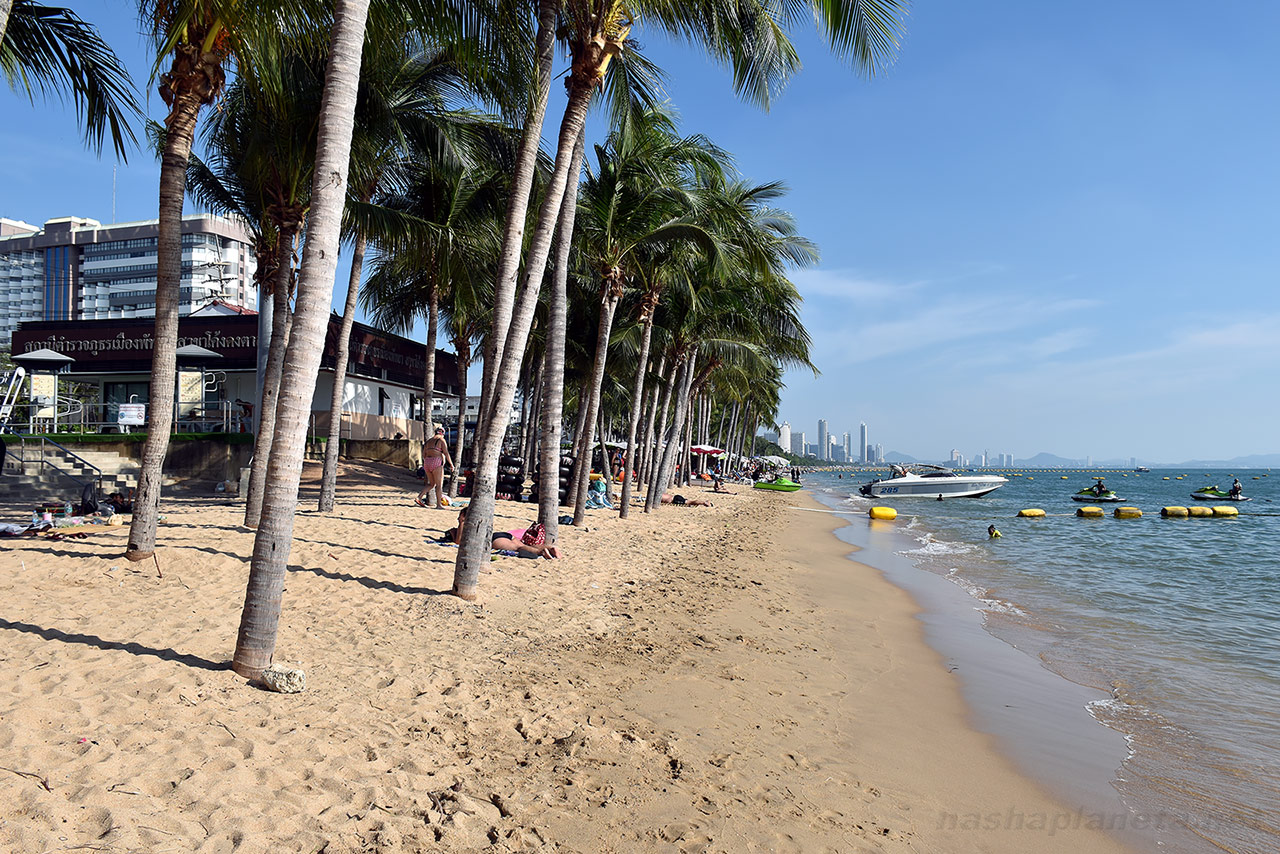
Pattaya is like that friend everyone talks about: some praise it, some criticize it, but you still want to check it out yourself. The resort is known for being affordable: you can live it up in an expensive hotel or spend 500 baht a day on street food and a guesthouse bed. But for a beginner this place is a minefield: lots of nuances with money, transport, choosing a district and understanding what to do here at all.
We think Pattaya is great for a first introduction to Thailand. It's easy, fun, and almost everyone speaks English (or at least gestures). But to avoid disappointment, you need to know a few key things. Let's talk about them.
Pattaya isn't just about nightclubs and go-go bars. There are plenty of family activities, great beaches (if you know where to look) and amazing nature. So don't believe the stereotypes.

What to Know Before the Trip: Documents, Visa, Transfer and Insurance

Thailand Visa in 2026
Good news: citizens of many countries, including Russia, can stay in Thailand without a visa for up to 60 days; on entry they just put a stamp in your passport. If you want to stay longer, you can extend for another 30 days at the immigration office.
The main thing is that your passport must be valid for at least 6 months at the time of entry. And a return ticket or a ticket to another country – they may ask for it at check-in or at passport control. So it's better to have proof of departure on hand.
Important: entry rules change periodically. Always check the current information in our updated article: Thailand Visa – everything about entry, rules and latest news.
Don't forget to fill out the electronic migration card (TDAC) – without it you won't be allowed in. It's filled out three days before arrival on the website, and takes 5 minutes. How to fill out the TDAC migration card – step-by-step instructions.
Medical Insurance – Is It Mandatory?
Formally, insurance isn't mandatory for visa-free entry, but we strongly recommend getting it. Thai medicine for foreigners is an expensive pleasure. Usually a doctor's visit just for diagnostics can cost several thousand baht, and hospitalization – hundreds of thousands. Better to spend 2000–3000 rubles on insurance than to pay hundreds of thousands out of pocket later.
But not all policies are equally useful. The standard insurance often included with a tour has many limitations. For example, it won't cover an injury from riding a scooter, diving, trekking or even just riding a bicycle – that's considered "active recreation" and is usually excluded from basic coverage. And yet such activities make up the lion's share of the fun in Thailand.
So we advise buying insurance yourself through online aggregators – that way you can choose exactly the options you need. Pay attention to:
- Coverage amount – at least $50,000.
- Deductible – if there is one, you pay the first, say, $50 yourself, but the policy is cheaper. For active recreation, it's better to get one without a deductible.
- COVID-19 coverage – in modern policies it's usually included, but check.
- "Active recreation" option – be sure to add it if you plan tours, water sports or renting a bike. Check whether motorcycle riding is included (it's often a separate checkbox).
Where's best to buy? Here are trusted platforms for tourists from Russia:
- Cherehapa.ru – flexible settings, easy to add active recreation and motorcycle.
- Sravni.ru – quick search across all major insurers.
- Tripinsurance.ru – a specialized service for travelers.
And one more life hack: many banks offer a free annual travel insurance policy as part of subscriptions or premium cards. For example, with a T-Bank All Airlines card you can get a free policy that covers even active recreation and motorcycle riding. You can get this card via the link – it really saves money and nerves.
Detailed advice on choosing insurance, price comparison and all the pitfalls we've gathered in a separate article: Insurance for Thailand – where to buy, how much it costs and how to get it free.
How to Get from the Airport – Briefly

If you're on a package tour, the transfer from the airport to the hotel is most likely already included – just follow the greeter's instructions. If you're traveling independently, here are the options for getting there yourself:
- Bus No. 389 from Suvarnabhumi Airport (BKK) – from 139 baht, travel time about 2 hours. Departs from the first floor, exit No. 8, every 1–1.5 hours.
- Taxi – from 1200 baht, can be ordered at the Public Taxi counter or via apps (Grab, Bolt).
- Transfer – book in advance via Kiwitaxi or Intui, you'll be met with a sign.
- From Don Mueang Airport (DMK) there's no direct bus – first get to Suvarnabhumi by shuttle or bus, then transfer there.
- From U-Tapao Pattaya Airport (UTP) there are minivans for 500 baht/person or a taxi for about 1000 baht.
All the details, schedules, prices and nuances – in our full guide: How to get to Pattaya – all the ways.
What to Do on Arrival: Step-by-Step Instructions
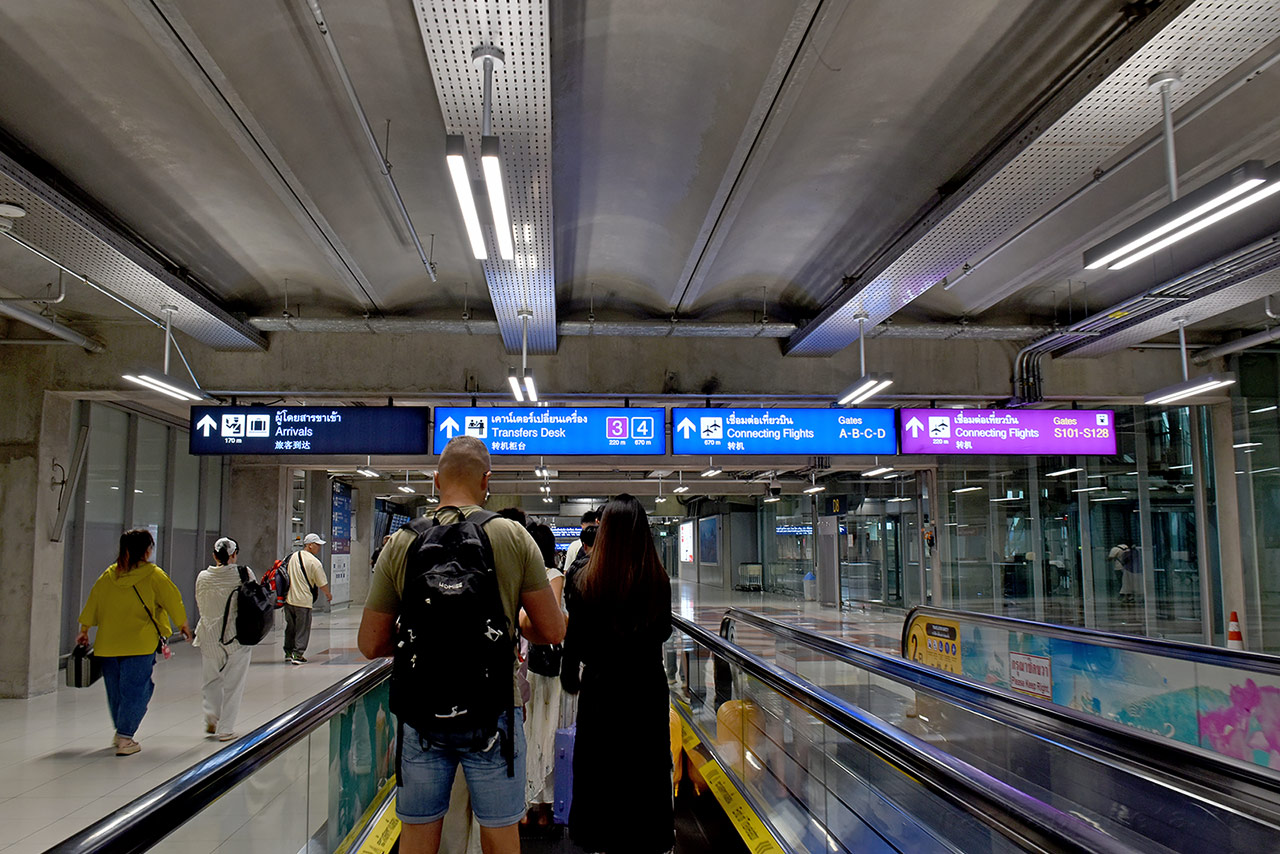
For many tourists, especially those flying for the first time, the process of going through the airport on arrival is scary. In fact, it's simple if you know the sequence of actions. Here are step-by-step instructions on what to do after the plane has landed at a Thai airport:
- Exit the plane and head to passport control. After you exit the plane, follow the flow of passengers and the signs "Arrival" and "Immigration" (Passport Control). Usually it's a fairly long walk, but there are plenty of signs – it's hard to get lost.
- Passport control (Immigration). Here you enter the border control zone. There's usually a queue, especially in high season. Prepare:
- Passport (it must be valid for at least 6 months).
- Boarding pass (for the flight you arrived on).
- Migration card (TDAC) – fill it out at home electronically on the website, here's detailed instructions.
- Tour documents or hotel booking – they may ask for confirmation of a return ticket and place of stay. Keep them at hand (can be on your phone).
The border officer will put a stamp in your passport with the date of entry and permitted length of stay.
- Baggage claim. After passing passport control you enter the baggage claim hall. On the board find your flight number and the corresponding belt (carousel). Wait for your luggage, check that you haven't mixed up suitcases.
- Customs control. With your luggage and stamped passport you go through the "green corridor" (for those with nothing to declare). Here customs officers may selectively inspect luggage. It's important to know the rules of import and export so you don't accidentally bring prohibited items (e.g., e-cigarettes, large amounts of cash without declaration). More about Thailand's customs rules and what you can and can't bring in.
- Exit to the arrival hall. After passing customs you enter the general arrival hall (Arrival Hall). Here you'll be met by:
- If you're on a package tour – a greeter with a sign (usually from the tour operator). They'll give instructions on where to go and take you to the transfer bus to the hotel.
- If you're on your own – you can exchange money, buy a SIM card, order a taxi (via counter or app) or find a bus to Pattaya (exit No. 8 at Suvarnabhumi, first floor).
Tip: After arrival, immediately turn on your phone and connect to free airport Wi-Fi (it's available at both Suvarnabhumi and Don Mueang). That way you can let your family know you've arrived, order a taxi or check your route, and immediately post a couple of photos from Thai soil.
What to Bring: A List of the Most Important Things

- Documents: passport, printout of return tickets, hotel booking, insurance (electronic version).
- Money: best to have dollars or euros in cash (new or old, but in perfect condition) + a UnionPay card (e.g., RSHB).
- First aid kit: fever reducer, stomach upset remedies, bandages, antiseptic. Medicines are sold freely in Thailand, but the essentials are better to have at hand.
- Clothing: light, made of natural fabrics. Be sure to bring a hat and sunscreen with high SPF. Don't forget closed clothing or a wrap (sarong, pareo) for visiting temples (shoulders and knees must be covered).
- Tech: chargers, power bank. Adapters for sockets aren't needed here.
- SIM card: you can buy one on the spot, but for convenience, order an eSIM in advance or buy one at the airport.
Where to Stay in Pattaya: Choosing a District and Hotel
Buying a Tour or Booking on Our Own?
For the first time in Pattaya, many people choose a package tour – it's simpler and safer. You don't have to think about the transfer, insurance, choosing a hotel and tours – everything is already put together in a package. But it's important to remember: even in a tour you can choose a hotel in a suitable district, rather than relying on chance or the travel agent's recommendation.
Advantages of buying a tour online:
- Fixed price – you know the final cost in advance, no surprises.
- Transfer included – you'll be met at the airport and taken to the hotel.
- On-site support – a guide or company representative will help with any questions.
Where to look for good deals? You can do it the old-fashioned way through travel agencies, but now it's more convenient to buy tours online on tour aggregator sites, where tour operators post their offers directly. Here are trusted sites:
- 🧳 Level.Travel – convenient search by hotels and dates, with filters by district and meal type.
- 🧳 Travelata.ru – one of the largest aggregators, lots of reviews.
- 🧳 Onlinetours.ru – simple interface, you can compare prices from different tour operators.
If you prefer booking separately (hotel separately, tickets separately), we'll also give advice on choosing a place to stay – it'll come in handy either way.
Which District to Choose for Accommodation
Pattaya has several districts, and each has its own character. For a beginner we recommend two main options:
| District | Beach | Atmosphere | For whom |
|---|---|---|---|
| Center (Central) | Central Beach (noisy, water is a bit murky) | Round-the-clock partying, shops, bars | Party-goers, lovers of city bustle |
| Jomtien | Long sandy beach, cleaner and calmer | Family, laid-back | Families with kids, beach holiday lovers |
| Naklua | Quiet Wongamat beach | Calm, hotel-oriented | For those seeking privacy |
| Pratumnak | Small coves, low tide exposes rocks | Prestigious, green | For wintering and long-term stays |
- If you've come for a week or two and want to be in the center of events – choose the center (the area between Beach Road and Second Road). Everything's nearby: bars, shops, restaurants, Walking Street. But be prepared for noise and crowds.
- If you're with kids or just love beach holidays – your choice is Jomtien. The beach here is longer and cleaner, the water is calmer, the atmosphere is family-friendly. Getting to the center is easy by songthaew for 15–20 baht, and hotels are often cheaper.
- For privacy – take a look at Naklua (northern part) or Pratumnak (hilly area with panoramic views). But keep in mind: there's less infrastructure, and without a bike or taxi it'll be inconvenient.
Important advice when choosing a hotel (even in a tour):
- Always check on the map where the hotel is – no more than a 5–10 minute walk to the beach, if that matters.
- Read fresh reviews on hotel booking sites and on Google Maps – they objectively point out real downsides (noise, distance, air conditioning problems).
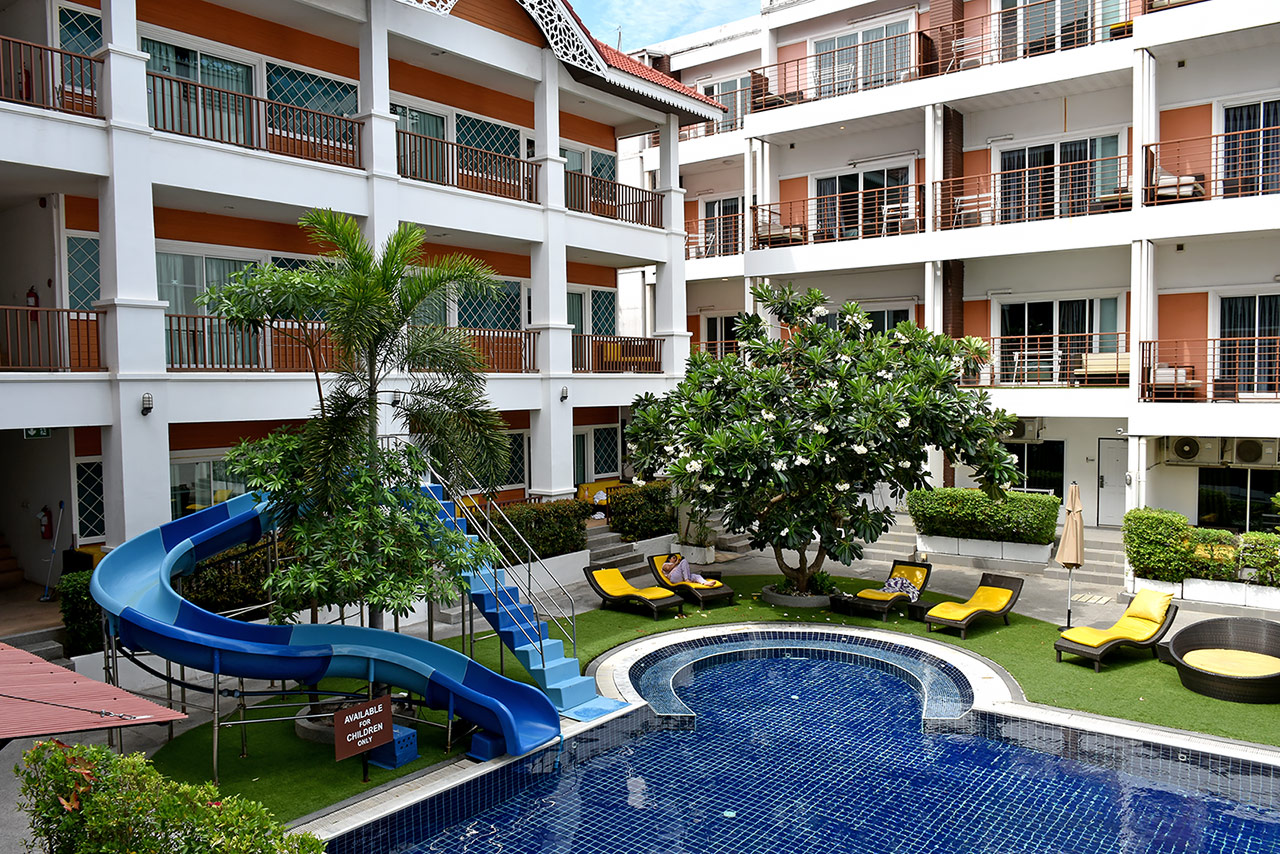
- Pay attention to whether there's a pool – in the heat and during low tides it's a lifesaver.
Want to understand districts and hotels in detail? We have a full guide with maps, photos and a video review: Pattaya districts and beaches – where to stay. There you'll find all the nuances, including tides and transport accessibility. We also have a separate article about tides in Pattaya – useful to know to choose the right beach for swimming at any time.
How to Get Around the City: Transport for "Dummies"

Songthaew – A Tourist's Best Friend
A songthaew is a pickup truck with benches in the back, a local route "tuk-tuk." In Pattaya they run on fixed routes: along the beach, along Second Road, to Jomtien and Naklua. The fare is 15–20 baht (0.45–0.6 USD) per ride.
How to use it: wave your hand at a passing vehicle, get in, press the bell button when you need to get off. Payment – you pass it to the driver through the window. But keep in mind that in the evening many songthaews operate as taxis with fares from 100 baht, so check the price in advance.
Taxi via Apps
Grab, Bolt, Maxim, InDrive apps work in Pattaya, as well as metered taxis. Prices for short trips (up to 3 km) – from 80 baht. Payment is cash only, no Russian cards work in the apps. In rain or at night prices can rise 1.5–2 times.
Renting a Bike or Car – Is It Worth It?
For beginners, renting transport is a dubious idea. Traffic is left-hand, and the local driving style is very unusual. If you're confident in your abilities, take a bike from 150 baht/day, a car – from 600 baht. You must have an international license and a deposit (usually 3000–5000 baht). For motorbikes you need a category A license specifically.
Want more details? All songthaew routes, taxi prices, rental advice and the subtleties of local traffic – in our detailed article: Transport in Pattaya – full overview with map and prices.
Money and Cards in Pattaya: What to Pay with and Where to Exchange
What Currency to Bring and Where to Exchange at a Better Rate
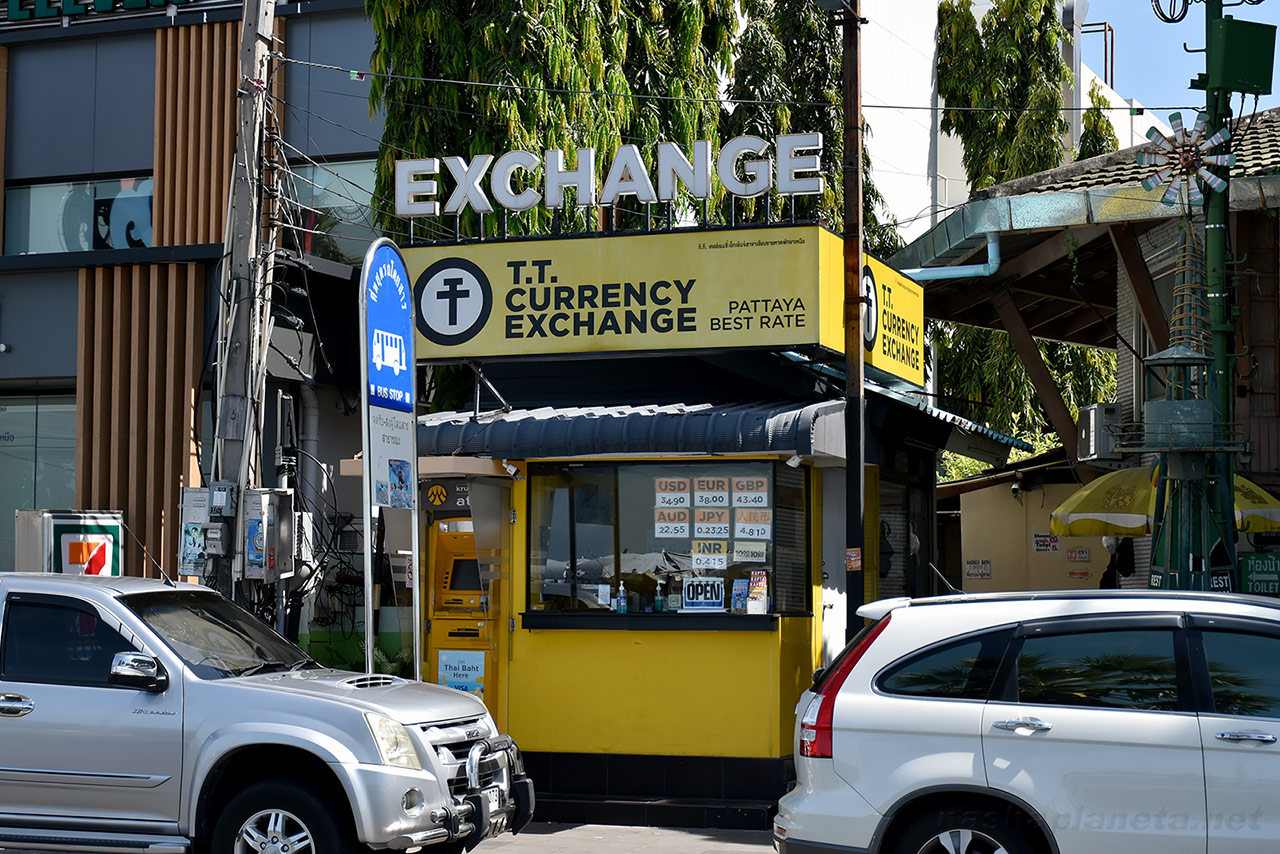
Bring dollars (new or old, but in perfect condition), euros or yuan. Dollars give the best rate. Exchanging rubles is extremely unprofitable – you'll lose up to 5000 baht per 100,000 rubles. Exchange at T.T. exchange chain offices – they have the best rates. Branches are all over the city, check the rate on their website. There are also good spots near Rompho market and Cash & Go on Pratumnak. More details in a separate guide: 4 places in Pattaya where we exchange money at the best rate.
Do Russian Cards and UnionPay Work
UnionPay cards from Russian banks (RSHB, ATB) work great in Thailand. Pay with them in shops, shopping malls, restaurants – the commission is minimal (built into the rate). It's better to open a card in yuan – that's more profitable for conversion. Mir cards don't work at all, anywhere.
At 7-Eleven, card payment is only accepted for purchases from 200 baht. In some private shops and cafes they may add 3–4% for acquiring.
ATMs and Commissions – How Not to Lose
Withdrawing cash from a card at ATMs is extremely unprofitable, try to use withdrawal only in extreme cases. The Thai bank commission is 200–220 baht per transaction, plus your bank's commission (for a ruble RSHB card – 1.5%, for a yuan card – 4%), so withdraw large amounts at once to reduce the impact of commissions. Overall, paying by card is much more profitable than withdrawing cash.
All the subtleties of currency exchange, card operation, good exchangers and budget calculations are in our full guide: Currency and money in Thailand – detailed guide. And if you want to know what's more profitable – dollars, a UnionPay card or crypto, read our separate post: Money and currency in Pattaya – personal experience.
Food and Water: How Not to Get Food Poisoning and Where to Eat Well
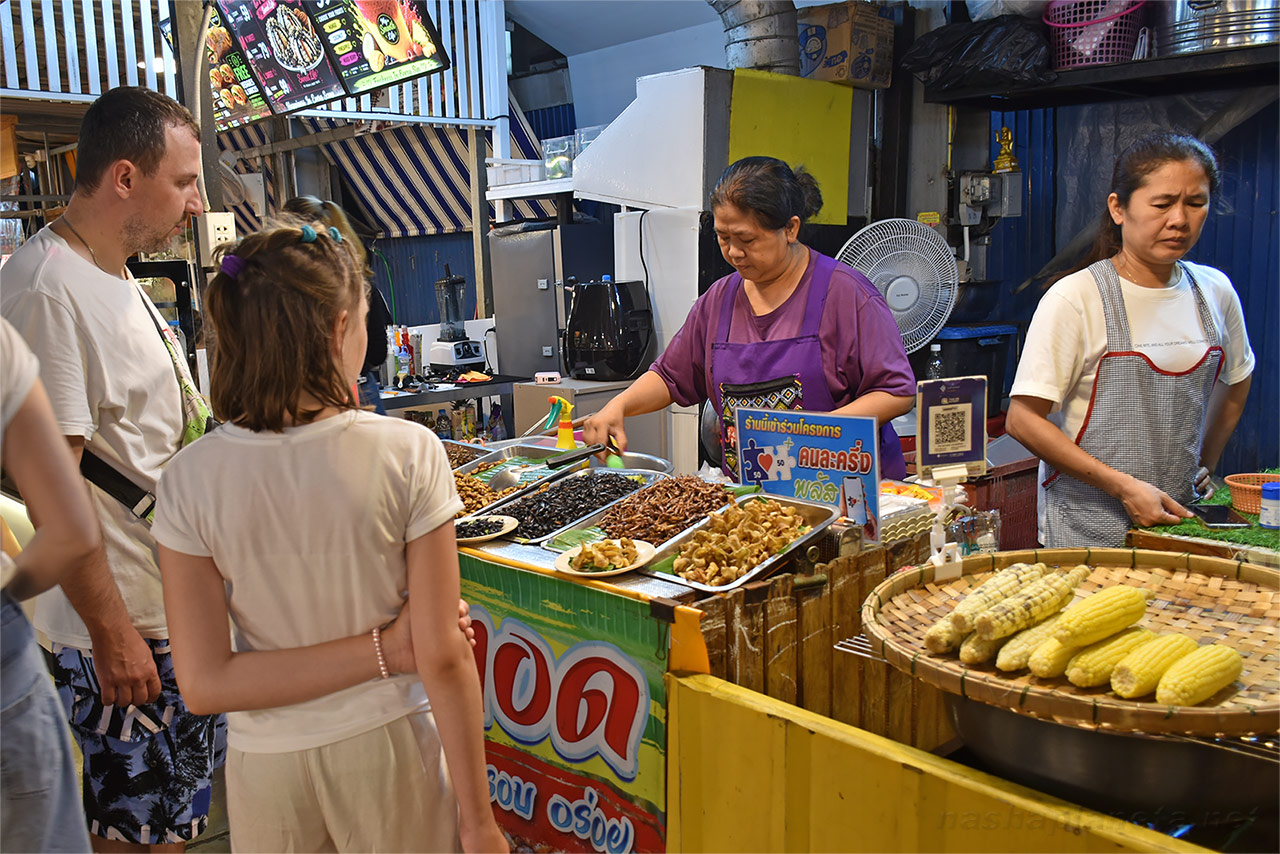
Street food is very common in Thailand, in food courts and small street cafes. And it's not just a tourist industry: a huge number of establishments work for Thais, which means it's cheap, tasty and safe there.
Where to Eat: The Main Options
- Street stalls and food carts (makashnitsy) – the heart of Thai cuisine. They cook in front of you, always fresh. A portion of rice with chicken – from 60 baht, a skewer – 10–20 baht. If you see a queue of locals – go for it.
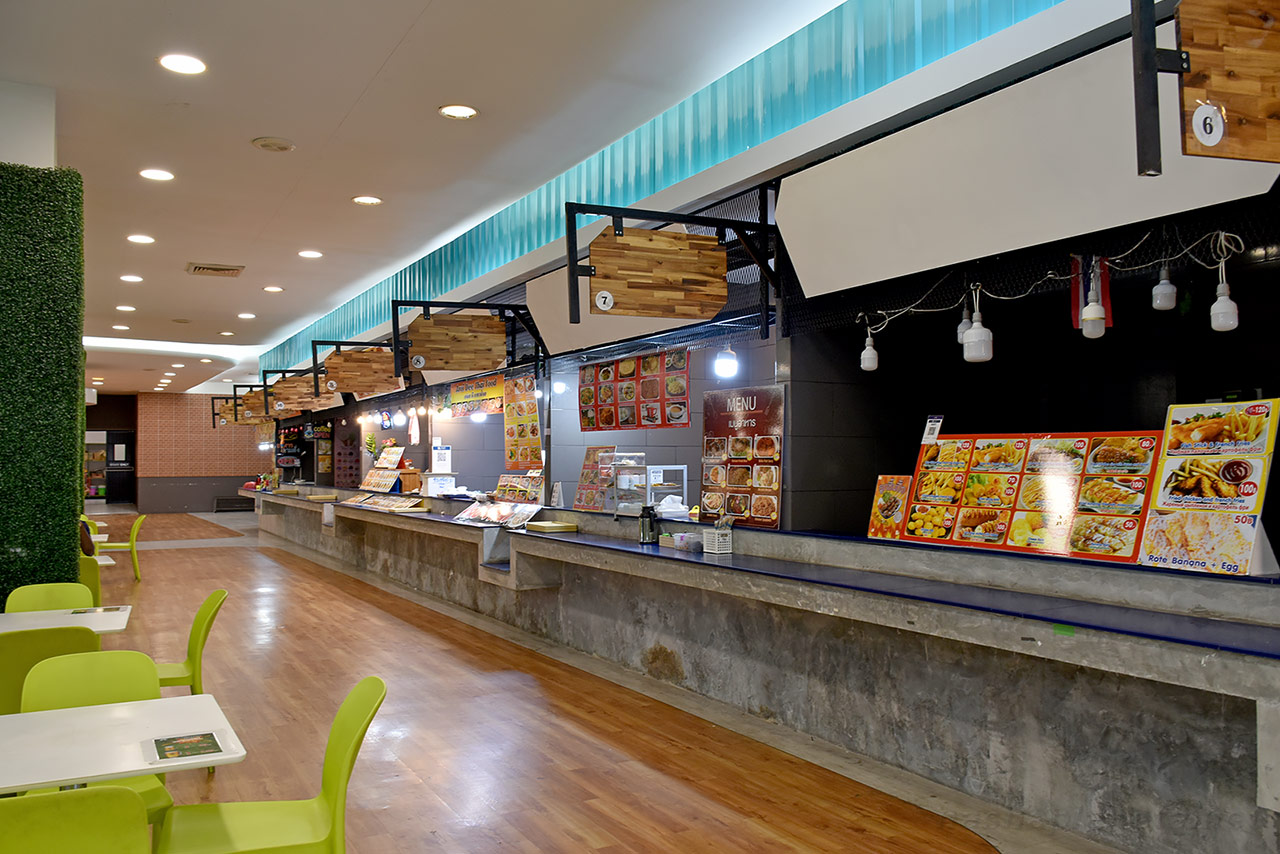
- Food courts in malls – clean, air-conditioned, prices from 60 baht per dish. The best: Pier 21 in Terminal 21, the food court on the 3rd floor of Mike Shopping Mall, Central Pattaya.
- Cafes and restaurants – from inexpensive street ones (from 60 baht for a huge portion) to panoramic ones with "nests" – for example, 3 Mermaids or The Sky Gallery on Pratumnak (book in advance, minimum bill from 700 baht). There's Russian, European, Indian cuisine and just about any cuisine.
- Takeaway – the Five Star chain and similar stalls around the city will pack it cheaply and tasty to go.
- Delivery – Grab Food: order via the app, pay cash on receipt (Russian cards don't work). Delivery 20–100 baht.
- Cooking yourself – groceries from 7-Eleven, Big C, Lotus, Makro. But in Thailand on holiday it's more interesting to try street food than to cook noodles in your room.
| Type of food | Cost per day (baht) | What's included |
|---|---|---|
| Minimum (street food + water) | 200–250 baht (5.97–7.46 USD) |
Breakfast from a stall, lunch in a food court, dinner on the street, water, fruit |
| Average (food courts + inexpensive cafes) | 400–500 baht (11.93–14.92 USD) |
Breakfast at the hotel, lunch in a food court, dinner in a cafe, beer or cocktail |
| Comfortable (restaurants, seafood) | from 700 baht (from 20.88 USD) |
Breakfast at the hotel, lunch with seafood, dinner with wine or cocktails |
What You Must Try
- Tom Yum – spicy soup with shrimp, mushrooms and lemongrass. Price in a cafe – 150–200 baht.
- Pad Thai – fried rice noodles with shrimp or chicken. From 60 baht in a food court.
- Som Tam – green papaya salad. Spicy, order with minimum heat.
- Mango with sticky rice – the main dessert, 50–80 baht.
- Roti – flatbread with banana and condensed milk, 20–40 baht.
- Seafood – grilled fish from 150 baht, a portion of rice with shrimp and squid – from 80 baht.
- Exotic – fried crickets, grasshoppers (20–50 baht), grilled crocodile (100 baht per portion).

Fruits: Where to Buy and How Much to Pay
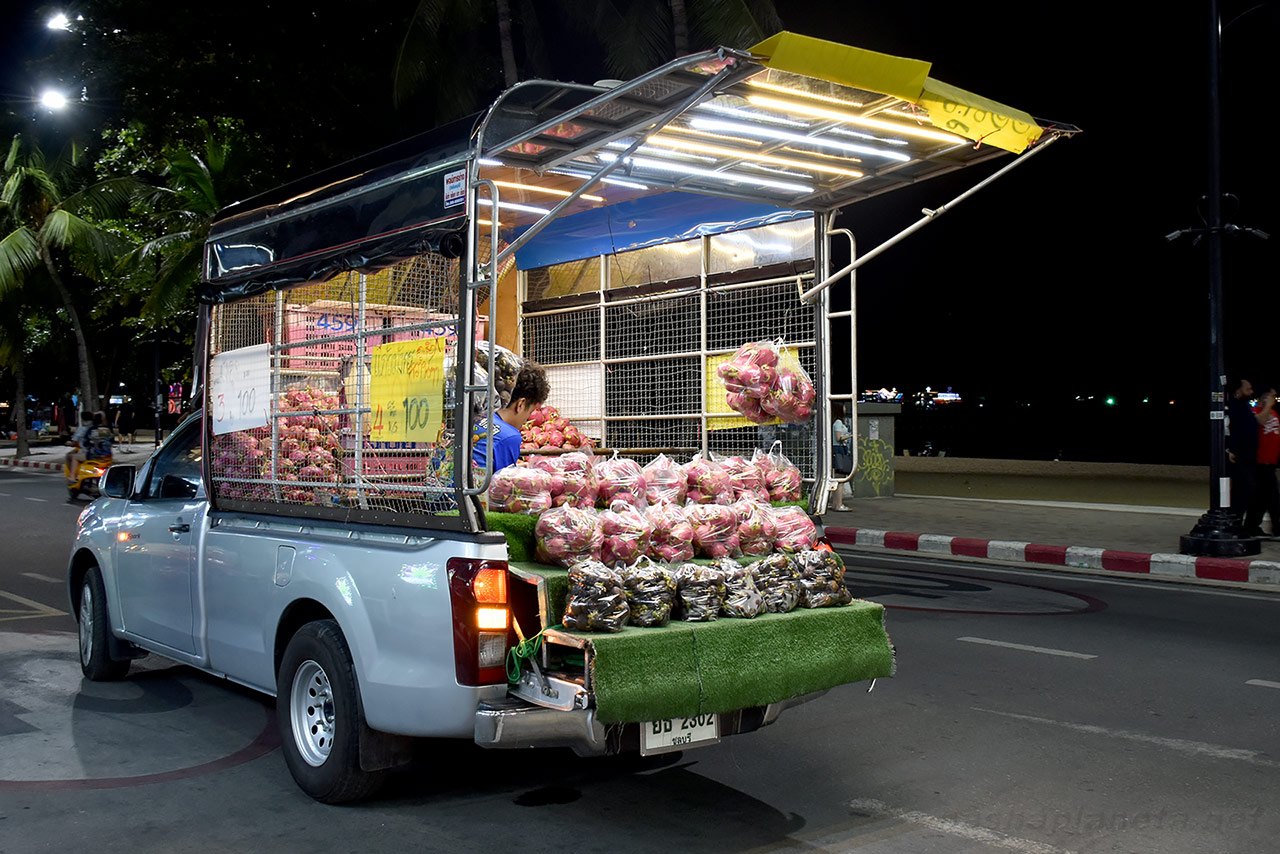
The lowest prices are from farmer delivery trucks: mango – 25 baht/kg, mangosteen – 33 baht/kg, rambutan – 33 baht/kg. At markets (Rompho, Thepprasit, Wat Chai Mongkhon) prices are slightly higher, but still cheap. Avoid tourist stalls near Mike Shopping Mall and similar places – prices there are inflated 2–3 times.
Night Markets: Where to Go for Atmosphere and Food
Top 4 for a first introduction:
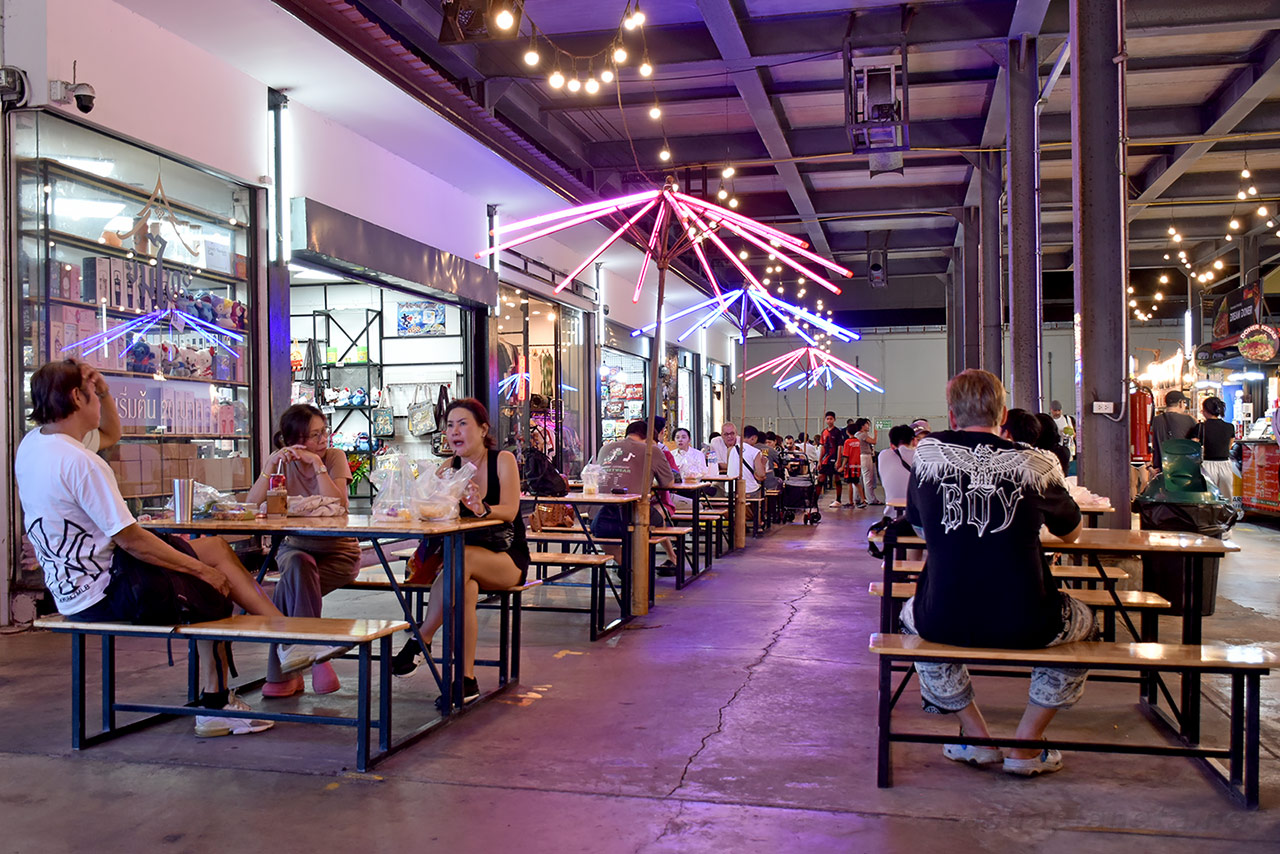
- Thepprasit Night Market (Jomtien) – the most authentic, works on weekends. Fish with noodles – 160 baht, beer – 75 baht.
- Rompho Market (Jomtien) – in the morning it's a fruit market, in the evening – a food court with bars.
- Russian market on Pratumnak – menu in Russian, dumplings, borscht, buckwheat. Prices slightly above average.
- Runway Street Food Market (center) – a market with a Boeing 747, a Ferris wheel and exotic food (crocodile, ostrich, insects). Prices above average, but the atmosphere is unique.
Drinking Water – Only Bottled
You can't drink tap water – even for brushing your teeth use bottled water. Water is sold everywhere: 7-Eleven, stalls, large bottles for 10–15 baht (0.45 USD). Ice in cafes and restaurants is usually made from purified water, but on the street it's better not to risk it.
Alcohol in Pattaya: What, Where and How Much

Thailand is a free country when it comes to alcohol. Here's what a beginner needs to know:
- Where to buy: cheapest in large chains Big C, Lotus's, Makro, Tops. 7-Eleven and Family Mart also have it, but the selection is smaller and prices are slightly higher. In cafes and restaurants the markup is usually moderate (beer is 10–20% more expensive), but in nightclubs prices skyrocket.
- Sale times: there used to be a ban from 2:00 PM to 5:00 PM, but now it's cancelled. Legally they sell from 11:00 AM to midnight. However, on major holidays and election days a full ban on sales may be introduced – follow the news and buy in advance.
- Drinking on the street: generally allowed, but not in temples, hospitals, schools and parks. On the beach or in a tourist area – no problem.
What local drinks are worth trying and how much they cost (supermarket prices):
| Drink | Volume | Price (baht / USD) | Note |
|---|---|---|---|
| Beer (Singha, Chang, Leo, Tiger) | 0.64 L | from 60 baht (1.79 USD) | The most popular drink |
| Beer (can) | 0.33 L | from 40 baht (1.19 USD) | — |
| Rum (Sang Som) | 0.33 L | from 145 baht (4.33 USD) | Quality local rum |
| Whiskey (Hong Thong, Mekong) | 0.33 L | from 145 baht (4.33 USD) | An acquired taste, but cheap |
| Rice wine (Sato Siam) | 0.62 L | from 36 baht (1.07 USD) | Sweet, 6.5% ABV |
| Wine (Monsoon Valley, Fresco) | 0.7 L | from 270 baht (8.05 USD) | Local wine – an acquired taste |
Want more details? All addresses, prices, fruit seasonality and a full breakdown of each market – in our detailed article: Food in Pattaya – where and what to eat (full guide).
When to Go: Weather and Seasons in Pattaya
The climate is tropical, hot all year round. But there are nuances:
- High season (November–February): dry, temperature +25…+30°C, ideal for the beach. Hotel prices are high.
- Hot season (March–May): +33…+35°C, humid. In April – the Songkran water festival.
- Rainy season (June–October): short showers, often in the afternoon. Prices are lower, fewer tourists.
| Jan | Feb | Mar | Apr | May | Jun | Jul | Aug | Sep | Oct | Nov | Dec |
|---|---|---|---|---|---|---|---|---|---|---|---|
Legend:
- 🍀 green – ideal (sun, warm sea)
- 🞬 olive – acceptable (short showers possible)
What clothes to bring by season:
In high season – light T-shirts, shorts, dresses, be sure to bring a windbreaker or light jacket for the evening (the breeze can be cool). In hot season – maximum cotton and linen. In rainy season – an umbrella or raincoat is best carried with you always (sold everywhere, from 30 baht).
What to See First: Top 6 for Beginners

- Nong Nooch Tropical Garden – a huge botanical park with perfect lawns, orchids and an elephant show where they paint pictures. Admission – about 500 baht. You can spend half a day there, there are restaurants on site.
- Sanctuary of Truth – a 105-meter wooden structure on the seafront, completely covered in carvings. Inside – a museum and philosophical ideas. Ticket about 500 baht. Better to come in the morning to avoid heat and crowds.
- Pratumnak observation deck + Big Buddha Hill – two locations next to each other. From the observation deck you get a panorama of Pattaya, and on the hill – a huge Buddha statue. Free, best view at sunset.
- Walking Street – the main pedestrian street with bars, clubs and go-go. Even if you're not a nightlife fan, take a walk in the evening – it's a show in itself. Be prepared for pushy touts, refuse politely.
- Cabaret shows (Tiffany, Alcazar, Colosseum) – a colorful transvestite show that surprises even experienced tourists. Tiffany is the oldest and most famous, Alcazar – modern, Colosseum – the largest in Pattaya. Tickets from 1000 baht.
- Koh Larn Island – 20 minutes by ferry from Pattaya (30 baht). White sand, clear water, several beaches. Sunbed rental – 100 baht. A great opportunity to spend a day at the sea without the city bustle.
Current ticket prices, opening hours and practical tips for all attractions – in our full guide: Pattaya attractions – what to see on your own.
Additional materials on the topic:
- Which zoo to choose in Pattaya
- What to see in Pattaya for free
- Where to go in Pattaya with kids – the best entertainment for a family holiday
- What to see in Pattaya on your own – the best routes and transport
- All temples of Pattaya – which one is worth visiting
- Pattaya nightlife – streets, bars and adult shows
Safety and Local Specifics: How Not to Get into Trouble
Scams and Tourist Fraud
Pattaya has two sides: bright resort life and the shadow industry of scams. All the schemes are long known, but tourists still fall for them – most often due to carelessness or haste. Here are the most common traps and how to avoid them:
- Inflated bar bill. You're brought a bill with drinks you didn't order, or prices inflated 2–5 times. Sometimes they add an "exit fee" of 500–1000 baht. Security won't let you leave until you pay. What to do: check the price in the menu before ordering and take a photo, and ideally pay for each drink right after ordering.
- "Lady drinks" – expensive drinks for girls. In go-go bars it's customary to treat the girls. The price of such a drink can be 3–5 times higher than usual – from 600 to 1000 baht per hour. Girls drink fast and ask for more. What to do: always check the lady drink price in the menu before ordering. Don't hesitate to refuse if the price seems inflated. Remember: the girls get a commission on every drink ordered.
- "Free" show. Touts promise "free entry." You go in – and then it turns out the cocktail costs 500 baht and you have to order it, and at the exit there's a bouncer. There are no free shows. What to do: before entering, clarify all the conditions: entry cost, drink prices, whether there's a minimum order. Ignore overly pushy touts.
- Card fraud. In some establishments they charge more from your card than you were supposed to pay. The cashier may "accidentally" enter an extra zero or process the payment twice. What to do: carefully check the amount on the terminal before entering your PIN. Check the amount on the receipt and in your mobile banking right after payment. If possible, pay in cash.
- Pickpockets in crowds. Pickpockets work on Walking Street at peak hours. Pattaya is among the cities with the highest risk of pickpocketing in the world. They steal wallets from back pockets and phones from hands. What to do: keep your bag or backpack in front of you. Don't carry your wallet in your back pocket. Take only a minimum of valuables with you. If you're robbed, immediately call the tourist police 1155.
- Renting a jet ski or bike. Scammers rent out equipment that already has hidden damage (cracks, scratches on the body). On return they "discover" these damages and demand a huge sum for "repair" – from 5000 to 50,000 baht. What to do: before renting, film the jet ski or bike from all angles, including the lower parts of the body. If the operator resists filming – that's a bad sign. Never leave your passport as a deposit – that's their main lever. Offer a cash deposit (2000–3000 baht) and a copy of your passport.
- Currency exchange: exchange only at official points (SuperRich, banks), don't trust street exchangers.
- Taxi and tuk-tuks: if not via apps (Grab, Bolt), always agree on the price before getting in. On songthaew – fixed price 15–20 baht, don't ask the cost, just get in and pay on exit.
- Photos in go-go bars: photographing girls or transvestites without permission may be charged or forbidden. Ask in advance.
Rules of Behavior in Temples and Public Places
- It's forbidden to touch a Thai person's head (for them it's a sacred part of the body).
- In temples cover your shoulders and knees, take off your shoes.
- Don't raise your voice, don't show aggression – Thais value "face."
- The king and royal family are inviolable, you can't criticize them.
What to Do in Emergencies
Emergency phone numbers: 191 (police), 1155 (tourist police, they speak English). In case of serious problems contact the Russian embassy: +66 2 234 9824.
More safety advice, typical scams and rules of behavior – in our article: Safety in Thailand – advice and rules.
Communication and Internet: How to Stay Connected

Thailand has excellent mobile coverage and fast internet. You have several options:
- Home operator roaming – convenient but very expensive. Without connected options, incoming and outgoing calls can cost hundreds of rubles, and internet – pennies per kilobyte, which quickly drains your account. If you decide to use roaming, be sure to activate a special option (e.g., "Roaming without worries" from Megafon or similar from other operators). But even with options it's still several times more expensive than a local SIM card.
- Local physical SIM card – the most profitable option. Can be bought at the airport, at 7-Eleven or at mobile operator stores. Operators – AIS, TrueMove H, Dtac (all have roughly the same coverage; AIS is slightly better in remote areas). You need a passport. There are ready-made tourist packages (for 7–15 days) or "prepaid" cards with the ability to choose a tariff. More about types and tariffs – in our guide to tourist SIM cards and on prepaid cards.
- eSIM – a modern option, can be bought online before departure. Great if your smartphone supports eSIM. Convenient: you arrive, turn it on – and the internet is already there. But note: many tourist eSIMs (e.g., via Airalo or Yesim) give only internet, without a phone number. If you need a local number, buy an eSIM from the operators themselves or on Trip.com (they accept Russian cards).
- Free Wi-Fi – available in all hotels, many cafes, shopping malls and even some public places. For calls and messaging via messengers it's usually enough, but for reliability it's better to have mobile internet too.
- VoWiFi (calls over Wi-Fi) – a technology that lets you call home numbers via Wi-Fi at the price of a local call, without roaming. If your operator and phone support VoWiFi, you can stay connected like at home by connecting to free Wi-Fi. More about VoWiFi.
What to do right after arrival (checklist):
- Turn off roaming and data transfer on your phone (to avoid accidental charges).
- Connect to free Wi-Fi at the airport to order a taxi or message your family.
- Buy a physical SIM card at an operator counter (passport and cash) or activate a pre-purchased eSIM.
- Check the balance and internet on the new SIM card – use the codes listed below.
Useful USSD codes (for all operators):
- *102*9# – find out your phone number
- *101*9# – check balance
- *101*1*9# – remaining internet traffic
- To extend the SIM card validity (if you have prepaid): *113*30# (extend for 30 days, costs 2 baht), *113*90# (for 90 days, 6 baht), *113*180# (for 180 days, 12 baht).
If you're planning a long stay or want to understand all the nuances (tariff comparison, buying prepaid, setting up eSIM, using VoWiFi) – read our full article: Communication and Internet in Thailand – full guide.
Summary: What's Important to Remember Before the Trip
- Visa – 60 days without problems, passport must be valid for 6 months. Current rules – in our article about the visa.
- TDAC migration card – fill it out before passport control. Instructions for filling out.
- Insurance – strongly recommended, choose with the active recreation option. Detailed insurance guide.
- Dollars in cash + UnionPay card – the ideal set. What's more profitable in Pattaya.
- From the airport – bus No. 389 for 139 baht or a transfer. Full information – in the article about the route.
- District – center for partying, Jomtien for beach and family. Details – in the district guide. It's also useful to know about tides in Pattaya.
- Transport – songthaew 15–20 baht, taxi more expensive. Detailed transport guide.
- Money – exchange at T.T. exchange, use a UnionPay card. Full currency guide.
- Food – street stalls and food courts are safe and cheap. Full food guide.
- Communication – a local SIM card or eSIM is much more profitable than roaming. Detailed communication guide.
- Weather – high season from November to February.
- Top attractions: Nong Nooch, Sanctuary of Truth, Pratumnak observation deck + Big Buddha Hill, Walking Street, cabarets (Tiffany, Alcazar, Colosseum), Koh Larn. Detailed guide to attractions. Also read: which zoo to choose, what to see for free, where to go with kids, the best routes and transport, Pattaya temples, nightlife.
Pattaya is a resort that can be different. For a beginner, the important thing is not to worry but to enjoy. Use our guide, and your first trip will go smoothly. And if you want to dig deeper into the details, read our full Pattaya guide – there's even more useful information there.
Our advice: don't try to do everything in one trip. Pattaya is huge, and even in a week you'll only see a small part. Better to focus on what interests you and leave something for the next trip.
Want to learn even more? Check out our full Pattaya guide: Pattaya on your own: full holiday guide with prices and tips. There you'll find detailed breakdowns of districts, beaches, food, shopping and tours.