 Thailand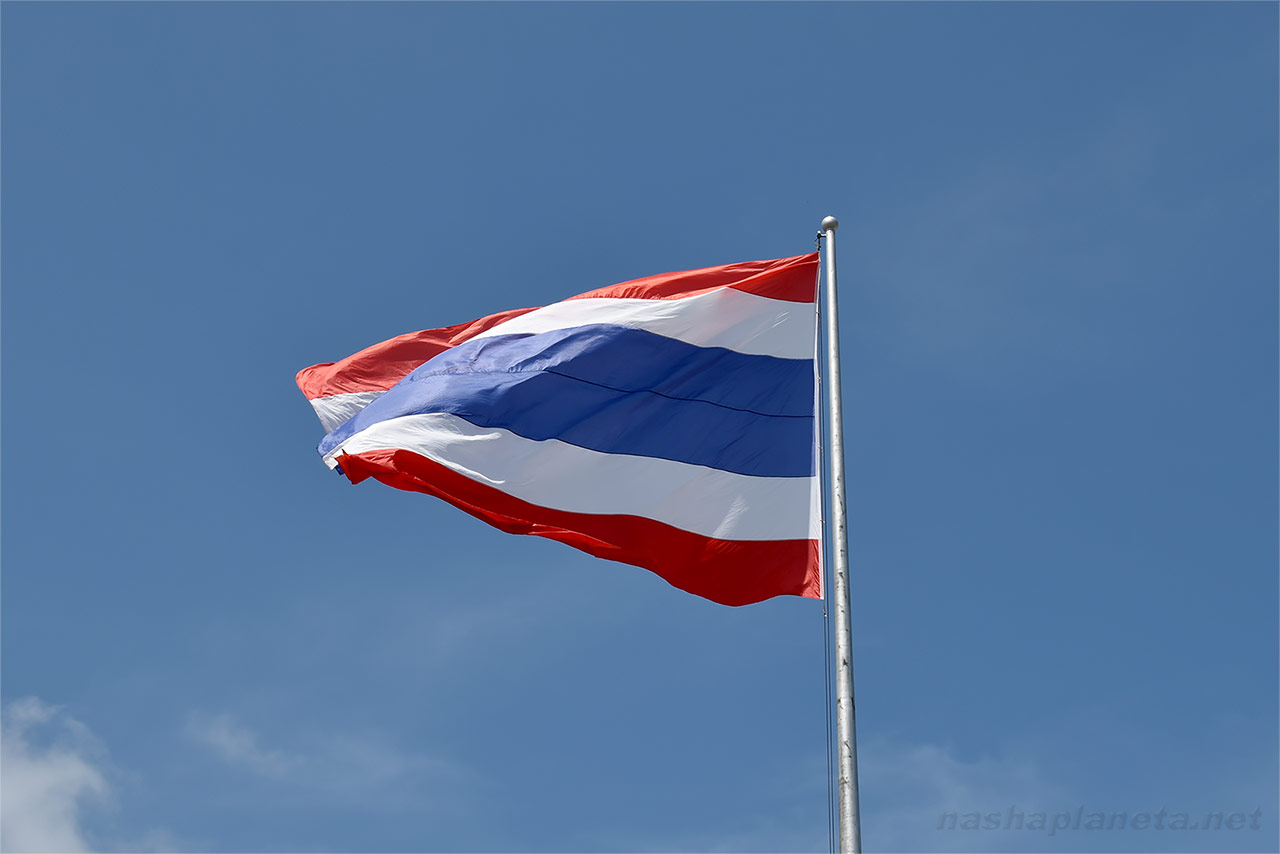
The information on this page about Thailand's customs rules is taken from official sources of the Thai Customs Department and is current for 2026. However, if you have any questionable items, we recommend double-checking the current customs info on the official website http://www.customs.go.th.
Another important point! When you return home from Thailand, you need to comply not only with Thailand's rules but also with the rules of your destination country. So we recommend familiarizing yourself with Russian customs rules for tourists.
To start, here are common questions and answers about importing and exporting in Thailand. Although they don't directly relate to customs rules, you should know about them:
- What and how much can you carry in checked and carry-on luggage to Thailand? First of all, you should know that baggage and carry-on allowances and customs rules are different things. Baggage and carry-on allowances are set by airlines and have nothing to do with a country's customs rules. You can find your baggage and carry-on allowance in your ticket or on the airline's website – they differ by airline and even by fare within the same airline.
- Can you import or export fruit not in a basket? Yes, there are no customs rules or airline rules that require passengers to carry fruit only in baskets. So you can bring fruit from Thailand in a bag, backpack, suitcase, or anything else, as long as it complies with the airline's baggage allowance.
- Can you carry fruit in checked luggage? Yes, you can carry fruit in both checked and carry-on luggage.
- How much fruit can you carry in carry-on or checked luggage? You can carry as much as your ticket's baggage allowance permits (they differ by airline and fare), but don't forget that what you bring on the plane still needs to be imported into your destination country. And here the customs rules of the destination country apply – for example, Russia allows no more than 5 kg of fruit and other plant products per person.
- Is it true that airlines have banned taking fruit baskets on planes? No, that's not true. If everything complies with the airline's baggage and carry-on weight, size, and number of items rules, you can carry a fruit basket. Read more here
- Is duty-free alcohol counted together with alcohol in checked luggage at customs? Yes, it's all counted together. If you're carrying 1 liter in your luggage and buy another 1 liter at the airport duty-free, you'll be carrying 2 liters through customs.
- How much alcohol can you bring into Thailand in total? No more than 1 liter per person over 20 years old, including alcohol from duty-free stores.
- Can you bring electronic cigarettes or hookahs? No. Thailand bans the import and sale of electronic cigarettes, e-liquids, and hookahs. Violations carry severe penalties: up to 10 years in prison and/or a fine of up to 500,000 baht (about 1,500 USD).
- Can you bring meat or dry-cured sausage? No. There's a sanitary ban on importing meat and meat products.
And now, in detail, everything you need to know about Thailand's customs rules:
How to go through customs in Thailand: green and red corridors
In Thailand, as in the rest of the world, customs points use the "green" and "red" corridor system. Here's how it works:
- If you have nothing to declare, go through the "Green Corridor" – this is where most travelers go.
- If you have goods that you need to declare and possibly pay duty on, go through the "Red Corridor."
Customs officers have the right to conduct random checks in the green corridor. If they find goods subject to declaration, they will be confiscated, and you may be fined up to four times the value of the goods, including duty, or even face up to 10 years in prison.
So if you're unsure which corridor to use, it's recommended to choose the "red corridor" to avoid misunderstandings.
According to the law, you can bring duty-free goods into Thailand with a total value of no more than 20,000 baht per person (601 USD, )Thailand currency). These goods must be strictly for personal use, in reasonable quantities, and must not be prohibited. This means that theoretically, even an expensive camera in its box worth more than 20,000 baht would require you to pay duty.
In practice, customs officers rarely check the value of personal items unless you draw attention to yourself. The main thing is not to exceed the limits on alcohol and cigarettes.
Nevertheless, if you're bringing in items worth over 20,000 baht (per person), you can declare them and pay the duty upon arrival at the airport. If the total value of the items exceeds 80,000 baht, they will be confiscated and placed in storage for further customs clearance.
You'll also be exempt from import duty on items if you previously purchased expensive equipment in Thailand and registered it when you left. This sounds a bit complicated, but the point is that if you frequently enter and leave Thailand with expensive equipment purchased in Thailand, it's better to register it upon departure as intended for re-import, so you don't have to pay duty on it when you return.
Limits: how much alcohol, cigarettes, and goods you can bring into Thailand
- Personal and professional items with a total value of no more than 20,000 baht (601 USD);
- Alcoholic drinks – no more than 1 liter per person over 20 years old, including alcohol from duty-free stores;
- 200 cigarettes or 250 grams of cigars or smoking tobacco per person over 20 years old.
It's worth noting that while checking the value of personal goods is not always straightforward and Thai customs officers don't pay much attention to it, bringing in alcohol and cigarettes over the limit is so obvious that there have been cases of tourists being fined upon entry. And if you're caught with alcohol or cigarettes over the limit, rest assured that customs officers will check your entire luggage and count the value of all your belongings.
As for electronics, one or two smartphones, one laptop, one camera – no questions asked. Several identical devices in boxes already looks like a commercial shipment and could attract attention.
How much currency you can bring in and out of Thailand without declaration
If you're carrying less than 20,000 USD in any currency – no need to declare anything. More than that – mandatory declaration, but without duty. Failure to declare currency over the limit is a criminal offense and confiscation
You are allowed to bring in and take out any amount of Thai and foreign currency from Thailand. However, any foreign currency equivalent to over 20,000 USD is subject to mandatory declaration upon import and export. You won't have to pay any duties, just declare the amount and answer the customs officer's questions. The declaration procedure at Bangkok Suvarnabhumi Airport is done on the fourth floor and takes no more than 15 minutes.
When exporting Thai currency over 50,000 baht, you also need to go through declaration without paying any duties. However, when exporting Thai currency to Laos, Myanmar, Cambodia, Malaysia, and Vietnam, the amount cannot exceed 500,000 baht.
What's prohibited to import/export
Note! The prohibitions and restrictions below apply only to tourists. Different (usually stricter) rules apply for commercial purposes.
It's prohibited to import and export from Thailand:
- Obscene literature and images
- Pornography
- Items depicting the Thai national flag
- All types of drugs
- Counterfeit money and securities
- Counterfeit royal seals and official seals
- Items infringing intellectual property rights (counterfeit cassettes, discs, software, etc.)
- Counterfeit products
Smuggling drugs, pornographic materials, and forged documents in Thailand carries criminal liability, including lengthy prison sentences. Thailand is very strict on these matters, so even a small "souvenir" batch can lead to serious trouble.
There are also items that are allowed to be imported/exported only with a permit from the relevant authority:
- Import/export of antiques and works of art (including large Buddha statues over 12–15 cm – permit required; small souvenirs and magnets can be freely exported)
- Import of medications and food products
- Import/export of antiques and works of art
- Import of weapons, ammunition, explosives, pyrotechnics, replica weapons
- Import of animals/fish/plants
- Import and use of drones in Thailand requires registration with the Civil Aviation Authority of Thailand (CAAT)
Jewelry (including processed precious stones) purchased in Thailand and being exported must be declared. You'll need to present purchase documents (receipts, certificates).
In addition to customs restrictions when entering/leaving the country, you may encounter other issues. Some items, while not directly prohibited for import/export, may cause problems at customs because their trade (buying and selling) is prohibited in Thailand. These include: ivory and ivory products; products made from shells of rare sea turtles; dried seahorses in keychains, embedded in plastic, etc.; unprocessed precious stones (usually sold at markets near the Myanmar border); tiger parts and products (skins, fangs, claws, bone-based medicines); stuffed bats and crocodiles; corals and coral products.
Additional information on the official website: http://www.customs.go.th
Can you export fruits and shells from Thailand: key prohibitions
There's no ban on tourists exporting exotic fruits from Thailand. You can export as many and whatever fruits you want (except durian, which is banned from airport buildings and planes), but of course no more than your airline's baggage weight allowance.
There's a myth that fruits can only be exported from Thailand in special plastic baskets. This is not true – you can pack them in bags, boxes, or luggage. We recommend putting fruits in checked luggage, as theoretically, fruits in carry-on could be confiscated during security screening. In practice, we've never encountered this and have always carried fruits on board in carry-on luggage.
As for durian, it cannot be brought into buildings or on board in any form. We strongly advise against trying to pack it in luggage even in sealed packaging – the smell will still seep through, which can ruin your clothes and result in a fine. Better enjoy this fruit on the spot, and as a gift, buy durian-flavored candies – they're sold in all stores.
However, don't forget that there may be restrictions on importing fruits into the country you're traveling to from Thailand. For example, if you're returning to Russia from Thailand, you can bring no more than 5 kg of fruit per person (for more details, see what tourists can bring into Russia here).
Exporting shells and corals is prohibited by law. Not only is it forbidden to export them, but also to collect them on beaches and reefs. Penalty – up to 4 years in prison. If you really want to take a shell as a souvenir – buy it at a souvenir shop with a receipt that says "Souvenir shell, not endangered species." This way, customs won't have any questions.
How to get a 7% VAT refund (Tax Free) from Thailand

What is VAT Refund and how it works in simple terms
In Thailand, tourists can get a 7% VAT refund on purchases when leaving the country. This is not a discount at the store, but a tax refund you'll receive at the airport before departure. But there's an important nuance: you can't get a refund on just any purchase. To get the money, you need to take care of it at the shopping stage.
Key conditions for VAT refund
- Buy goods only from stores that participate in the VAT Refund program (they usually have a special logo).
- The purchase amount on one receipt must be at least 2,000 baht (60.12 USD).
- The total value of goods on all receipts for refund must be at least 5,000 baht (150 USD). For example, if you have one receipt for 3,000 baht – you won't get a refund.
- No more than 60 days should pass between purchase and departure.
- You must depart Thailand through an international airport.
Step-by-step guide: how to get the refund
-
At the store – fill out the documents
When you buy an item, ask the seller right away if a VAT Refund can be processed. In large stores, this is done at Customer Service, not the checkout. You'll need your passport to process it.
You'll receive a VAT Refund Application for Tourist (P.P. 10) form – a yellow A4 sheet with the original receipt attached. Keep this form until you leave the country! -
At the airport before checking in luggage – get a stamp
This is the most important step. Before checking in your luggage, find the VAT Refund office at the airport (usually in the departure area, before passport control). A customs officer will stamp your forms. Without this stamp, you won't get a refund!
We recommend not checking in your luggage before visiting the office – the officer may ask to see the goods, especially if their value exceeds 8,000–10,000 baht. Show the goods, get the stamp, then check in your luggage. -
After passport control – get your money
Check in for your flight and go through passport control. In the departure area, after duty-free, find the VAT Refund counter. Show your passport and stamped forms – and get your money.
Important nuances
- A 100 baht fee is charged for processing – it will be deducted from your refund.
- If the refund exceeds 30,000 baht, you won't get it in cash – the money will be transferred to a VISA or Mastercard or issued as a check.
- For expensive items (jewelry, watches, gold), officers may conduct an inspection.
Official rules for VAT refund
- You are not a resident of Thailand and have been in the country for less than 180 days in the current year.
- You are not a pilot or crew member.
- No more than 60 days have passed since purchase.
- You are departing Thailand through an international airport.
What documents are needed for the refund
- Passport
- Completed VAT Refund form (P.P. 10)
- Original receipts
Remember the main thing: process the refund documents at the store, don't throw away the yellow forms, and before checking in for your flight, be sure to visit the VAT Refund office at the airport to get a stamp. Without the stamp, you won't get your money.
For more details, see the separate article on the VAT refund procedure.
In summary, the main things for tourists to remember: 1 liter of alcohol, 200 cigarettes, 20,000 baht for personal items. Electronic cigarettes and drugs are strictly prohibited. You can export almost any fruit except durian, and not necessarily in a basket – that's a myth. Process your VAT Refund at stores and don't forget to get a stamp at the airport before checking in your luggage to save on shopping. Safe flight!
Customs clearance of cargo
- Customs clearance of cargo in Thailand (commercial and private). At ports and airports. "All-inclusive" service.
- Logistics in Thailand. (Container delivery to door)
- Manufacturer selection and production organization in Thailand (Brand registration in Thailand and production under your own label)
- Export of food products from Thailand: frozen, fresh fruits and vegetables, dried fruits, juices and beverages, snacks, fish.
- Export of cosmetics and skincare products.
- Export of raw materials (for food production)
- Organization of a trade representation in Thailand.
"THAI RUSS ALLIANCE CO., LTD"
Phone: +66 99 33 44 357
WhatsApp: +66 99 33 44 357
E-mail: tra@thai-rus.ru
🌐 Official website: http://thai-rus.ru/