 Thailand
On September 15, 2026, new visa rules came into force in Thailand that turned the usual life of long-stayers upside down: visa-free entry was cut from 60 to 30 days, and land borders can now be crossed no more than twice per calendar year. The schemes with endless visa runs that worked for years no longer work – the PIBICS biometric system and unified database record every entry, and changing your passport won't solve the problem.
However, the good news is that there are still plenty of legal ways to live in Thailand long-term – from extending visa-free status at the immigration office to the 5-year DTV visa. This article is a complete breakdown of all working schemes for 2026: how many days, how much money, what to expect from immigration and what backup plans to keep in mind. Everything is based on personal travel experience and real photos – no made-up stories or stock images.
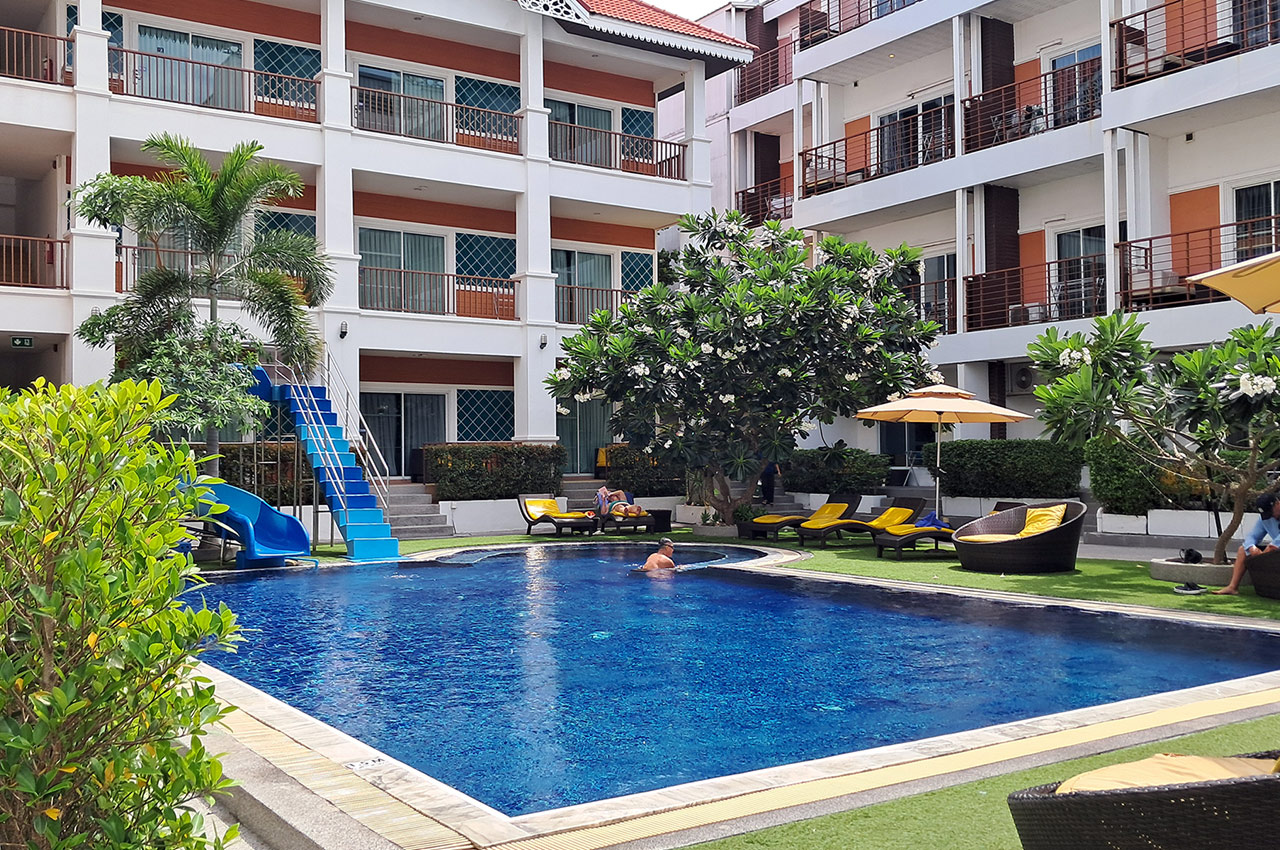
Many tourists, when first thinking about moving to Thailand, imagine it by analogy with other countries: bought real estate – got a residence permit, invested money – and live in peace. In Thailand such a scheme doesn't work. Getting citizenship and living peacefully in the country without worrying about the visa question is difficult to the point of impossible: for this you need to live here for at least twelve years, know Thai and have permanent residence. This matter is very expensive and long, accessible to only a few.
Owning real estate in Thailand doesn't give any visa benefits to foreigners. You can buy a condo apartment or a villa, but the visa question will still have to be resolved on general grounds – unlike some countries where square meters automatically open the path to residence. Buying housing here gives ownership rights and the ability to live in it, but no more – by itself it isn't a basis for long-term stay.
There is an investment visa, but it's not all that simple either: it's not "bought an apartment – got residence." It requires depositing a significant amount into the Thai economy – we're talking about buying government bonds or investing in a Thai company, not purchasing residential real estate. The amounts run into millions of baht, which doesn't suit everyone and isn't the optimal option for budget travelers. There's also the Long-Term Resident (LTR) Visa program, which allows investing in Thai real estate – from 500,000 USD for "wealthy global citizens" or from 250,000 USD for "wealthy pensioners." However, even LTR doesn't give the right to own land – foreigners are still limited to the 49% quota in condominiums and 30-year leasehold agreements.
Good to know: many types of visas can be applied for not only by the main applicants but also by family members – spouses and children under 20. For example, if one family member gets a DTV, the spouse and children can get it as dependent family members. The document requirements in that case are simpler: mainly you need to confirm the relationship (marriage or birth certificate), provide passports and confirm financial resources. This also applies to other long-term visas – student, retirement, business visa.
Nevertheless, there are quite a few legal and inexpensive ways to stay in Thailand for as long as you want: constantly extending visa-free stay (the so-called "visa run"); getting and extending a tourist visa; getting a long-term non-immigrant visa; getting a retirement visa. Well, in general, now let's go through everything in more detail:
All visas except DTV don't give the right to work in Thailand. Even a business visa (B) is issued on the basis of an already registered company or employment contract, but by itself it isn't a work permit – a separate Work Permit is needed for that. DTV allows you to work remotely, but strictly for companies and clients located outside Thailand.
Regardless of visa type: if you stay in Thailand continuously for 90 days, you're required to file a 90-day report (form TM47) with the immigration bureau. This applies to all long-term visas – DTV, ED, O-A, O-marriage, B. Missing the report risks a fine of up to 5,000 baht, and in some cases – visa cancellation. The counter resets every time you leave Thailand and re-enter.
Visa-Free Entry to Thailand: 30 Days and How to Extend for Another 30
Visa-free entry for 30 days is available to citizens of 60 countries and territories, including Russia. The previously valid 60-day visa-free regime for 93 countries was abolished on September 15, 2026. This isn't a visa on arrival – instead, you just get a stamp in your passport with the date of entry.
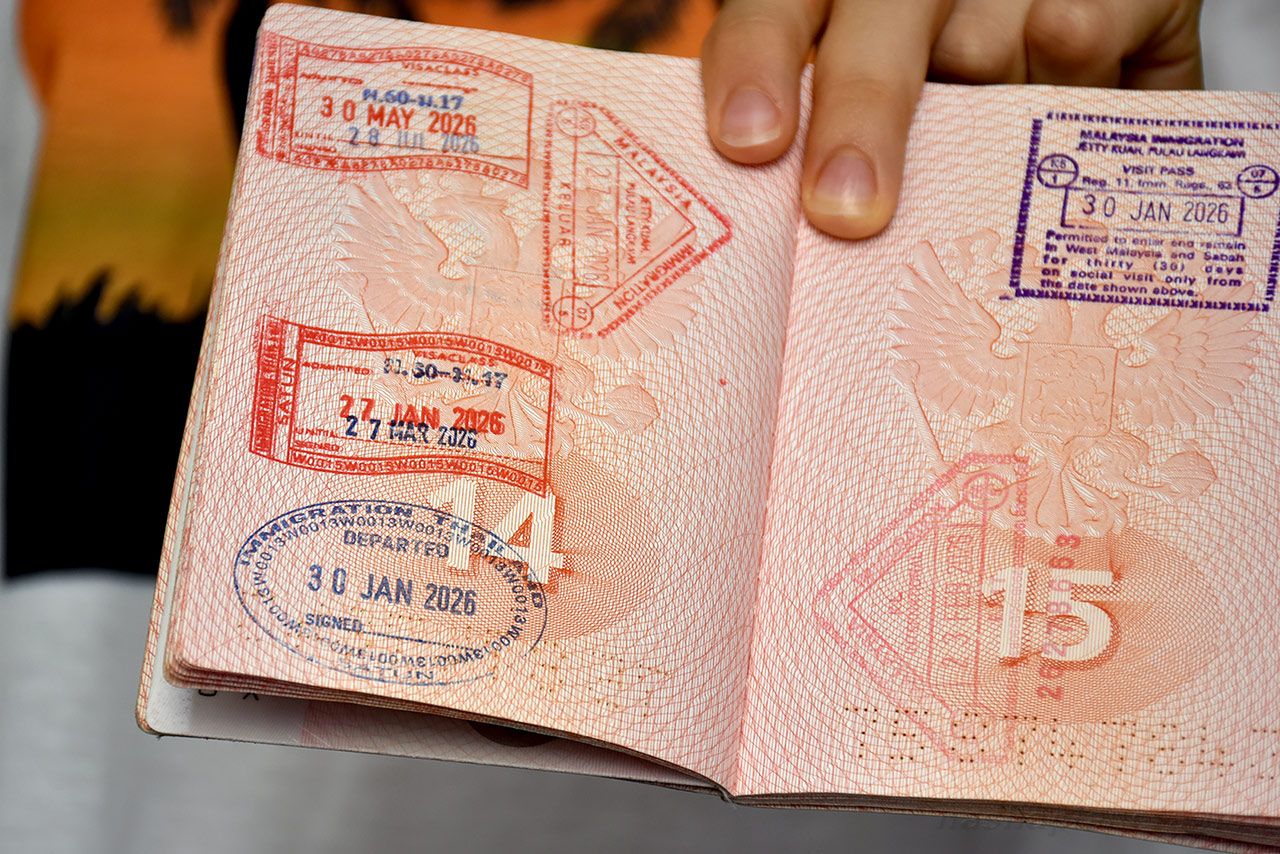
To get such permission you need to meet the conditions: your passport must be valid for the entire period of stay in Thailand and you must have a ticket out of Thailand to any country. It should be noted that the ticket isn't always checked, but that doesn't remove the requirement.
Since September 15, 2026, visa-free entry through land (overland and water) borders is limited to two entries per calendar year. Air entries still have no quantitative limits, the main thing is not to exceed the permitted length of stay. The limit is counted from January 1 of the calendar year and doesn't reset with the introduction of the new rules.
You shouldn't really count on visa-free entry now – it's just a short starting segment. For long stays it needs to be combined with other methods: extending at the immigration office or leaving for a visa. At the same time it's important to remember that a repeat stamp (border run) and extension aren't guaranteed – an officer can refuse, so you always need backup plans and to calculate the route in advance.
Extension at the Immigration Office – Another 30 Days
If 30 days isn't enough for you, you can extend your visa-free stay by another 30 days at the immigration office. It costs 1,900 baht (56.53 USD). Total – your legal 60 days. The extension is available only once per entry – you can't extend visa-free status a second time in the same visit.
To extend you need to provide:
- Application on form TM7
- TM30 registration form (issued by the landlord or at the hotel reception)
- Photo 4×6 cm
- Copy of passport (page with photo and page with entry stamp)
- Original passport
- Cash 1,900 baht
There are immigration offices in almost every tourist city. The extension can be done yourself or through "turnkey" agencies.
Visa Run and Border Run – What's the Difference and What Works in 2026
Many people confuse these two concepts, although the difference between them is fundamental.
-
Border run
This is a short trip abroad followed by re-entry to get a new visa-free stay stamp. You simply cross the border, leave Thailand and immediately return, getting a new 30-day stamp. It used to be the easiest way to extend your stay, but now it's significantly limited: land borders – no more than 2 entries per calendar year, and frequent re-entries trigger additional checks and can lead to refusal.
-
Visa run
This is a trip to a third country (e.g., Malaysia, Laos, Vietnam) to submit documents at a Thai consulate and get a new visa – tourist, student or another. This format is still legal, but requires a full package of documents and is increasingly accompanied by stricter checks from consulates. The main advantage – you get not a 30-day stamp, but a full 60-day visa with the option to extend for another 30. Read about how to apply for a tourist visa in the section below.
In major resort cities of Thailand – Pattaya, Phuket, Chiang Mai – there are specialized agencies that organize visa runs "turnkey": they help with documents, transfer to the border and back, submission at the consulate. The cost of such a service is from 6,000 to 12,000 baht (179 – 357 USD) depending on the destination and included services (transport, hotel, accompaniment). Organizing it yourself will be cheaper, but agencies assure that thanks to their connections they guarantee getting the visa. We can't verify these guarantees, so we won't recommend a specific agency – choose yourself, based on reviews.
The most convenient destinations for visa runs: Laos, Malaysia, Cambodia, Vietnam. Russians don't need a visa to visit Laos, Malaysia and Vietnam.
If you're refused entry at a land border, don't panic. The most reliable backup plan is to fly to Thailand on an international flight: air entries have no quantitative limits. You can also try crossing the border on another day or in another shift – the decision is made by a specific officer, and the human factor is still a thing.
TR Tourist Visa: 60 + 30 Days – How Long You Can Live on It
The tourist visa, officially TR-Visa (Tourist Visa), remains one of the simplest and most affordable ways to legally stay in Thailand longer than 30 days. It gives the right to stay 60 days with the option to extend for another 30 days at the immigration office. Total – 90 days legally.
Since January 1, 2025, all Thai visas are issued fully electronically through the official portal thaievisa.go.th. Submitting documents at consulates in paper form is no longer practiced. In Russia, the visa can only be obtained through the consular department of the Thai embassy in Moscow.
How to apply for TR-Visa:
- Register at thaievisa.go.th and fill out the electronic form.
- Upload scans of documents: passport (valid for at least 6 months, at least 1 blank page), photo, hotel booking, return ticket or ticket to a third country, bank statement.
- Pay the consular fee by card. The cost is about 40 US dollars (may vary depending on the country of submission).
- Wait for approval. Processing time – from 3 to 10 working days (in high season it can go up to 15 working days).
- Get the PDF file with the visa by email. Print it and present it at the border.
Important: application processing starts strictly from the date of payment, not from the moment documents are uploaded. Submit your application at least 2–3 weeks before the trip.
Where you can apply:
- In Russia – only through the consular department of the Thai embassy in Moscow (electronic submission, card payment).
- In countries neighboring Thailand – in Laos (Vientiane, Savannakhet), Malaysia (Kuala Lumpur, Penang), Vietnam (Ho Chi Minh City, Hanoi), Cambodia (Phnom Penh). This is a convenient option for those already in Asia. The process takes 2–5 working days. In Laos and Myanmar cash payment at the consulate is available, which is convenient without a foreign card.
Information on applying for a tourist visa to Thailand in Russia and other countries is here.
Schemes for Legal Long Stays: Visa-Free + Tourist Visa
This method is considered one of the most optimal in terms of cost and legality. The idea is that you combine a short visa-free entry with getting a full tourist visa in a neighboring country. Here are two working algorithms.
Important: these are just scheme options, and they aren't guaranteed. Everything depends on the specific situation: the history of your stamps in your passport, the current policy of the authorities and even the opinion of a specific border officer who makes the decision. So you always need a backup plan.
Scheme A: Visa-Free → Extension → Visa Run
You enter Thailand visa-free for 30 days. At the end of the period you extend at the immigration office for another 30 days (60 total). Then you leave to a neighboring country, where you apply for a tourist visa for 60 days at the consulate. On return you live another 60 days, extend for 30 at immigration – 90 total. After that you leave again for a visa. Such a scheme gives almost continuous legal stay.
Scheme B: Visa-Free → Visa Run → Tourist Visa
You enter visa-free for 30 days. Then you immediately leave to Laos or Malaysia, apply for a tourist visa for 60 days and return. You live 60 days, extend for 30 – 90 days total with one trip. When the period is coming to an end, you repeat the cycle. If the visa is refused, you can return visa-free (if the land entry limit isn't exhausted) or use a flight.
In any scenario it's important to consider the conditions of visa-free entry (having a ticket out of Thailand) and the requirements for getting a visa (hotel booking, bank statement). And most importantly – always have a backup plan: if you weren't allowed in at a land border, fly by plane or try on another day.
DTV Visa – 5 Years, 180 + 180 Days per Entry
The Destination Thailand Visa (DTV) is a relatively new type of visa that appeared in 2024 and became an excellent alternative to endless visa runs. It's suitable for remote workers, freelancers, digital nomads, as well as those participating in soft power programs: Muay Thai, Thai cooking, sports training, medical treatment, seminars, cultural festivals.
Note: since 2026 language schools are no longer considered soft power for DTV. If you want to learn Thai, apply for the ED student visa.

DTV is issued for 5 years with the right of multiple entry. Each time you enter you can stay in the country up to 180 days, and then extend your stay by another 180 days at the immigration office. Total – almost a year of continuous stay in Thailand per entry.
Extension for 180 days: costs 1,900 baht, submitted on form TM7 at the local immigration office. The extension is available once per entry.
On August 31, 2026, important changes came into force: DTV can now be applied for only in the country of your citizenship or permanent residence. Submitting an application from a neighboring country, like a tourist visa, is no longer possible. A certificate of no criminal record from the country of citizenship or residence, issued no earlier than 6 months before submission, is also required.
Who can get DTV:
- Employees with a remote work contract for a company outside Thailand
- Sole proprietors and self-employed people working with foreign clients outside Thailand
- Freelancers and digital nomads
- Participants in soft power programs: Muay Thai, Thai cooking, sports training, medical treatment, seminars, cultural festivals
Financial requirements: confirmation of at least 500,000 baht (14875 USD) in a bank account or an equivalent amount in another currency. The balance must be maintained for at least 3 months before applying. Confirmation of income is also required: payslips or statements for the last 6 months.
Visa cost: 10,000 baht (298 USD).
DTV is one of the most optimal ways of long-term stay in Thailand today. However, keep in mind: the document requirements are strict. All documents must be translated into English with notarization. Submission – through the official portal thaievisa.go.th. Payment requires a card that works abroad. Spouses and children under 20 can get DTV as dependent family members – the document requirements in that case are simpler: you need to confirm the relationship and provide passports.
ED Student Visa – a Year of Study and a Guardian Visa for Parents
Due to the tightening of the visa regime in the country, there have been reports of cases of student visa cancellation when it was established that the holders in practice didn't attend classes at the school and used it only to extend their stay.
This is one of the most convenient types of visas for long stays, at a relatively low cost. True, in addition to the visa cost you'll have to pay for education.
Such a visa is issued for 1 year to students of state and commercial accredited educational institutions. Many educational institutions specialize only in providing foreigners with this opportunity, so both the education there is formal and attending classes isn't mandatory. You can study anything, but most often it's language schools and massage schools. Some institutions also offer remote learning via the internet. This visa is also issued to teachers.
The consular fee for getting a student visa is 2,000 baht (59.5 USD). Moreover, getting such a visa in Thailand is impossible; for it you'll have to leave to one of the neighboring countries or apply for it back home. After entering on such a visa, a stay of 90 days will be possible, then it needs to be extended for another 90 days for 1,900 baht at the immigration office, and then twice more. After a year you need to leave to a neighboring country and get such a visa again for a year. Naturally, each extension and getting a new visa must be carried out with the attached relevant documents from the educational institution.
Student visa for children and parents. If you plan to send your child to a Thai school or kindergarten, they'll need their own ED visa. One of the parents can apply for a guardian visa (Non-Immigrant O) to accompany the child – for this you'll need confirmation of relationship (birth certificate) and documents from the school. The guardian visa is issued for 3 months with extension up to a year. At the same time only one parent per child can get such a visa. If both parents want to stay, usually two children are needed, each of whom "sponsors" one guardian. To extend the guardian visa, immigration usually requires at least 500,000 baht (14875 USD) in a Thai account.
Here's a useful link to a school on this topic http://www.thaiwalen.com/student_visa.php?lang=ru and an FAQ about the student visa http://www.thaiwalen.com/faq.php
O-A Retirement Visa – a Year, but with "Frozen" 800,000 Baht
Such a visa is issued only to those over 50 years old. The visa costs 5,000 baht (149 USD) or equivalent, and gives the right to stay for 1 year. The visa is extended every year, and financial requirements must be confirmed for each extension.
Not everyone over fifty can afford a retirement visa. First, you must deposit at least 800,000 baht (23800 USD) in a Thai bank or provide proof of income of at least 65,000 baht per month. Second, not be on the blacklist for entry to Thailand. If you can meet all these conditions, then this is the ideal solution for you.
Important inconveniences of the retirement visa:
- 800,000 baht must be in the account for at least 2 months before the first extension and 3 months before each subsequent one. After extension the balance must not drop below 400,000 baht.
- The money must arrive in the Thai account strictly from abroad. For Russians this is a big problem: international transfer functions are blocked, you'll have to either buy a "fake" certificate (about 10,000 baht) or look for workarounds through banks of Kazakhstan, Kyrgyzstan and other countries.
- Funds can't be in a Thai deposit – only in a current or savings account.
- Medical insurance with coverage of at least 100,000 USD (about 3,000,000 baht) from a company approved by TGIA (Thai General Insurance Association) is mandatory. Without it the visa won't be extended. When applying for the visa inside Thailand (change of status) insurance may not be required – check with the specific immigration office.
Such a visa, unlike all other visas, can also be applied for in Thailand itself. Many firms offer services for applying for this type of visa (you can find them near immigration bureaus in tourist cities), but their help mainly consists of filling out and checking documents, since applying for it isn't very difficult.
B Business Visa – for Company Owners and Employees
A business visa is issued to those who have their own business (a registered company) in Thailand or official employment. But don't be mistaken: such a visa doesn't give you the right to work or do business in Thailand. On the contrary, this visa is issued on the basis of documents confirming that you registered a company or were hired. Moreover, if you're hired, you must also have a Work Permit, which is usually arranged by the employer. Only in that case will you be issued a business visa.
The sequence is as follows: first you apply for a Non-B visa (90 days), then on arrival you apply for a work permit (Work Permit) at the Department of Employment. You can only start work after getting the Work Permit.
The company that sponsors your business visa and work permit must have paid-up registered capital of at least 2 million baht per foreign employee and maintain a ratio of 4 Thai employees per 1 foreigner (except for BOI companies with exceptions).
The visa is issued at a consulate outside Thailand and gives the right to a 90-day stay with extension for another 90 days at the immigration office, up to 1 year in total.
It's practically impossible to prepare all the documents for this visa yourself, so all information about it can be obtained from specialized firms. Many options for ready-made businesses in Thailand are offered for sale for this purpose.
Marriage to a Thai Citizen – O-marriage Visa
If you marry a Thai citizen, you won't automatically get citizenship. You'll still have a long way to go to that goal. Nevertheless, in that case you can calmly get an "O-marriage" visa, though again, only outside Thailand. Moreover, the visa is issued for a period from three months to a year, and it'll have to be constantly extended. To apply you'll need confirmation of relationship – a marriage certificate (Kor Ror 3) and an extract from the registration book (Kor Ror 2) – and a financial guarantee: 400,000 baht in a Thai account (held for 2 months before the first extension, 3 months before subsequent ones) or monthly income of 40,000 baht.
Which Way to Choose: Comparison of All Options in One Table
To make it easier to navigate, we've gathered all the options into one clear table – from the simplest to the most long-term. Look at your goals and possibilities.
| Method | Length of stay | Cost | Who it suits |
|---|---|---|---|
| Visa-free entry | 30 days (+30 when extended) | Free, extension – 1,900 baht | Short trips, tourists |
| TR-Visa tourist visa | 60 + 30 days | ~40 USD (consular fee) | Those who want up to 90 days legally |
| "Visa-free + TR" scheme | up to 90 days per cycle, cycle can be repeated | ~40 USD + transport | Long-stayers ready for visa trips |
| DTV visa | 5 years, 180 + 180 days per entry (extension once, 1,900 baht) | 10,000 baht | Freelancers, remote workers, digital nomads |
| ED student visa | 1 year with extensions | 2,000 baht + tuition | Those ready to study (at least formally) |
| O-A retirement visa | 1 year, extendable | 5,000 baht + 800,000 baht in account | Those 50+ with funds |
| B business visa | 90 + 90 days, up to 1 year | Depends on the situation | Company owners and employees |
| O-marriage visa | from 3 months to 1 year, extendable | Depends on the situation | Spouses of Thai citizens |
And two more important points for all long-term visas:
-
Re-entry permit – a "pass" for a single-entry visa. If you have a long-term single-entry visa (ED, O-A, O-marriage, Non-B) and you plan to leave Thailand and then return on the same visa – be sure to apply for a re-entry permit in advance at the immigration office. Without it the visa is canceled right at the border on departure, and on return you'll be given a regular 30-day visa-free stamp. A single-entry one costs 1,000 baht, a multiple-entry one – 3,800 baht.
For multiple-entry visas (DTV, LTR, Elite, Smart) a re-entry permit isn't needed – they're preserved on any exits and entries. With DTV, for example, each entry simply starts a new 180-day countdown.
-
90-day report (TM47). All foreigners staying in Thailand continuously for 90 days or more are required to submit a report on their place of residence (form TM47) to the immigration bureau. Missing the report risks a fine of up to 5,000 baht, and in some cases – visa cancellation. The counter resets every time you leave Thailand.
To wrap up the article, it's worth adding that this isn't a complete list of options for long-term stay. There are also investment business visas, diplomatic visas, etc. But all these methods are connected with serious financial matters or special conditions that can't possibly be resolved by budget travelers, for whom our site is intended.
User reviews and comments
Нужны ли права категории «А» для аренды мотобайка?
Можно ли поменять рубли на Пхукете?
Заходите по ссылке, все эти вопросы обсуждают в чате - https://t.me/thailand_travel_chat