 Thailand
Features of Thai Cuisine
In China they say: "There are no bad ingredients, only bad cooks." In Thailand, they say the opposite: "There are no bad cooks, only bad ingredients."
In Thailand, they believe that the foundation of any dish should be tasty and high-quality ingredients, and anyone can turn them into something delicious. Who knows how true that is, but one thing is for sure: Thai cuisine is one of the most exotic in the world, and also one of the tastiest and healthiest.
In Thailand, people eat just about anything, within reason. There are no taboos on pork, chicken, or beef. Thai cuisine is very liberal: you'll find everything here, from Italian pizza to fried grasshoppers. In general, Thai cuisine masterfully combines five flavors: sweet, sour, salty, bitter, and spicy. The Thai diet is diverse and includes all types of meat, a huge variety of fish, and plenty of fruits and vegetables.

The staple of Thai cuisine, as is common in Asia, is rice. The word "food" in Thai literally translates to "eat rice." Thais eat different types of rice with everything. Rice can be served with meat, fish, or seafood. Actually, rice in Thailand is something else! Not only is Thai rice the best in the world, but it comes in the most incredible varieties – white, black, red, fragrant, sticky rice... They say there's even a special type of rice that Thais chew and get a narcotic or alcoholic buzz from.
Another popular base for Thai dishes is noodles, which also come in great variety: wheat, rice, egg, mung bean flour noodles, and others.
In their diet, Thais use a lot of hot spices and pastes. The most common type of dish is "kaeng" – this refers to any soups and curries based on coconut milk or water. There are red, green, yellow, and massaman curries – each with its unique set of spices. Sometimes there's so much heat it takes your breath away when you spoon up some Tom Yum. But Thais are polite people: if you order something, they'll go easy on the spices compared to what they'd use for themselves. Tell them when you order: "no spicy" or "little spicy." Your plate arrives, you take a spoonful, tears streaming down your face, and you think: "How rude, they brought it spicy, didn't understand a thing." If that's what you think, try another place. Somewhere with fewer tourists. Where only locals eat. Order the same dish. You'll try it and realize no one forgot anything. You'll go back to the first place to use that soup as a chaser for this "real" one. In short, everything is just that spicy.
By the way, Thais believe it's better not to drink water with spicy food, but to eat rice with it. Rice for spicy dishes is often served on a separate plate, but it's not always included in the price of the main dish and needs to be ordered separately.

Best Dishes: What to Try
- Tom Yum – a hot and sour soup with shrimp and mushrooms, the signature dish of Thai cuisine. There are several variations depending on the ingredients: with shrimp (tom yum goong or tom yum kung), with chicken (tom yum kai), with fish (tom yum pla), or seafood (tom yum thale or tom yum po taek). Years of research have shown that Tom Yum soup is an excellent preventive against cancer, and it's precisely because of it that Thais rarely suffer from this disease. This soup is so popular worldwide that it even has its own fan clubs. We've joined the community too and cook this wonderful soup using our Tom Yum recipe here.
- Pad Thai – rice noodles in a tamarind-based sauce with fish sauce and palm sugar, with egg, shrimp, bean sprouts, and green onions. Price on the street – 50–80 baht, in tourist cafes – up to 120 baht.
- Spicy Green Papaya Salad (Som Tam) – a salad made from green papaya with green beans, cherry tomatoes, garlic, chili peppers, peanuts, and a dressing of fish sauce and lime juice. Extremely spicy.
- Tom Kha Kai – a creamy, mild coconut milk soup with chicken, mushrooms, galangal, and lemongrass. Unlike Tom Yum, it's hardly spicy at all but very fragrant.
- Khao Pad – fried rice with egg and meat (chicken, pork, or shrimp), often served with a slice of lime. A very filling and inexpensive dish (50–70 baht).
- Poh Piah Sod – spring rolls filled with sausage, omelet, and vegetable salad.
- Mi Krob – crispy fried noodles with a sweet and sour sauce.
- Yam Nua – grilled beef with cucumber, onion, chili, and lime juice.
- Larb Kai – minced chicken with shallots, lime juice, and chili.
Of course, this is just a modest list of traditional dishes you can try there. Also check out what you absolutely must try in Thailand.

Sweets and Desserts
Thais aren't particularly fond of sweets, so there aren't many desserts in the classic sense. But what they do have is definitely worth trying:
- Mango with Sticky Rice (Khao Niao Mamuang or Mango Sticky Rice) – the most popular dessert: ripe mango and sticky rice drizzled with coconut milk. Sold everywhere – from street stalls to restaurants (50–80 baht).
- Roti – a thin fried pancake with filling: banana, egg, condensed milk, or chocolate. A hot street treat for 20–40 baht.
- Thai ice cream – often served with sticky rice, sweet beans, and fruit pieces.
- Fou Thong – sweet meringue balls, introduced by the Portuguese in the 17th century.
- Khanom Luuk Chup – a coconut and jelly mixture, similar to marzipan, shaped into miniature fruits.

Exotic Food
Fried insects, scorpions, caterpillars – these aren't everyday food for Thais, but rather a tourist attraction and a local delicacy. You can find them at night markets and in some tourist areas. They cook them right in front of you in boiling oil, selling them in little bags with salt and spices. They taste crunchy and salty, and go great with beer. Price per bag – from 20 baht (0.6 USD, currency of Thailand, exchange rate). You can get a mix of different "critters." It's worth trying at least for the experience, and who knows, you might even like it.

Fruits: Seasons and Prices
Thailand has a huge selection of fruits: from familiar apples to exotic durian, mangosteen, rambutan, and longan. Imported fruits (apples, pears, grapes) are expensive, but local ones are cheap and tasty.

Fruit prices in season (for example, Pattaya and mainland resorts):
- Mango – from 25–33 baht/kg (from a farmer's truck) to 50–60 baht/kg (at the market). Peak season – April–May.
- Mangosteen – from 33 baht/kg (from a truck) to 50 baht/kg (at the market). Peak season – May–September.
- Rambutan – from 33 baht/kg (from a truck) to 40–50 baht/kg (at the market).
- Longkong – from 33 baht/kg (from a truck) to 50 baht/kg (at the market).
- Dragon fruit (Pitahaya) – about 60 baht/kg at the market.
- Durian – price per kilogram from 120 baht in season (June–August). An average fruit can cost 240–260 baht.
- Lychee – out of season up to 150 baht/kg, in season (April–June) – 70–80 baht/kg.
Where to buy most profitably:
- Lowest prices – from farmer trucks that stop along the roads (e.g., mango for 25–30 baht/kg). Also cheap at local markets for residents.
- High prices – at tourist markets and in supermarkets (especially for pre-cut and packaged fruits).
- Seasonality: the peak harvest for most fruits is May–July, when prices are at their lowest. Out of season, prices can be twice as high.
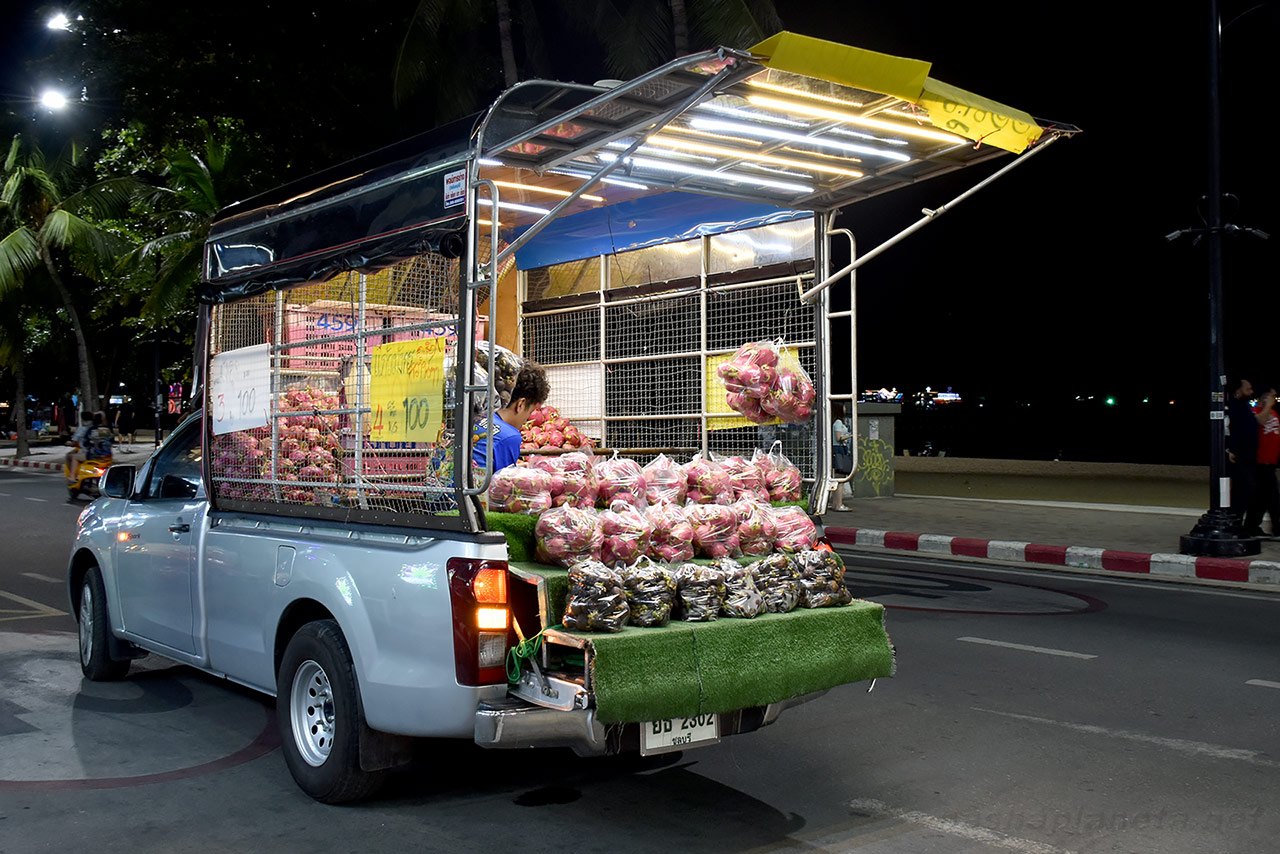
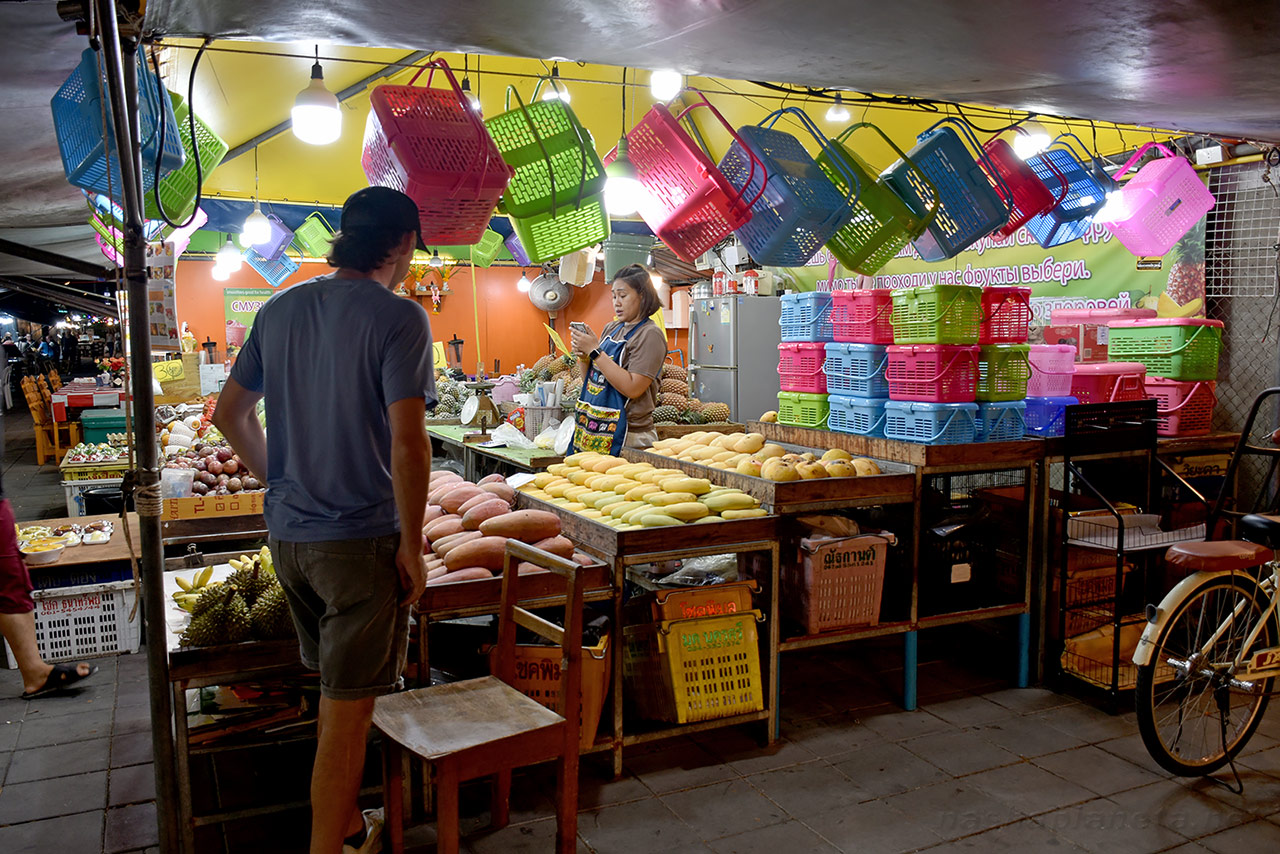
At tourist markets, prices are often inflated, especially for beautifully packaged baskets – they're aimed at unsuspecting tourists. Bargaining for fruit isn't customary, but if the seller is clearly overcharging, you can politely ask for a discount or just walk away to another vendor.
Sometimes fruits are sold already peeled and sliced – pineapples, papaya, mango, pomelo. They'll crack open a coconut for you and give you a straw for the juice.
Some fruits Thais eat with a mix of chili, salt, and sugar, and possibly other spices. For example, they eat guava and green mango this way. Give it a try, it's very interesting, and you might even end up loving it.
Where to Eat: Prices in Cafes and on the Street
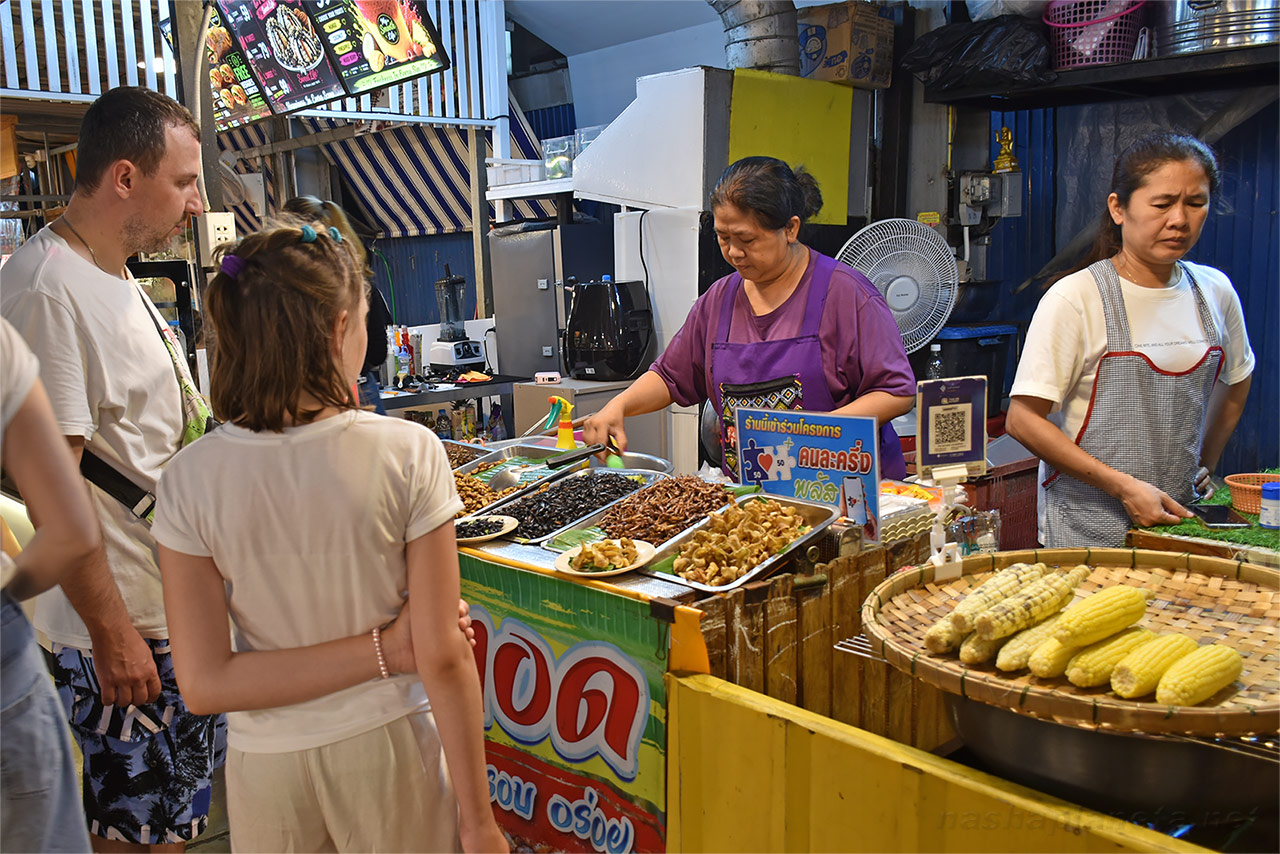
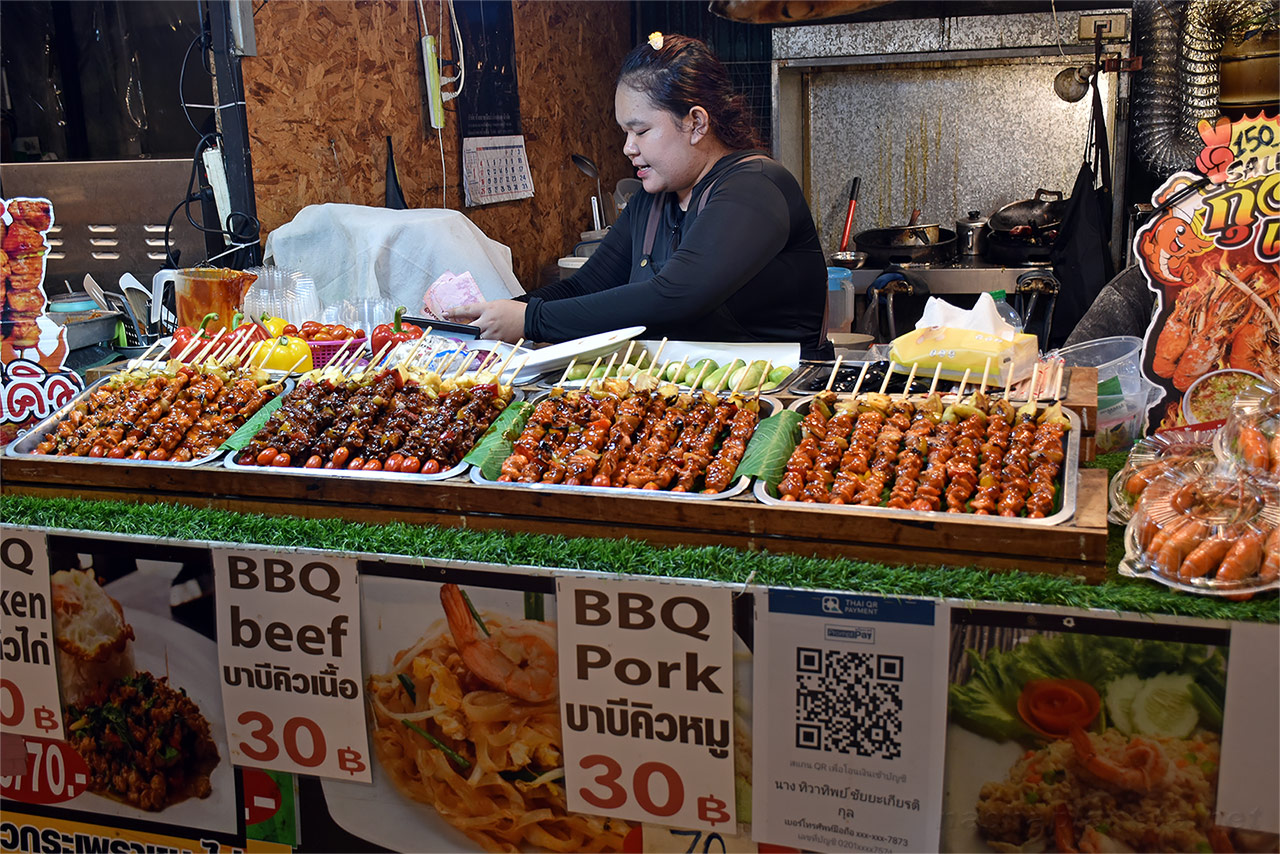
Thais themselves mostly eat out: cooking at home isn't common. Of course, they don't go to tourist-level restaurants, but to "their" places, where the menu usually consists of one or two dishes, and the interior of a few plastic tables. Everywhere on the street you can see carts or stalls where they cook and sell food on the spot, which you can take away – for example, chicken legs in sauce, potato or meat skewers, sausages. You can eat all of this, and the prices are very low.
Typical prices for street food and in simple establishments (in baht):
- Chicken or pork skewer – 10–20 baht
- Rice pancake – 10 baht
- Portion of fried rice with meat (Khao Pad) – 50–70 baht
- Portion of Pad Thai – 50–80 baht (in tourist cafes up to 120 baht)
- Portion of Tom Yum with shrimp – 150–200 baht (in a cafe)
- Mango with sticky rice – 50–80 baht
- Fruit smoothie – 30–60 baht
Where to eat depending on your budget:
- Street stalls and food carts – the most budget-friendly and authentic option. They cook in front of you, fresh and hot. Don't be afraid if there are lots of locals around – it's a sign of quality.
- Food courts in shopping malls – clean, air-conditioned, prices almost like on the street. Payment is often via a card (you buy a card for the amount you need, pay with it, and get the balance back).
- Inexpensive cafes for locals – often without English signs, but prices are very pleasant (lunch from 60 baht).
- Restaurants for tourists – prices are higher, but there are menus in Russian, staff often speak Russian, and a wide selection of dishes.
- Food delivery – via the Grab Food app (cash on delivery, Russian cards don't work).
Important: when ordering at any establishment, don't hesitate to say "no spicy" if you don't like spicy food. They'll understand and make the dish milder. Over time, you can try spicier versions too.
You can roughly budget for food based on the following prices per person:
| Type of establishment | Price (baht) |
|---|---|
| Snack from street fast food | from 30 baht (0.9 USD) |
| Snack at a simple local cafe | from 60 baht (1.8 USD) |
| Meal at a local cafe with a drink | from 80 baht (2.4 USD) |
| Dinner at an inexpensive cafe with beer or other alcohol | from 200 baht (6.01 USD) |
| Dinner at a tourist restaurant | from 300 baht (9.02 USD) |
| Dinner at a seafood restaurant for tourists | from 400 baht (12.02 USD) |
Tip: Don't be afraid of the specific smell you sometimes notice near street stalls. Most often its source is fish sauce, a fermented condiment widely used in Asian cuisine. It's a normal ingredient, and you quickly get used to it. The food itself can be very tasty and fresh.
If you're squeamish about eating in local diners with plastic tables, we recommend eating in canteens or food courts. These are fairly serious, clean establishments, usually found in all large supermarkets and shopping malls. They cook very tasty, diverse, and high-quality food. You can eat everything there, from Russian dumplings to fiery-hot Tom Yum. Prices are very reasonable: for 100 baht you can eat your fill.

Service in such places usually goes like this: you buy a plastic card or paper coupons at the cash register, for example for 200 baht, then you go to the various stalls, choose something, and pay with the card or coupons. On your way out, you hand back the card or coupons, and they return any unused money. In general, that's how it works, or something like that, with various variations.
It's a bit more expensive to eat in restaurants, cafes, or bars. There are plenty of such places in tourist areas; you can find a place to suit any taste – expensive or cheap, quiet or lively. There are many Russian restaurants, German, Italian, Chinese, and just about any kind you can think of. There are also many restaurants specializing in seafood, with the catch swimming or crawling in aquarium displays.
Night Markets – a Culinary Adventure
Night markets are not just about food, they're a whole culture. Here you can try everything: from classic Pad Thai to fried scorpions. Be sure to visit at least one:
- Thepprasit Market in Pattaya – one of the most authentic and inexpensive, open on weekends.
- Rompho Market in Jomtien – a great place for seafood and fruits.
- Night Market in Bangkok (e.g., Rot Fai) – a huge selection of food and vintage items.
- Market on Loi Kroh Road in Chiang Mai – famous for street food and souvenirs.
Read our detailed guide to night markets with maps and tips in our separate article: Night Markets of Thailand.
Thailand has a highly developed network of small supermarkets like "7/11", "Family Mart", "Friendship Market", and large ones like "Big C", "Lotus", and many others. In tourist areas, they're almost on every corner. In any of these stores, you'll always find something to eat, even quite European fare. In short, even the laziest person won't starve in Thailand.
Practical tip: In local street eateries and stalls, they don't leave tips. In tourist restaurants, if you liked the service, you can leave 20–30 baht – it'll be a sign of appreciation.
Food Prices in Different Regions of Thailand
The prices listed above are typical for the mainland and popular resorts like Pattaya, Chiang Mai, and Bangkok. However, it's important to know that prices can vary in different regions:
- Pattaya and other large resorts (except islands) – the prices in this article are current for these places. Street food, food courts, and local cafes are very affordable here.
- Phuket Island – food prices are usually 10–20% higher than on the mainland, due to the tourist flow and logistics.
- Small remote islands (Koh Lipe, Koh Kood, Koh Mak, Koh Chang) – here prices can be 1.5 times higher, especially for street food and seafood, since everything is imported.
Keep this in mind when planning your budget, especially if you plan to visit several regions.
Drinks and Alcohol
Attention! Previously, Thailand had a ban on alcohol sales from 2:00 PM to 5:00 PM, but it has been permanently lifted as of December 2025. Now alcohol can be bought and consumed from 11:00 AM to midnight.
Important warning: Local whiskey and strong spirits can differ greatly in quality from familiar European brands. Some of them have a harsh taste and can cause a severe headache the next morning. If you're not sure, start with beer or order imported alcohol from a trusted place.
You can't drink tap water. Bottled water is sold everywhere: in 7-Eleven, a large bottle (1.5 L) costs about 15 baht – this is the cheapest option. Hotels often provide free bottles in the room.
Juices are very common, drunk both fresh and with ice. Also, be sure to try Thai iced tea with milk – sweet, refreshing, with a characteristic orange color (costs about 20–30 baht).

Thais, especially young people, drink energy drinks – M-150, Shark, Red Buffalo. They taste good, but you need to be careful with them: no more than 2 cans a day, and don't drink them before bed.
Alcohol in Thailand is mainly represented by local drinks: beer, whiskey, and wine. Imported spirits are expensive due to taxes.
Beer

Beer in Thailand is very popular and excellent quality. It's usually sold in small bottles or cans of 0.33L, and large ones of 0.6L. Popular brands: Singha (from 60 baht per 0.6L), Tiger (from 55 baht), Leo (from 55 baht), Chang, Archa. "Heineken" and "Carlsberg" are available almost everywhere, but they're more expensive. The most popular beer is Singha, with about 90% of the Thai market share. It's quite strong – 6% alcohol, so if you want to keep a clear head as long as possible and not fall asleep too early, prefer the light beer of the same brand – Gold.
Beer prices: in a store, a large bottle (0.62–0.65 L) costs about 60–62 baht, in cafes and bars – 75–100 baht, in nightlife establishments on adult streets – up to 200 baht.
Whiskey

Thailand produces many local whiskeys and spirits. They're cheap, but the quality and taste vary greatly. Here are the main brands you'll see on store shelves:
- Mekong – a legendary local herbal whiskey, produced since 1941 from a blend of molasses and sticky rice. Usually drunk with soda, cola, ice, and lime. Price: from 145 baht per 0.33L. It has a specific taste that's not for everyone, and according to reviews, it can cause a headache in the morning.
- Hong Thong – another popular local whiskey. Price: from 145 baht per 0.33L.
- Blend – a more expensive local whiskey. Price: from 350 baht per 0.7L.
- Black Cock – an inexpensive whiskey in a red or black label. Price: from 90 baht per 0.33L bottle.
- Red Cock – another budget option. Price: from 155 baht per 0.7L bottle.
- Lao Khao – the cheapest alcohol, which locals call "rice whiskey." Price: from 61 baht per 0.33L and from 114 baht per 0.7L. Essentially, it's rice moonshine with a pungent mash smell. Very cheap, but the morning after can be painful – try it at your own risk.
Also popular in Thailand is the local rum Sang Som – often drunk with cola or soda.
Wine

In Thailand, they make exotic wines like palm wine or pineapple wine, as well as regular grape wines. But the quality of local wine is far from the level of Italian or French brands. If you plan to order imported wine in a restaurant, remember that markups on imports are very high.
Be sure to treat yourself to a homemade alcoholic cocktail in a coconut. Here's how it's made: drink a little coconut milk from a freshly cracked coconut and add some whiskey, rum, or brandy. If you don't overdo it, you're guaranteed a great time, especially if the coconut milk is cold. For reference: a fresh coconut on the street costs from 10 to 30 baht.
If you want to know more about alcohol in Thailand, where to buy it, prices, and if there are any restrictions – read here.