 Thailand
Don't want to read a lot of text? Here are quick answers on the topic:
- How to generally avoid problems and stay safe in Thailand? – Follow local customs: don't insult the king, don't touch Thais on the head, don't point with your foot, don't raise your voice, avoid conflicts, especially with drunk locals. Carry a copy of your passport, don't smoke on beaches, and don't use e-cigarettes (they're banned).
- How safe is Thailand for tourists? – Overall very safe, serious crimes are rare. However, there are risks of petty scams and corruption. The main thing is to behave politely and respectfully, then there won't be any problems.
- Do I need to carry my passport in Thailand? – By law – yes, foreigners are required to always have their original passport with them. In practice, they rarely check, but it's better to carry a photocopy or a photo of your passport on your phone.
- What laws and customs are important for tourists to know in Thailand? – It's forbidden to insult the royal family, touch a Thai person's head, point with your foot at people or objects, or kiss in public. In temples, you can't wear shorts or sleeveless shirts, and you must remove your shoes before entering. Smoking on many beaches is prohibited, fines up to 100,000 baht.
- Is insurance necessary for a trip to Thailand? – Yes, highly recommended, as local healthcare is very expensive. Regular travel insurance does not cover injuries from renting a motorbike – you need the "extreme sports" option for that.
- What vaccinations are recommended before traveling to Thailand? – There are no mandatory vaccinations, but doctors recommend getting vaccinated against tetanus, diphtheria, hepatitis A and B, typhoid, rabies, and Japanese encephalitis. Plan them at least 6 weeks before departure.
- What to do if I lose my passport in Thailand? – Contact tourist police (1155), file a report. Then with the police report, go to the Russian embassy to get a "Certificate for Return," after which get a stamp from the immigration office. Without this, they won't let you leave the country.
- What are the emergency phone numbers in Thailand? – Police: 191 or 123 (free), tourist police: 1155 (operates in English and Russian in major cities), ambulance: 1554. Save them on your phone right after arrival.
- Ensuring safety without communication is impossible in today's world. Be sure to get an e-sim, buy a local SIM card, or activate roaming options from your home operator. We've covered everything in detail in the guide about communications and internet in Thailand.
Now we'll tell you everything from our personal experience:
Attention! Since January 1, 2025, recreational use of marijuana in Thailand is banned. Now "weed" can only be bought in specialized stores and exclusively with a medical prescription. Purchasing for personal use without a doctor's prescription is again considered illegal!
Crime and Police: What Really Threatens Tourists?
Serious crimes against foreigners in Thailand are extremely rare. The main risks are petty scams, pickpocketing, and corruption. The police work slowly and are often interested in "resolving issues" for money, so it's better to avoid any conflicts.
Tourist Police (1155) is your main helper. They speak English and sometimes Russian, and respond faster to complaints. For emergencies, it's better to call 191 (regular police) or 1554 (ambulance). In tourist areas (Bangkok, Pattaya, Phuket), there are special police booths – you can go there in person.
But so you don't mistakenly think that Thailand is 100% safe and nothing bad can happen to you here, here's a recent real-life story:
In July 2026, two young Russians (a sister and brother, 22 and 17 years old) were killed in one of the suburbs of Pattaya. The killers and their accomplices were arrested and stated that they committed the crime to take possession of their motorbike. Earlier in 2026, another Russian citizen was killed in Pattaya – his body was dismembered and buried in five different locations. However, in that case, the killers turned out to be foreign nationals.
So reasonable safety measures and healthy vigilance won't hurt at all, no matter where or how you're vacationing.

Police salaries are low, so corruption thrives. If you're stopped, try to speak calmly, don't raise your voice. Don't offer a bribe openly – it could be seen as provocation. You can ask if you can pay the fine on the spot (many tourists do this), but be prepared that the amount will be inflated, and also paying on the spot is effectively just a bribe, so be careful with that too. The best option is to call the tourist police – they'll help resolve the situation legally.

Insurance – Mandatory, But with Caveats
Insurance for entry into Thailand is not yet mandatory, it's up to you. But healthcare here is very expensive. So our firm belief is that insurance is needed by everyone, even the healthy.
Regular travel insurance does not cover injuries from renting a motorbike, diving, rock climbing, and other activities. So it makes sense to get an additional policy with "extreme sports" or "adventure tourism" coverage. This will increase the cost of your vacation by a couple of thousand rubles, but it'll be much more peaceful.
Compare prices and choose a suitable policy on these aggregators:
What You Absolutely Cannot Do: Laws and Customs
Thailand is a police state with strict laws. Violating even minor rules can result in prison or a huge fine. Additionally, traditions are strong here, and ignoring them offends locals and can provoke aggression.
Laws That Carry Jail Time or Heavy Fines
- Insulting the Royal Family – punishment up to 15 years in prison (in special cases – up to 20). Don't criticize, don't step on money with the king's portrait, don't make insulting gestures near images.
- Drugs – possession, use, trafficking are punishable by up to the death penalty. Even marijuana, which was partially legalized, has been restricted since January 1, 2025, to prescription-only.
- E-cigarettes – completely banned. Import, sale, use – up to 10 years in prison.
- Smoking on beaches – banned since 2018. Fine up to 100,000 baht (about 250,000 USD).
- Photographing military facilities – strictly prohibited, may be considered espionage.
- Drones (UAVs) – mandatory registration with the Civil Aviation Authority (CAAT) for devices weighing over 250 g. Flying without permission – fine up to 100,000 baht and up to 5 years in prison. Flying over royal palaces, airports, and nature reserves is prohibited.
- Alcohol sales – since May 29, 2026, alcohol is sold in stores from 11:00 to 24:00 without interruption (previously there was a ban from 14:00 to 17:00). Outside these hours, you can only buy alcohol in bars and hotels.
Customs and Etiquette Rules You Must Not Break
- The head – the most sacred part of the body. Don't touch a Thai person's head, even a child's, and don't put your feet up on seats in transport (this shows the soles of your feet, which are considered dirty).
- Feet – pointing your foot at a person or object is rude. Don't sit so that your feet are pointed at anyone.
- Temples – short shorts and sleeveless shirts are prohibited. Remove your shoes before entering. Women must not touch monks or hand things to them directly.
- Loud voice and conflicts – Thais value calmness. Yelling, scandals, aggressive behavior cause strong disapproval and can lead to crowd intervention.
- Public hugging and kissing – not customary, especially in temples and public places.
- Alcohol with strangers – don't drink with drunk Thais, they lose control faster and can become dangerous.
- Monkeys and dogs – don't feed monkeys, don't take selfies near them – this provokes aggression. Street dogs are mostly harmless but can attack at night. The danger of rabies is deadly. For any bite or scratch, seek medical attention immediately for vaccination. Read more about behavior with monkeys in our article How to behave with monkeys, precautions.
The main thing is to respect the local culture and not break the laws, then your vacation will go smoothly.
How to Avoid Problems with Police and Scammers
When Dealing with Police
- Always carry a photocopy of your passport or a photo on your phone (the original can be left in the safe).
- If you're detained, stay calm, don't argue. Ask if you can call the tourist police (1155).
- Don't sign anything in Thai without a translator. Demand that documents be in English.
- If your passport is confiscated – demand a written confirmation (receipt). Without it, you won't be able to contact the embassy.
- If you're arrested – contact the Russian embassy (addresses and phone numbers below).
Protection from Scammers
- Always agree on the price in advance (taxi, boats, excursions, rentals). Write down the amount on paper or on your phone.
- Don't believe in "closed" temples or palaces where they offer an alternative tour – this is a classic scam.
- Exchange money only in banks or official exchange booths with "Exchange" signs and rates on a board.
- In Bangkok, beware of "tuk-tuk scammers" – drivers offer a free ride but take you to a jewelry store where they'll try to pressure you into a big purchase.
- When renting a bike or car, photograph all scratches before the trip so you don't pay for someone else's damage.
- Don't leave valuables in the room, even in the safe – thefts happen in cheap hotels. Better check them in at the reception with a receipt.
Financial Safety
- Divide your money: part in the safe, part with you, part on the card.
- Withdraw cash at bank branches, not at street ATMs (skimming is possible there). Before using, check the card reader for overlays.
- Make sure your bank card has SMS alerting enabled.
- If your card is lost, call the bank immediately. Visa/Mastercard hotline numbers in Thailand: 02 252 2212 (Mastercard/Visa), 02 233 5644 (Diners Club), 02 273 5296 (American Express).
We've covered everything about money and currency in Thailand in this guide. We strongly recommend reading it before your trip to know how to handle money.
Traffic and Vehicle Rental
Left-hand traffic – look to the right when crossing. But that's not the main thing. The main thing is the aggressive driving style: motorbikes on sidewalks, rudeness, machetes in the glove box. According to 2024 data, 17,447 people died in road accidents in Thailand, of which 14,144 were in motorbike accidents. The country remains one of the most dangerous in the world in terms of road fatalities.
Renting a Motorbike/Car
- License: since 2021, Russian licenses are valid under the Vienna Convention, but police often fine you for not having them. We strongly recommend an International Driving Permit (IDP) – it resolves all disputes. We explain everything in detail here: What license is needed in Thailand
- Prices: bike – 150–500 baht/day, car – from 700 baht/day.
- Deposit: usually a passport or money. Never leave your original passport – give a copy.
- Inspection: photograph all scratches and dents before the rental starts.
- Rental scam with "theft": the owner may take the bike with their own keys and demand compensation. Only rent from verified rental companies with good reviews.
- Helmet – mandatory for both driver and passenger. Fine for not wearing one – up to 1000 baht.
- Insurance – some rental companies offer additional "insurance," but it's often fake. Better rely on your travel insurance with activity coverage.
Road fines (updated as of June 2025):
- No license – from 1000 baht.
- Running a red light – from 1000 baht.
- Riding without a helmet – up to 2000 baht.
- Using a phone while driving – 400 baht.
- Parking in a prohibited spot – 500 baht.
If you decide to rent a vehicle, we strongly recommend studying our honest guides on rentals and traffic rules:
Health and Medicine
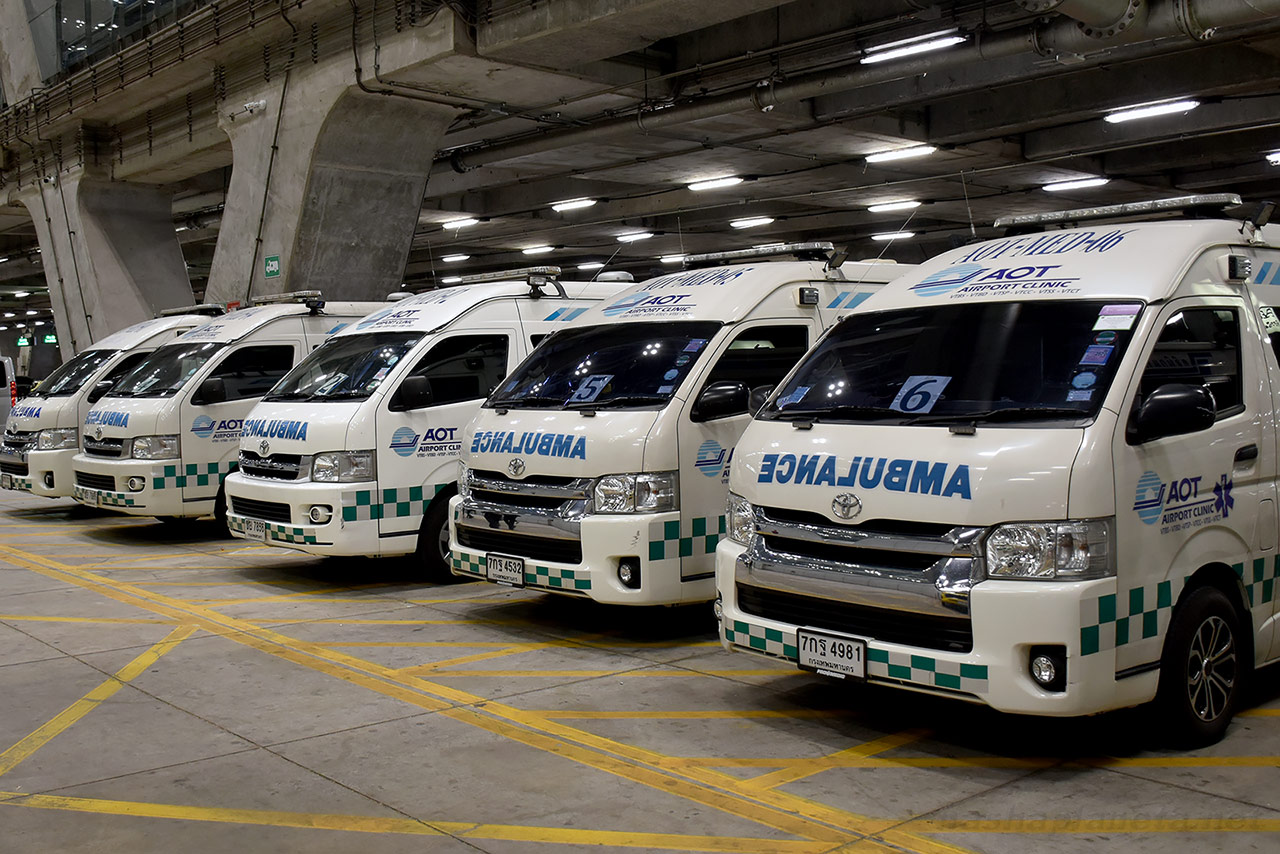
Healthcare is expensive. Insurance is mandatory (see section above). Medications are usually sold without a prescription, but antibiotics and strong drugs require a doctor's prescription – it's better to have one with you. Check expiration dates. Bring a first-aid kit with you (list below). At pharmacies with a green cross, you can get a basic consultation from a pharmacist.
Important Phone Numbers
- Police: 191 or 123 (free)
- Tourist Police: 1155 (English, Russian in major cities)
- Ambulance: 1554
- Russian Embassy in Bangkok: contacts here
- Lost cards: Mastercard/Visa 02 252 2212, Diners Club 02 233 5644, American Express 02 273 5296
Vaccinations
None are mandatory. Recommended: tetanus+diphtheria, hepatitis A and B, typhoid, rabies, Japanese encephalitis. Consult 6 weeks before travel.
Health Recommendations
- Water: drink only bottled water, brush your teeth with tap water (it's chlorinated). Some hotels have purification systems, but still better not to drink it.
- Ice: safe if it's cylindrical with a hole (factory-made).
- Street food: choose places where there are many locals, food is hot and cooked in front of you. Avoid raw seafood and salads that have been sitting in the sun.
- Sun: use sunscreen, even on cloudy days. Thai coconut oil is good protection.
- Snake and insect bites: in the jungle, wear closed shoes, don't stick your hands into holes. If bitten – don't panic, immobilize the limb and go to a doctor immediately. Specific antidotes are not available in pharmacies, only in hospitals.
- Dengue fever: risk is higher during the rainy season (May–October). Use mosquito repellents, sleep under a mosquito net.
- Sea urchins: stepping on them is painful, the spines are brittle. Don't try to remove them yourself – go to a medical station. Folk remedies with lime can lead to infection.
- Jellyfish stings: rinse with vinegar or lime juice, then carefully remove the tentacles with tweezers, then soak the affected area in hot water (42–45°C) for 20 minutes. For severe allergic reactions – immediately see a doctor. Aloe can be bought on the beach to relieve symptoms.
What to Do in Emergencies
- Snake bite – immobilize the limb, apply a pressure bandage, call an ambulance (1554) immediately. Don't try to suck out the venom or cut the wound.
- Severe allergic reaction – take an antihistamine if you have one, and seek medical attention immediately.
- Loss of consciousness, heatstroke – move to the shade, loosen clothing, give water, call an ambulance.
Before your trip, pack a first-aid kit:
- Antihistamines (Suprastin, Telfast)
- Fever reducers (paracetamol, aspirin)
- Antispasmodics (No-spa)
- Anti-diarrhea (Smecta, Levomycetin, Imodium)
- Motion sickness remedies (Dramina)
- Panthenol (for burns), Chlorhexidine, bandage, band-aid
- Insect and mosquito repellents
- Heart medications if needed
Checklist: 6 Important Points Before Your Trip
- Get insurance with activity coverage (motorbike, diving).
- Make copies of your passport (paper and in the cloud), photograph all visas.
- Save emergency phone numbers (191, 1155, 1554).
- Learn about prohibitions (e-cigarettes, beach smoking, insulting the monarchy).
- Check your driver's license – if you plan to rent, get an IDP.
- Take care of communication – buy a local SIM card or eSIM to have access to maps and emergency numbers.