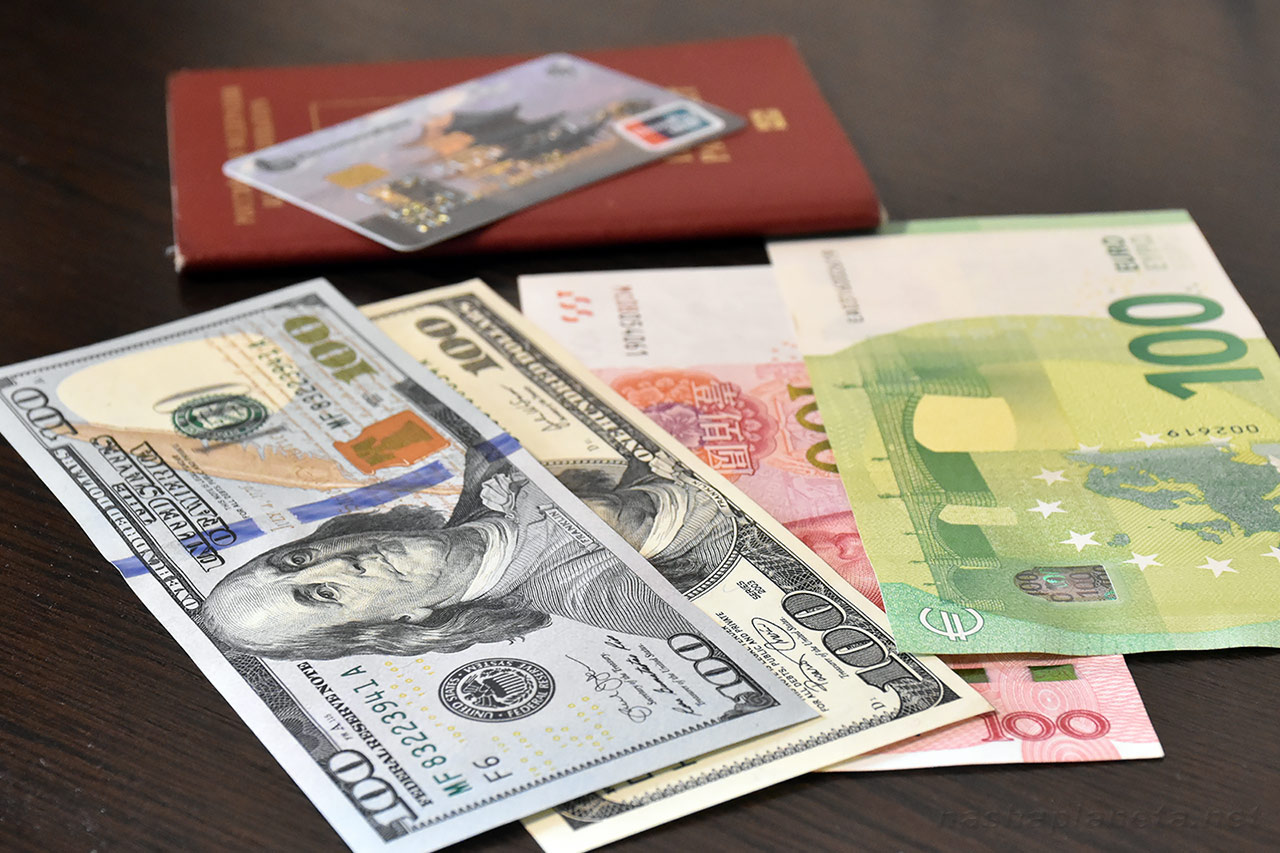
Just ten years ago, a Visa or Mastercard and a couple hundred dollars in your wallet were enough – and you could fly anywhere. That trick won't work now. Sanctions have cut off half the usual tools, and restrictions on importing currency into Russia have done their job: banks have officially split rates for new and old banknotes, and foreign exchangers have started assessing dollars by year of issue.
Sounds like a financial quest? You bet. But it's solvable. Now let's tell you from our own experience and based on the many calculations we constantly do during our travels:
The Universal Kit: What to Put in Your Wallet Before Departure
First, the most important tip! You can't rely 100% on a single payment method abroad in today's reality. The situation changes literally by the day: a UnionPay card may stop working in a specific country, foreign plastic may be blocked due to new sanctions, and cash can be lost or refused because of the condition of the banknotes. The worst thing that can happen on holiday is to be left without money in a foreign country, where you have neither acquaintances nor a backup plan. So before every trip we do the math and distribute the budget across several tools: some we keep on a card, some we carry in cash, and part we keep in reserve on a Russian card for P2P exchange.
From our travel experience, if you don't want to dig deep into the details of each country, it's enough to assemble a basic kit that works almost everywhere. Here it is:
- UnionPay card – the main cashless "workhorse." Get one from a non-sanctioned Russian bank.
- Cash dollars or euros – "old" $50 and $100 notes as the base, plus a few "new issue" notes for visas and emergencies. Small notes will come in handy for tips.
- Rubles on a Russian card – for P2P exchange right on the spot.
- QR payment via a bank app – as a backup in Turkey and a few other countries.
Everything else – crypto, foreign bank cards – is an add-on. Optional, but sometimes very useful.
| Method | Where it works | Conversion losses | Cash withdrawal |
|---|---|---|---|
| UnionPay | 50–60 countries | 0–2.5% | Not recommended |
| Cash dollars/euros | Everywhere | Depends on the exchanger | – |
| Mir card | Belarus, Abkhazia, Cuba | About 2–3% | Limited |
| P2P exchange | Asia, Turkey | can be up to 5% | Yes |
| QR codes | Turkey, CIS | 3–6% | – |
| USDT | UAE, Turkey, Georgia, Thailand | 1–3% | Yes, via services |
| CIS bank cards | Almost everywhere | 0.5–1.5% | Yes |
UnionPay Card: Pay Boldly, But Don't Try to Withdraw
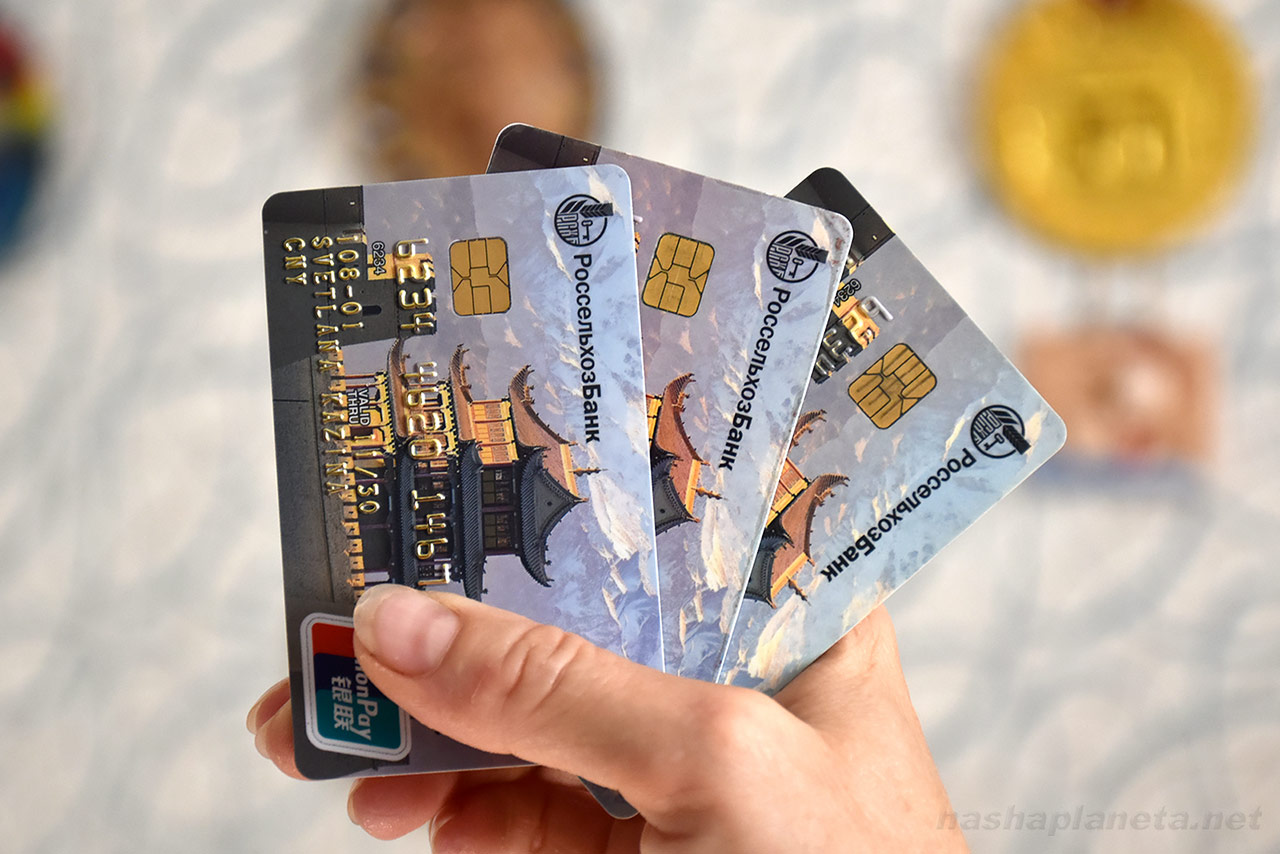
A Russian-issued UnionPay is the main cashless tool for Russian tourists abroad. And at the same time the most unpredictable. It works in 50–60 countries, but with caveats worth knowing in advance.
First, where the card doesn't work. In Europe, the US, UK, Japan, India, Canada, Australia and Georgia, Russian UnionPay cards have completely stopped being serviced. In Germany, France and Austria, payment in stores may go through, but you won't be able to withdraw cash.
In some countries, for example Egypt, the situation is separate: the card works there, but weakly. You can only find a terminal that accepts it in large supermarkets like Gomla Market, but in most cafes, shops and small hotels it's useless. There are no guarantees of acceptance anywhere – today the terminal worked, tomorrow it may refuse.
But there's also the most pleasant category of countries, for example Thailand, Vietnam, Indonesia, Malaysia, UAE, Turkey, where Russian UnionPay cards work great. Here you can pay for most expenses with this card. It's just important not to forget that you need a cash reserve in case the cards are unexpectedly blocked again.
Online payments: the card is useless
Russian UnionPay cards are practically useless for online payments. They're not accepted by the App Store, Google Play, Netflix, YouTube Premium and other foreign services – transactions are blocked by BIN code. You also won't be able to link the card to foreign subscriptions or airline accounts. So if you planned to buy something online before or during the trip – this option is out.
3–5% markup in private outlets
In private retail outlets – small cafes, souvenir shops, travel agencies – when paying by card, they often add 3% to 5% to the bill. The seller usually warns right away: "Card – plus three percent." This practice is common in Vietnam, Thailand and Indonesia, and it applies not only to UnionPay, but to any card, including Visa and Mastercard. In such a situation, cash wins unconditionally: you paid 300 baht by card – you lost another 9–15 baht on top. And over a trip these percentages add up to a noticeable sum.
In small shops, markets and family restaurants there may simply be no UnionPay terminal. So cash is still needed. The card is a convenience for large stores, hotels and pharmacies, not a replacement for a wallet.
Which Currency to Choose for a UnionPay Card
Straight to the point: of the large Russian banks, a working UnionPay is currently issued in practice only by Rosselkhozbank (RSHB). There's also small ATB, but it has a weak presence in the European part of Russia. All UnionPay cards previously issued by Tinkoff (T-Bank), Gazprombank, Russian Standard and several other banks no longer work abroad. If you have such a card in hand – leave it at home, it's useless.
What to choose for UnionPay: rubles or yuan?
There's no clear answer here – it all depends on how and where you plan to use it.
Servicing at RSHB is free, but issuance and cash withdrawal are charged differently depending on the card's currency. A yuan card has a paid issuance – 380 yuan (56.94 USD), cash withdrawal – 4% of the amount with a minimum of 70 yuan (10.49 USD) per transaction. A ruble card has free issuance, withdrawal – 1.5% with a minimum of 250 rubles. There's no commission for paying at checkouts on either. Plus in any case, the ATM's own commission will be added if you withdraw cash.
Why is a yuan card more profitable for large expenses? When paying in lira or baht, it goes through one conversion: "local currency – yuan." A ruble card has a longer chain: "local currency – yuan – ruble." Double exchange eats up 3–5% of the amount. On a $3000 holiday that's $90–150 – a decent dinner at a good restaurant that you're just giving to the bank.
And an important point many miss: the card's currency doesn't affect its functionality at all. If a UnionPay card is accepted at a given point in principle, then ruble, yuan and dollar cards will all work the same. The difference is only in conversion losses and commissions.
Our advice: for small expenses on a trip you can get by with a ruble card without overthinking. For large expenses – only a yuan card. The ideal option is to have both: opening and servicing are free, you lose nothing.
We've put the detailed calculation with tables, real numbers and rate comparison in a separate article: Which UnionPay card to choose: rubles, yuan, dollars or euros.
Why Withdrawing Cash via UnionPay Is a Bad Idea
For each withdrawal, an ATM abroad charges a fixed commission. In Thailand it's 220 baht (6.55 USD). Plus your Russian bank will withhold its own percentage, often with a minimum threshold. Total for one withdrawal can add up to $12–15 in commission. Withdraw $50 – you lose almost a third. Withdraw $300 – it's still a shame.
You need to pay with the card at checkouts. There the commission is 0%. But remember the 3–5% markup in private outlets – sometimes cash turns out to be more profitable even considering the withdrawal commission.
Cash: The Hunt for the "Right" Banknotes
Cash is your main guarantee. But here there are rules of the game.
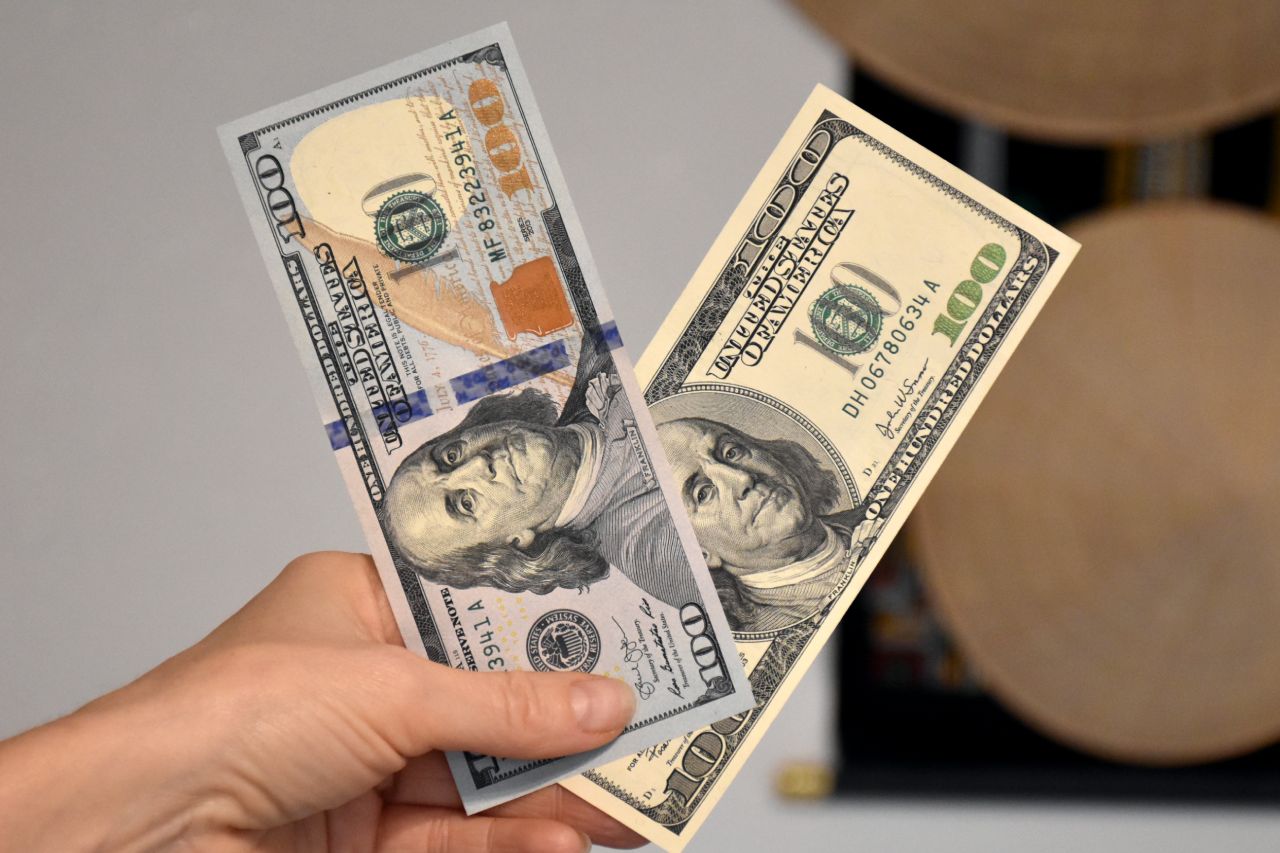
Dollars are currently in use in three main categories:
- "New" (blue, series from 2009–2013) – accepted everywhere at a good rate
- "Old" (greenish-white, issued from 1996 to 2006) – accepted almost everywhere, but sometimes at a slightly lower rate
- Really "ancient" notes issued before 1996 – they're a problem even in Russia, and abroad they won't be accepted almost anywhere except countries with official dollar circulation
Old dollars: not as scary as it seems
A common myth: old dollars aren't accepted anywhere. In fact, you can sell 1996–2006 notes almost anywhere with a bit of persistence. Large chain exchangers, for example SuperRich in Thailand, accept them at the new rate without problems. If one point refuses, it's enough to go around a couple of neighboring exchangers or visit a bank.
The rate for old notes may be slightly lower, but the difference isn't critical. In Thailand, at a rate of 33 baht per dollar, the discount is 10–50 satang (0.1–0.5 baht) – that's only 0.3–1.5%. In Vietnam, old notes go for 300–500 dong less per dollar than new ones, that is, about 1.2–2%.
But notes issued before 1996 are really problematic. In Turkey, Egypt, the UAE, Thailand and Vietnam they may not be accepted even at large exchangers. If you have such notes lying around – it's better not to bring them.
In this video I explain in detail how old dollars differ from new ones, whether there's really a problem with exchanging them and what's more profitable – old or new notes. And I also tell you whether you really need to look for new dollars at all or can do without them, what to take instead, and what to look out for when buying old dollars at Russian banks.
Euros: old notes exist too
With euros the situation is simpler than with dollars, but not ideal. 2002 notes (first series) remain legal tender and are accepted everywhere. But in some exchangers and private outlets, old notes may get a slightly lower rate than new ones. In Turkey, for example, old euros are accepted on par with new ones, but in semi-legal exchangers they may ask for a commission. So take fresher euros if you have a choice.
Yuan: an underrated option
Many people now consider the yuan as an alternative to the dollar. And they underestimate it for nothing. Chinese banknotes are accepted in any form – they have no division into "old" and "new." At Russian banks, yuan is most often sold in perfect condition, so you can safely take it as a reserve.
The problem is different: the markup from the official rate (spread) when buying yuan in Russia is very high. Because of this, paying with them is usually less profitable compared to dollars and euros. But at the same time clearly more profitable than carrying cash rubles. As an example, you can look at our calculation in the article about Thailand, where we regularly update the profitability between dollars, euros, yuan and rubles: Currency and money in Thailand.
Rubles: only for the near abroad
Cash rubles are useless in the far abroad. In exchangers in Turkey, Egypt or Thailand the rate is predatory – you'll lose from 5% to 15%. The exception is Belarus, Abkhazia, Kazakhstan, Armenia: there the ruble is accepted willingly and at an adequate rate.
National currency of the country: buying in Russia is unprofitable
At Russian banks you can now buy baht, dong, rupees and other local currency. We've compared this option with exchange through dollars or euros more than once – direct purchase always loses. The overpayment compared to exchanging on the spot through dollars or euros is consistently higher. The exception is perhaps the yuan, if you're going to China, but even then you need to choose the right bank in Russia to avoid overpaying.
| Currency | Where accepted | Pros | Cons | Recommendation |
|---|---|---|---|---|
| Dollars (new) | Everywhere | Best exchange rate | Markup at Russian banks 1.5–5 rubles | The most reliable option |
| Dollars (1996–2006) | Most countries | Cheaper when buying in Russia | Exchange rate lower by 0.3–2% | Can take, but check condition |
| Dollars (before 1996) | Almost nowhere | – | Not accepted in Asia and the Middle East | Don't take |
| Euros (any) | Everywhere | Stable acceptance | Rate may be slightly lower for old ones | Good option |
| Yuan | Asia, growing acceptance | No division into old/new | High spread when buying in Russia | As a reserve |
| Rubles | Only CIS | No need to exchange | Predatory rate in the far abroad | Don't take |
| Baht, dong, etc. | Country of origin | – | Overpayment when buying in Russia | Buy on the spot, not in Russia |
Where to Buy New Dollars in Russia
Good news: new dollars are available at Russian banks. Bad news: you'll most often have to overpay for them. The markup for "blue" notes compared to old ones is currently from 1.5 to 5 rubles depending on the bank and region. If you don't want to drive around half the city, here are a few options we use ourselves.
- Alfa-Bank – one of the most convenient options. Here you can buy new series second-hand, which other tourists deposit after trips. The condition is usually normal, and the rate is noticeably lower than for "freshly printed" notes from the cash desk. In addition, the bank publishes a daily list of branches where new dollars are in stock: alfabank.ru/lp/crm/currency/office-usd. You can look up the nearest branch in advance and not waste time on calls.
- Ak Bars Bank – the markup for new notes compared to old ones is the most gentle: 1.5–1.7 rubles depending on the city or region. If you have a branch of this bank, it's worth starting your search there.
- Sberbank – in the app on the exchanger map there's a filter "Dollars of new series": sberbank.ru/ru/quotes/currencies. It's convenient because you can immediately see where the needed notes are nearby, without calling branches.
- T-Bank guarantees the issuance of new series dollars at its ATMs. True, the rate there is traditionally high. But you don't need to go anywhere special – if you're a client of the bank, you can get the money at any time.
In large cities you can find and buy new series even without hours of driving around banks – just overpay a bit. But in small towns everything is more complicated: there the choice of banks is limited, and new notes may simply not be delivered. In that case, we advise not to get hung up on dollars and to take a closer look at alternatives – euros or yuan. They're accepted everywhere, and in terms of exchange losses they often don't lose to dollars.
Take only $50 and $100 (or €50 and €100). For small banknotes, the rate in Asia is always worse by 1–3%. The exception is a stack of $1 notes (30–50 pieces) for tips and taxis in the first hours. In Egypt and Cambodia, small dollars generally replace local currency.
Rubles, Mir and QR Codes: What Works and What Doesn't

Bringing cash rubles to the far abroad is pointless. In exchangers in Turkey, Egypt or Thailand there's a "RUB" line on the board, but the rate there is predatory. You'll lose from 5% to 15% when exchanging paper rubles for local currency.
The exception is the near abroad. In Belarus, Abkhazia, Kazakhstan, Armenia, cash rubles are accepted willingly and at a rate close to the Central Bank. In all other cases – only dollars or euros.
Mir Card: The Rate Isn't as Good as It Seems
Mir cards for tourists abroad are almost useless today. In Turkey and most Asian countries it has turned into a useless piece of plastic. It only works in Belarus, Abkhazia, Cuba, South Ossetia, Armenia, Kazakhstan, Tajikistan, Vietnam, Iran, Azerbaijan, Laos, Myanmar, Nicaragua. But mostly card acceptance is extremely limited, often only at single ATMs and payment points.
For a long time it was believed that Mir has an excellent conversion rate, almost like the Central Bank. In practice it's more complicated. Yes, officially conversion goes at the Central Bank rate, but issuing banks add their own margin – usually 2–3%, and sometimes up to 4–5%. Plus the rate is fixed not at the moment of purchase, but when the transaction reaches processing, which can take several days.
In Vietnam, for example, the Mir card only works at VRB ATMs (Vietnam-Russian Bank). We withdrew cash and compared the result with exchange through cash dollars: we lost 8.4% of the amount. When withdrawing 1,000,000 dong, 3,356 rubles were debited, while exchanging the same rubles through dollars would have given 1,084,000 dong in hand. For a short holiday with small expenses this is tolerable, but on a long trip the losses become noticeable: for every 10,000 rubles you lose 840.
The VRB bank commission is zero. But your Russian bank may charge its own commission for withdrawing abroad. T-Bank, for example, doesn't withhold commission up to 100,000 rubles per month – that's the one we use. Sber and VTB take 1% and 0.5% respectively, plus a minimum amount.
QR Codes: Convenient, But Not for Saving
In Turkey, Thailand, Vietnam, Indonesia and some CIS countries, large Russian banks have launched QR code payments via the Faster Payments System (SBP). Sber, VTB and MTS are actively developing this area. At a store checkout (for example, LC Waikiki in Turkey) you scan the terminal's QR code with your phone camera. Money is debited in rubles from your card, the store receives lira. There's no commission for the payment.
There are pitfalls too. First, you need stable internet. Without a local SIM card or good roaming, the bank app simply won't load. Second, the conversion rate is fully controlled by the service provider. Usually it's 3–6% worse than the official Central Bank rate. This isn't a way to save, but an excellent backup option if you've run out of cash.
P2P Exchange: Only as a Backup, Not as a Way to Save
Imagine: your cash dollars have run out, the card is blocked, and there's still a week of holiday left. What to do?
P2P exchange comes to the rescue. This is when you transfer rubles from your Russian bank app to an exchanger's card via SBP. You can transfer from a card of any bank – Sber, T-Bank, Alfa, VTB, or even a small regional one. The main thing is that the Faster Payments System works. In return you get cash baht, rupees or dong right in your hands – at an office or via a courier.
An important clarification on limits: transfers up to 100,000 rubles per month via SBP are free for citizens. If you exceed this threshold, the commission will be up to 0.5% of the excess amount, but no more than 1,500 rubles per transaction. For most tourists who exchange 20–50 thousand rubles per trip, this isn't a problem.
But the exchange rate via P2P is usually worse than when exchanging through cash dollars or euros. The difference can be several percent, which makes losses noticeable for large expenses. P2P is more of a lifeline when other options are unavailable, or a way to get a small amount for the first days. For the main expenses on a trip, it's still not the most profitable option.
Important! P2P exchange is a high-risk zone. Through Telegram chats or tips from "acquaintances" in travel groups, it's easy to fall for the "triangle" scheme. A fraudster links two victims together: one transfers money, the other receives it, and he disappears. So you should exchange currency strictly through trusted services and physical exchange offices on the streets, not through anonymous people in messengers.
USDT Cryptocurrency: For the Advanced and Cautious
USDT is a stablecoin, a digital equivalent of the dollar. The rate is always equal to $1. Direct payment for goods with crypto at checkouts is prohibited almost everywhere. But the legal exchange of crypto for cash is well developed.
In Dubai, Istanbul and Tbilisi, official crypto exchangers work right on the streets. In Thailand you can transfer USDT through a local licensed service and withdraw baht at an ATM by code without a card.
Since September 2026, buying and owning crypto in Russia has been fully legalized for ordinary citizens. For beginners, the easiest way to buy USDT is on large P2P platforms (Bybit, HTX), transferring rubles to sellers from Russian cards.
Two Main Risks: "Dirty" Crypto and the Sanctions Flag
The first risk is "dirty" crypto. By buying USDT from unverified individuals or in dubious Telegram bots, you risk getting coins involved in illegal operations. International security systems will flag your wallet, and when you try to cash out in Dubai or Bali, they simply won't accept it. The funds will remain in the wallet but become dead weight.
The second risk is the sanctions flag on "Russian" crypto. Since 2026, crypto bought on Russian legal platforms may be flagged as high-risk. According to analysts, transactions pass through Russian legal platforms that foreign exchanges can track and refuse to accept. Moreover, the USDT issuer, Tether, is capable of freezing tokens at specific addresses at the request of US authorities, and such cases have already occurred. So if you bought USDT on a Russian exchange, when trying to exchange it abroad you may be asked to confirm the source of funds or simply refused the operation.
What to do: buy USDT only from merchants with a high rating (from 98%) and immediately withdraw to personal non-custodial wallets (Trust Wallet, TronLink, etc.). But remember: even this doesn't guarantee that there won't be questions about the origin of the coins abroad.
Foreign Bank Cards: Freedom for Big Money

Getting a card from banks in the near abroad (Kazakhstan, Kyrgyzstan, Tajikistan, Belarus) is a way to get full-fledged international Visa and Mastercard again. They work all over the world without restrictions.
What does this give? You can directly book hotels on Booking and Airbnb, buy tickets from foreign low-cost airlines (WizzAir, Ryanair), rent cars. When paying in stores, payment systems use the clean international rate, which is as close to the exchange rate as possible. Losses are only 0.5–1.5%.
When paying at a terminal abroad, you may be asked: "In which currency to debit?" Don't be alarmed, it's not always, but it happens. Always choose the local currency – lira, baht, dirhams. If you choose dollars or rubles, the terminal will calculate the exchange at its bank's predatory rate. You'll lose from 3% to 8% for nothing.
Prices for issuance have noticeably risen over the past year. If earlier you could get by with 12,000–15,000 rubles, now the minimum tariffs from intermediaries start at 21,900 rubles for a Kazakhstan card, and for cards from Armenia and Kyrgyzstan they ask from 33,000 to 40,000 rubles. Premium tariffs with a multi-currency account and SWIFT transfers reach 70,000 rubles. Plus the partner bank takes its own servicing – from $20 to $53 per year. Plus you need to file annual reports with the Russian Federal Tax Service about opening a foreign account and the movement of funds.
If you fly 1–2 times a year on package All Inclusive tours, where the hotel and flight are already paid for in Russia, this card isn't needed, it simply won't pay off. But if you travel independently and spend from $3000–5000 per trip, foreign plastic will return you to pre-sanctions comfort. It'll pay off in two or three trips, not in one, as it used to.
Every Country Has Its Own Quirks
Everything we described above is the foundation. But financial rules in the world change quickly. Here are a few examples so you understand the scale:
- In Egypt, small dollars may be needed for change. From a large note, change will be given in local pounds at an unfavorable rate.
- In the Maldives, a note with the slightest spot or tear won't be accepted.
- In Cuba, euros may turn out to be more profitable than dollars.
- In Indonesia, only new dollars are accepted for a visa on arrival.
Before your trip, spend 10 minutes on specialized forums or Telegram channels specifically about your country. It's not paranoia, but healthy foresight.
Our updated articles about money and currency in specific countries:
- Currency and money in Sri Lanka: what to take and where to exchange
- Money and currency in Abkhazia: cards, cash and exchange
- Currency and money in Thailand: complete guide
- Money in Egypt: what works and what's more profitable
- Money and currency in Vietnam
- Money and currency in Malaysia
- Currency and money in the Philippines
- Money and currency in Indonesia
In Short: What Money and Cards to Take on Holiday
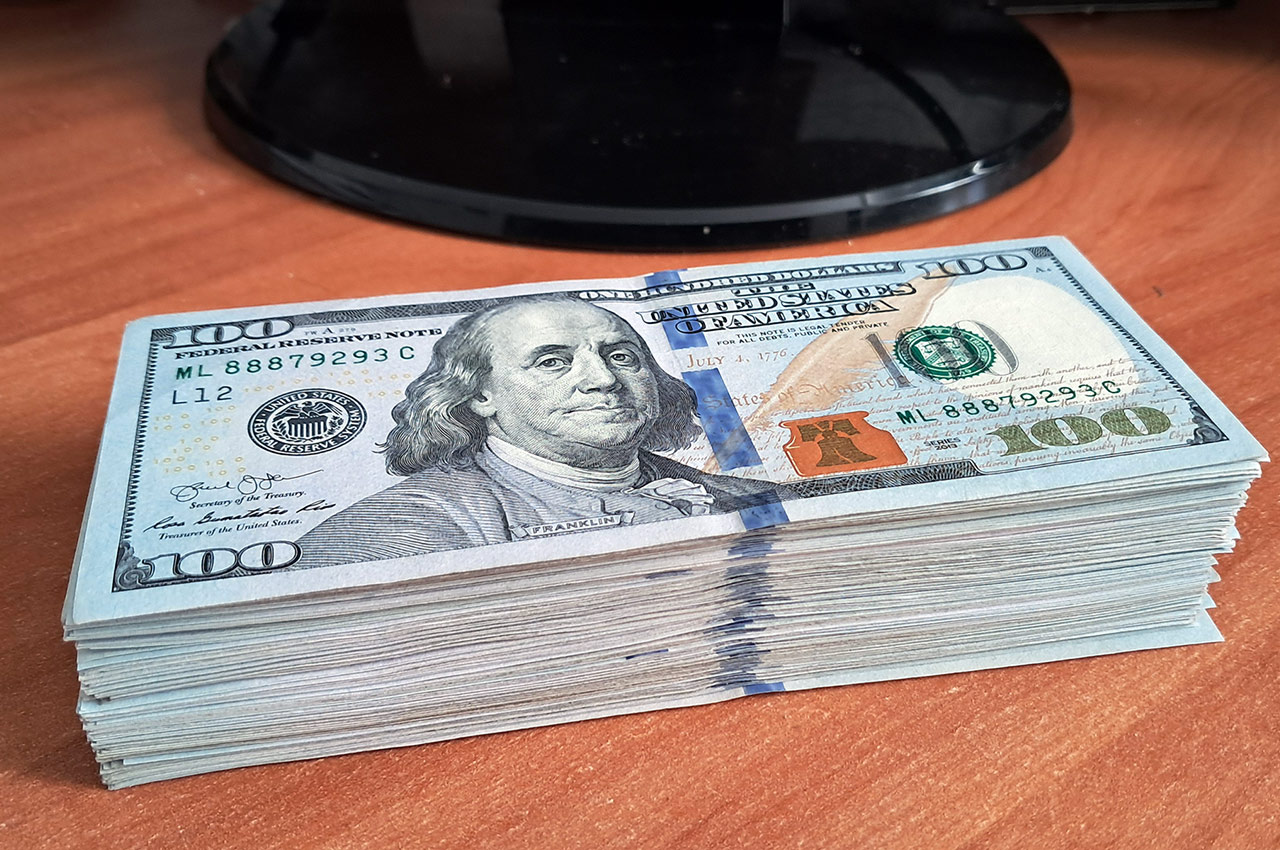
If you've read this far and are still a bit confused, here's a condensed version:
Take dollars or euros. Dollars – new series of $50 and $100, plus a small reserve of "new issue" for visas and emergencies. If dollars don't work out, take euros – they're accepted everywhere and there's less hassle with the year of issue.
An additional cashless tool. It doesn't work everywhere, online payments don't go through, but in large stores and hotels it saves the day.
Not as a foundation, but as a reserve for P2P exchange if cash runs out. It's a lifeline, not a way to save.
Only as a backup option in Turkey and some CIS countries, when other options are unavailable.
For the advanced. It can be exchanged for cash in the UAE, Turkey, Georgia and Thailand, but there's a risk of getting "dirty" coins or a sanctions flag. As a reserve – yes, as a foundation – no.
For those who travel often and are ready to pay for issuance. It won't pay off for one-off trips.