The main hit – on your wallet. Which financial loopholes are closing?
Money is the fuel of any trip. And that's exactly the gas tank they're trying to block now.
The bank blacklist expands: foreign "plastic" under threat?
Over 100 more Russian financial institutions and banks have been added to the new list. This means if you've been using transfers through some "quiet" regional bank that stayed under the radar, that loophole has likely closed.
Moreover, the EU has started strictly punishing foreign banks for helping bypass restrictions. Financial institutions in the UAE, Georgia, Kyrgyzstan, and Panama have already been caught in the crossfire. It's like musical chairs: there are fewer and fewer chairs (safe banks in neighboring countries), and more and more people wanting to sit. The risk that your brand new CIS-bank card will suddenly stop accepting transfers from Russia has skyrocketed.
Warning: even if you already have a foreign bank card in hand, it may stop working due to frozen correspondent accounts. Always have a backup payment option, and don't keep large sums in foreign accounts.
UnionPay from RSHB is losing ground: Asia no longer accepts the "plastic"?
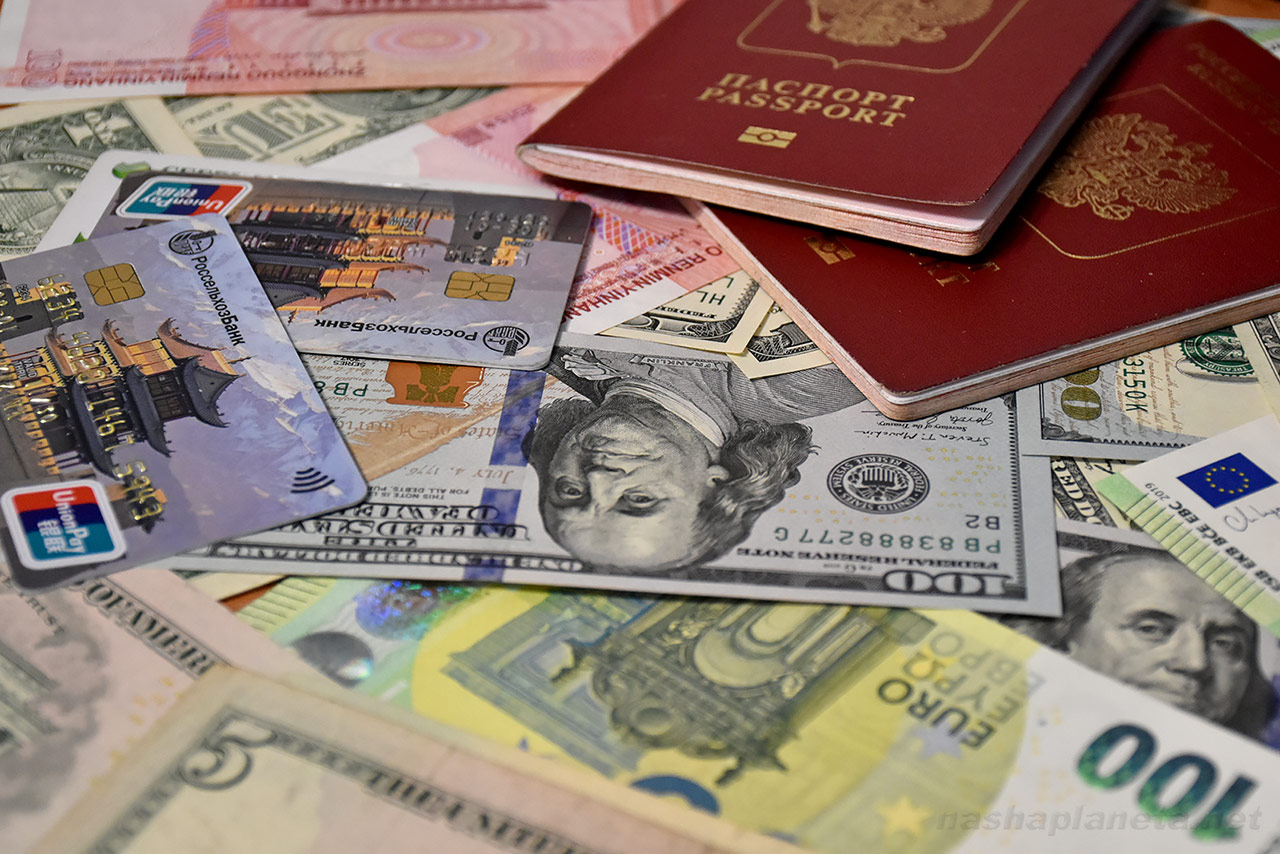
Until recently, we had a proven ace up our sleeve – UnionPay cards from the Chinese payment system issued by Rosselkhozbank (RSHB) and ATB. They performed well: good rates, stable operation, reliability. We actively used them ourselves on trips. But it seems the loophole is starting to close, and counting on it 100% is definitely no longer safe.
There are already worrying reports from travelers. In China and other Asian countries, these cards have started to "fail" massively when trying to link them to local wallets like WeChat, Alipay, and Nihao China. QR code payments simply don't go through. Finding yourself in the middle of Beijing or Bangkok with a smartphone that's become a useless brick for payments is not a pleasant experience.
As an alternative, UnionPay cards from the Asia-Pacific Bank (ATB) remain available. But here we face harsh reality: their service fees are steep, and finding a branch in Russian regions is a challenge.
Crypto goes on the defensive: forget about easy transfers?
For independent travelers, crypto has long been a digital wallet. The scheme "buy USDT for rubles – withdraw to a foreign card" saved millions of vacations. Now the EU has imposed a complete ban on transactions with 14 major crypto platforms registered in the UAE, Georgia, Kyrgyzstan, and Panama.
We think this is the most sensitive blow to crypto-travelers. The EU has created a mechanism that can completely block ties between European counterparties and platforms that help Russians. If the platform you use to withdraw money for life in say Spain or Thailand lands on this list, your digital coins there will simply be frozen.
Advice: don't keep all your funds on one exchange. Use decentralized wallets and P2P platforms – they're harder to block.
Transport quest: airports and flights
Large Russian aviation hubs – Sheremetyevo and Mineralnye Vody – suddenly appeared in the sanctions text. Many immediately felt a chill: are international hubs really closing?
Sheremetyevo and Mineralnye Vody airports hit by sanctions. Will we stop flying?
Don't panic. Sanctions against airports are related to cargo transport and military-industrial equipment, not passenger flights. Ordinary civilian flights to Istanbul, Dubai, or Yerevan won't be canceled because of this.
However, we have a healthy skepticism about the cost of such flights. Servicing planes, purchasing spare parts, and coordinating logistics will become harder for airports. And any additional business costs are always passed on to the buyer. So get ready for a gradual rise in ticket prices.
Survival guide: how to prepare for a trip now
Living in an era of restrictions is like crossing a busy intersection: you need to look around 360 degrees. To avoid being left without a cent in a foreign country, we recommend restructuring your vacation preparation.
- Diversify your crypto: Don't keep all assets on one exchange, especially if it has roots in the UAE or the CIS. Switch to decentralized wallets and P2P platforms on "cold" media that can't technically be blocked by a Brussels decision.
- Check CIS banks before opening a card: If you're planning "card tourism" (a trip for a card to Kazakhstan or Kyrgyzstan), choose only large banks that strictly follow compliance and aren't involved in gray schemes. The stricter a bank is with checks, the longer its card will survive abroad.
- Don't rely on UnionPay: Don't use Chinese "plastic" as your only source of money. Payment failures via QR codes prove that this system no longer provides 100% stability guarantees.
- Return to cash: Cash is once again the traveler's best friend. Yes, wads of euros and dollars in your pocket are outdated and inconvenient. But cash knows nothing about the 21st sanctions package and is accepted at any cafe in Rome, Beijing, or Bangkok without checking your passport.
Comparison of payment methods abroad
| Method | Reliability | Fees | Where accepted | Main risks |
|---|---|---|---|---|
| UnionPay cards (RSHB) | ⚠ declining | Low | Worldwide (partially) | Refusal to link to WeChat/Alipay, issues in Europe |
| UnionPay cards (ATB) | ✅ still working | High | Worldwide (partially) | Expensive service, few branches in Russia |
| Cryptocurrency (USDT, BTC) | ⚠ under threat | Medium | International exchanges, P2P | Exchange blocking, frozen funds |
| Cash (euros, dollars) | ✅ absolute | Exchange rate | Everywhere | Theft risk, import limits |
| Foreign bank cards (Kazakhstan, Georgia) | ⚠ risk of disconnection | Medium | Many countries | Termination of correspondent relationships |
The bottom line: is the window to Europe and the world closing?
The world hasn't closed, but the entry ticket has become more expensive – both in money and preparation time. You can still travel, but now before every trip you'll have to do a mini-investigation: does the bank work, is the exchange alive, and how much cash are you allowed to bring. We believe flexibility and the ability to change plans quickly are the key skills of a modern traveler. As for what other consequences we'll feel from the new sanctions package – we're yet to find out.