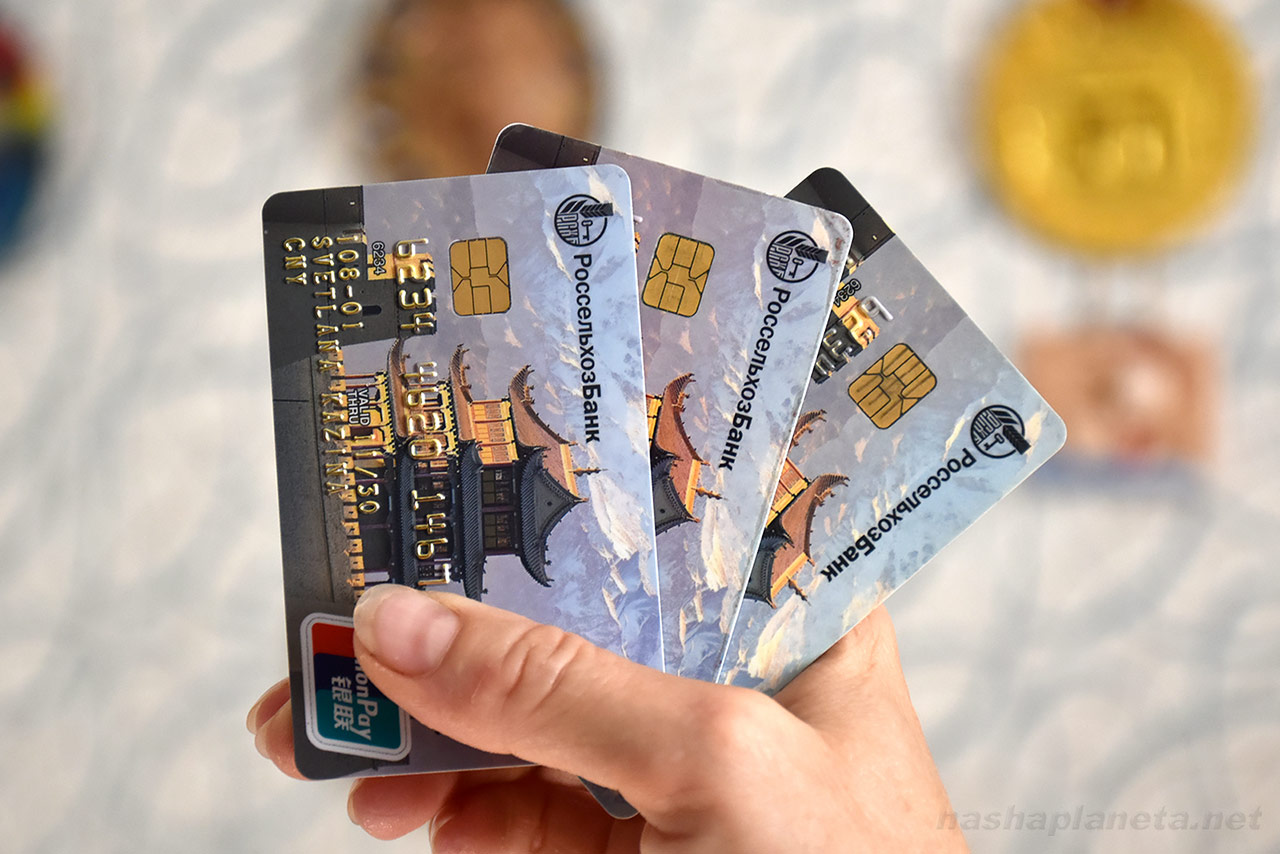
What exactly has increased: new RSHB rates for UnionPay
Let's start with the main point. Yes, rates have indeed gone up. The changes have affected not only withdrawal fees but also card issuance costs. Previously, you could open any UnionPay card for free, but that's no longer the case.
But there's good news too: maintenance is still free!
Key changes starting in 2026:
- First ruble card – still free.
- Issuance of the second and each subsequent ruble card – 4,500 rubles.
- Issuance of foreign currency cards (yuan, dollars, euros) – paid: 380 yuan, 55 dollars, or 45 euros.
- Cash withdrawal fees at third-party ATMs have increased:
- For ruble cards: 1.5% (minimum 250 USD).
- For foreign currency cards: 4% (minimum 70 yuan / 7 dollars / 7 euros).
Previously, under the old rates, the withdrawal fee for a ruble card was 1% (minimum 199 USD), and for a yuan card – 3% (minimum 17 yuan). Now the numbers are higher: 1.5% and 250 rubles vs 4% and 70 yuan respectively. The difference is significant, especially when withdrawing small amounts.
At the same time, the fee for card payments in stores is still absent – that's a plus. But, as before, there are hidden conversion losses, which we'll also discuss.
An important plus: if your card turnover in the previous month exceeded 30,000 rubles, RSHB's cash withdrawal fee is not charged. This rule remains and applies to all currencies.
Ruble card: pros, cons, and the price tag
A ruble card is the classic option. Top it up in rubles and you're good to go. No dancing around buying foreign currency.
Pros:
- Simplicity. No need to think about exchange rates, conversions, or brokerage accounts.
- Free issuance (first card).
- Free maintenance.
- Relatively low withdrawal fee – 1.5% (minimum 250 USD) vs 4% for foreign currency cards.
Cons:
- Double conversion. When paying abroad, the purchase currency is first converted to yuan, then to rubles. Each step has its own losses.
- Less profitable for large purchases compared to a yuan card (excluding the withdrawal fee).
Essentially, the ruble card is the choice for those who value convenience and aren't ready to deal with currency transactions. Especially if you plan to withdraw cash – here the ruble card wins due to its lower fee.
Yuan card: savings or a headache
A yuan card is a tool for those willing to spend time learning the details to save money.
Pros:
- One conversion. The purchase currency is converted directly to yuan, which sit on your account. Fewer intermediaries – fewer losses.
- Better for store payments. According to our calculations (and not only ours), a yuan card gives instant savings of at least 6% compared to a ruble card for non-cash payments.
Cons:
- Paid issuance – 380 yuan.
- High cash withdrawal fee – 4% (minimum 70 yuan).
- Top-up complications. You need to buy yuan – either through the bank's app at the internal rate, or through a brokerage account (cheaper but slower).
A yuan card is the choice for those who plan to mainly pay by card and are willing to deal with top-up hassles for the sake of savings. If you plan to withdraw cash – this card becomes unprofitable due to the 4% withdrawal fee.
Comparing in numbers: which is better in 2026
To make it clearer, we took real data and calculated how much you'll lose on fees in different scenarios. The calculations are for a trip to Thailand (baht) – but the proportions will be roughly the same for other countries.
For the sake of accuracy, we didn't include ATM fees (they vary everywhere) and assumed you don't have the 30,000 ruble turnover waiver. That is, RSHB fees are charged in full.
| Scenario | Amount in rubles | Baht received | Loss from best option |
| 🛒 Payment / yuan card (top-up via broker) | 10,000 ₽ | ~4,420 ฿ | 0% |
| 🛒 Payment / yuan card (top-up via app) | 10,000 ₽ | ~4,330 ฿ | ~2% |
| 🛒 Payment / ruble card | 10,000 ₽ | ~4,140 ฿ | ~6.3% |
| 🏧 Withdrawal / ruble card (10,000 ₽) | 10,000 ₽ | ~4,040 ฿ | ~8.6% |
| 🏧 Withdrawal / ruble card (20,000 ₽) | 20,000 ₽ | ~8,160 ฿ | ~7.7% |
| 🏧 Withdrawal / yuan card (10,000 ₽) | 10,000 ₽ | ~3,990 ฿ | ~9.7% |
| 🏧 Withdrawal / yuan card (20,000 ₽) | 20,000 ₽ | ~8,300 ฿ | ~6% |
What we see from the table:
- For store payments the yuan card is still better than the ruble card – the difference is about 4-6% in favor of the yuan.
- For cash withdrawals the picture changes. The ruble card turns out to be more profitable than the yuan card, especially for small amounts. Due to the high minimum fee threshold (70 yuan), the yuan loses to the ruble over the long run.
- The worst option is withdrawing small amounts (up to 10,000 USD) from a yuan card. The 70 yuan fee eats almost 10% of the amount.
These calculations are consistent with our tests of the card in other countries: for example, in May this year, when withdrawing 1000 ringgit (about 20,000 USD), the fee from a ruble card was 300 rubles, while from a yuan card – 4% of the yuan amount, which is already 800 rubles!!!
So what to choose in the end
After all the calculations and analysis of the new rates, the answer is no longer as clear-cut as before. Previously, the yuan card won almost always, but now it all depends on how you plan to spend your money.
- 💰 If you're going on a short trip (up to 2 weeks) with a budget of up to 50,000 rubles – get a ruble card. It's free to issue, simple to use, and doesn't require extra hassle. Yes, you'll lose a bit on conversion when paying, but the losses won't be critical – within 500-1000 rubles for the whole trip. And for cash withdrawals, the ruble card is actually better than the yuan.
- 📈 If you're going for a long time, planning large expenses (from 100,000 USD) and willing to deal with top-ups – get a yuan card. But with one condition: you'll be paying by card, not withdrawing cash. For cash withdrawals, the yuan has become too expensive due to the 4% fee (minimum 70 yuan).
What if you need cash?
- Withdraw from a ruble card – it's cheaper than from a yuan card, especially if you withdraw large amounts (to minimize the 250 ruble minimum fee).
- Or bring cash dollars or euros and exchange them on the spot. According to our calculations, this may be even more profitable than withdrawing from a card, especially if you bought the currency at a good rate.
Important warning: don't rely solely on your card. The sanctions situation changes quickly, and the card may stop working at any moment. Always bring backup cash – dollars, euros, or yuan – for the entire trip. This is our firm recommendation, based on experience. And for how the new 21st sanctions package against Russia has affected things, read our overview.
And one last tip: if possible, get both cards – ruble and yuan. The ruble card as your main one for cash withdrawals and backup, the yuan card for purchases. This way you get maximum flexibility and can choose the best method for each situation. The paid issuance of a foreign currency card at 380 yuan pays for itself after purchases of just 6000 yuan (about 896 USD) thanks to savings on conversion.
We hope our breakdown has helped you understand the new rates and make the right decision. If you still have questions – ask in the comments, we'll try to answer.
And if you want to dive deeper into the topic – read our full article with detailed calculations for all currencies. There we analyzed the situation before the rate increase, but many principles are still relevant.