In the first hours after the Boeing 737 MAX 8 of Flydubai suddenly turned into the Saudi Arabian desert instead of heading to Tel Aviv, travel publics produced a sensation: a Russian and a Ukrainian pilot had fought in the cockpit over politics. A little later the version was reworked: allegedly they were ordinary passengers and heroically broke down the door to save the airliner.
This tale about a "Slavic trail" is still circulating online. But if you put emotions aside and open the official intelligence reports and CBS News material, the picture becomes far more chilling. There was no petty brawl there. A real thriller unfolded on board.
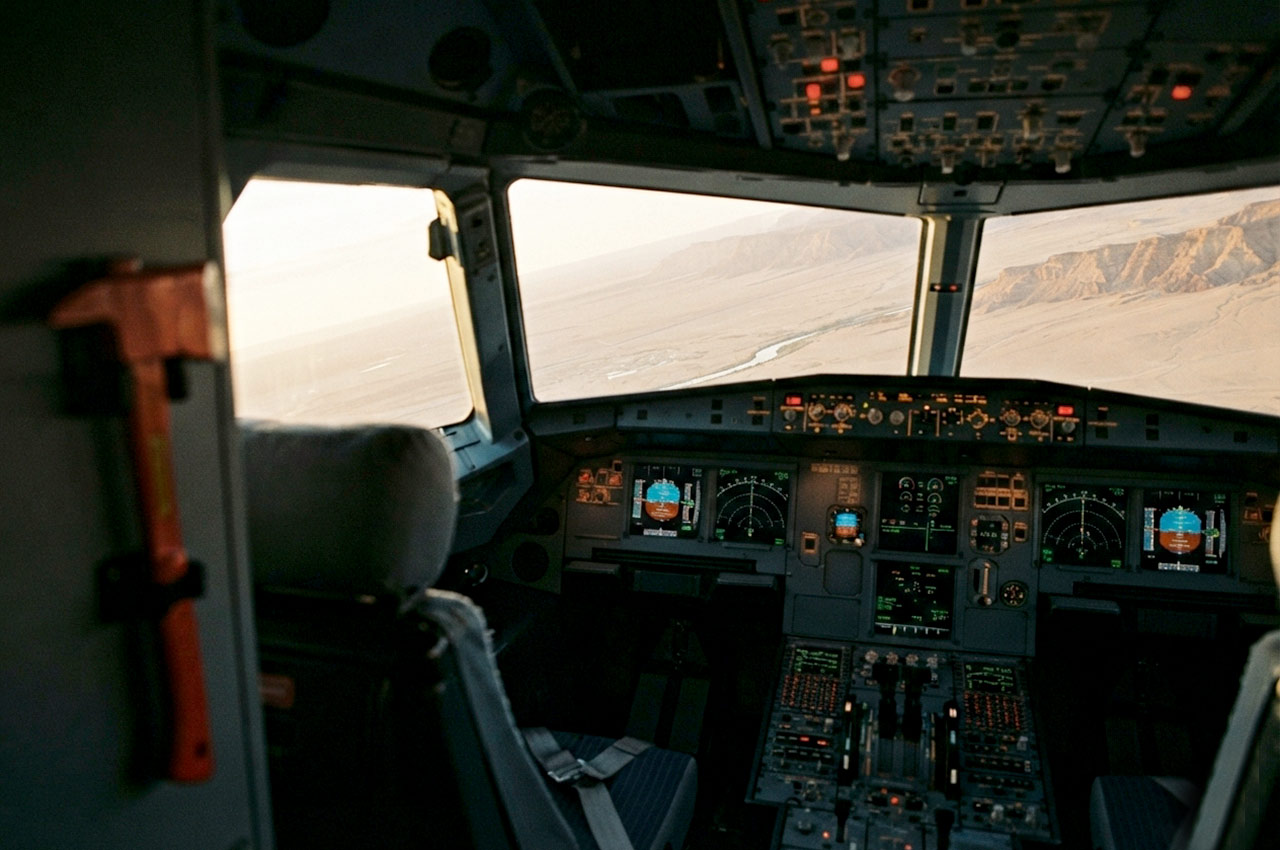
The image above was created by AI and is for illustrative purposes only. It is not a photograph of flight FZ1073 and does not reproduce the real events of that day.
Russian versus Ukrainian: how Israeli TV invented a Slavic fight
The funny thing is that this rumor was spread not by anonymous bloggers but by official Israeli media: Channel 12 and other local TV channels. When the plane was going down and radars were picking up who knows what, sources in emergency services gave journalists the first hypothesis that came to mind.
World media instantly picked up the hype. Publics began competing to invent details: who hit whom first and what was shouted. In reality, there were no Russian or Ukrainian citizens in the crew. This whole story is a clear example of how respectable TV channels, chasing urgent views, can invent a geopolitical detective story against the backdrop of political tension in the world.
If news of an emergency appears in the first hours, do not rush to retell it to your friends. Official preliminary reports are usually published a few days later, and black box data sometimes only after weeks and months of investigation, and they often completely refute the initial media versions.
Chronicle of the dive: axe, shut-down engines, and Hanuman in the cockpit
What actually happened on flight FZ1073? In the skies over Jordan, the co-pilot, Omani citizen Hammam al-Hammani, attacked the captain, Indian citizen Smith Macchar. The Omani used the crash axe, which is always kept in the cockpit in case of an emergency.
The attacker acted like a seasoned suicide terrorist. He put the Boeing into a steep dive: the plane descended from about 35,000 feet (10,600 m) to 16,000 feet (4,900 m) in just two minutes. Such an overload tore part of the rudder. He presumably also shut down both engines and cut off radio contact with the ground (final conclusions on the engines are still being made based on the flight recorders). The plane turned into a huge silent iron, falling from a height of several kilometers.
The bleeding Indian captain managed to press the button unlocking the armored door. Passengers, realizing that we were flying nose down, burst in and subdued the Omani. Two pilots flying on the same flight as passengers (off-duty) took over the controls, restarted the engines in the air, and diverted the aircraft to the Saudi city of Tabuk. Saudi Arabia provided an airport for the emergency landing, for which the UAE later officially thanked its authorities.
Captain Macchar survived. Later in the hospital, when Indian Prime Minister Narendra Modi called him by video link, the pilot cried and said that he simply prayed to the god Hanuman and tried to save the 174 people on board, including 166 Israeli passengers.
Fighter jets scrambled: why they almost shot down their own
While the fight was going on in the air, terrible decisions were being made on the ground. The Israeli military saw that the passenger aircraft was silent, not responding to requests, and falling along a trajectory that led straight to the Ben Gurion airport terminal or to the Azrieli towers in Tel Aviv. According to the investigation, al-Hammani had visited Ben Gurion Airport several times in advance and collected information for an attack. He initially planned to strike back in July but postponed it.
The military activated the strict "9/11" protocol. Its logic is cynical: if a hijacked plane is heading to ram a city, it is destroyed in the air. The death of one and a half hundred passengers is a tragedy, but a fueled Boeing falling on a residential block will kill thousands.
Fighter jets were urgently scrambled, and Israel's airspace was closed. A clear geographic line was established, after crossing which Prime Minister Benjamin Netanyahu was to give the order to strike. In Israel, only the head of government can make the decision to shoot down, and the military would have preferred to destroy a passenger airliner than allow hundreds of people on the ground to die. The passengers were saved only by the sharp turn toward Saudi Arabia, which the pilots managed to make a couple of minutes before the critical point. The Israeli military canceled the attack, and Saudi fighter jets began escorting the Boeing in the air.
A security hole the size of a Boeing: how a radical got the controls
The main question for the airlines: how did a person with extremist views even end up at the controls?
Wild things came to light. Hammam al-Hammani was born in the UAE, his mother is Syrian, and he is about 29 years old. He previously worked at Oman Air. There he was caught for radicalization and removed from flight training, transferred to another position within the company. Later he underwent three months of theoretical training at Royal Air Maroc in 2025 but was not hired for a permanent job at the Moroccan airline. But Flydubai in Dubai hired him without unnecessary questions – and he worked there for only about 8 months.
International aviation still has no single mandatory global pilot database. A person's past problems within Oman simply did not appear in the UAE databases. Moreover, according to the rules, Israeli security services were supposed to check crew lists in advance before departure and screen out the Omani citizen (the countries have no diplomatic relations). However, as it turned out after the incident, the Israeli Ministry of Transport does not conduct independent checks of foreign pilots and relies on airlines and their national regulators, even though it was the Ministry of Transport that in 2025 was appointed responsible for the security of foreign flights. Crew lists were supposed to be transmitted to Israel 48 hours before the flight, but in practice this did not happen.
At the time of the incident, there was no single mandatory global pilot database. ICAO introduced "Insider Threat Toolkit" recommendations back in 2022, but this is a set of advice, not a full-fledged registry. An airline sees only the part of a pilot's biography that the previous employer voluntarily passed on.
Farewell to cheap tickets and fast transit? What awaits us at airports
Experts express concern that this case could significantly complicate and make more expensive the civil aviation we are used to. For us ordinary tourists, the changes will be noticeable:
- Total screening of crews. Netanyahu ordered the security level of all flights to Israel to be raised and the background of every pilot and flight attendant of foreign companies to be checked. This will inevitably lead to flight delays in the Middle East.
- A second cockpit door. At the ICAO level, the possibility of obliging companies to install double barriers in front of the cockpit is being discussed. When a pilot leaves to use the restroom, the passage to the first rows will be blocked tightly. This may worsen comfort in the first rows.
- Secret air marshals on board. According to Israeli media, expanding the air marshal program to foreign airline flights is being discussed. One or two seats on the plane that you could have bought will now be reserved for security agents.
- Rising ticket prices. Global pilot checks, psychological tests, and more complex security systems cost huge amounts of money. We will be made to pay for this, through new fees.
The era when you could quickly slip through the transit zone in the UAE, Qatar, or Oman on cheap tickets and relax in your seat is under threat. Aviation will become safer, but we will have to pay for this safety with our time and our wallets.
There is also good news: Captain Macchar survived, and all 174 passengers of flight FZ1073 landed safely in Tabuk. Sometimes even in the most terrible story there is room for a happy ending.
If you are planning a layover through major Middle Eastern hubs in the coming months, allow at least 3–4 hours between flights. New crew checks and additional barriers in front of the cockpit are already increasing boarding time by 20–40 minutes.