Planning flights around Russia and abroad now feels like playing the lottery. Since May 12, 2026, there has not been a single day when all Russian airports operated normally. On average, every day the schedule of seven airports across the country is disrupted due to restrictions – versus four a year earlier. In the main air hubs the picture changes daily: in Sochi on September 13, 139 flights were delayed, and passengers waited 40–56 hours for departure. In Moscow, the airspace is periodically closed in all civil airports at once.
For a passenger, these are not dry numbers. This is a ruined vacation, a burned connection, a night in the terminal, and buying a new ticket with your own money. We have also found ourselves in such situations more than once. Below is what helps in practice.
How often airports are closed and where it happens most often
The Carpet plan is not introduced on a schedule. The shortest restriction can last 20–30 minutes, but during periods of mass attacks the airspace is closed in waves several times a day. Even a nighttime restriction of 3–4 hours leads to schedule disruptions for the entire next day.
If you are only choosing a route, look at the table. The flow of restrictions is distributed unevenly, and some hubs are hit noticeably more often than others.
| Airport | Risk of delays | Comment |
|---|---|---|
| Sochi | 🔴 Maximum | September 13 – 139 delayed flights in a day, waiting up to 56 hours |
| Kazan | 🔴 High | In the first half of 2026 – 51 days with restrictions |
| Domodedovo | 🔴 High | Closes synchronously with Sheremetyevo and Vnukovo |
| Vnukovo | 🔴 High | September 29 – more than 60 delayed arrivals |
| Sheremetyevo | 🔴 High | September 29 – more than 70 delayed arrivals |
| Pulkovo | 🟡 Medium | September 30 – 8 flights delayed, 10 canceled |
| Samara | 🟡 Medium | September 28 – 30 delayed flights in the morning |
| Novosibirsk, Irkutsk, Krasnoyarsk, Khabarovsk, Vladivostok | 🟢 Low | In the first half of 2026 – not a single day of disruptions due to UAVs |
Siberian and Far Eastern hubs more often live at their usual rhythm. But this does not mean they are insured against disruptions. If your route starts in Moscow, Sochi, or Kazan, the risk of delay is higher than when departing from Novosibirsk. And it does not matter whether you are flying through a problematic city or departing from it. The problem affects both local and transit passengers. During a Carpet alert over the Moscow zone, Sheremetyevo, Domodedovo, and Vnukovo all close at the same time.
Wave closures of the airspace mean that an airport can open and close again during the day. If you hear that "the airspace is already open", this is not a guarantee that your flight will depart on schedule.
Why 2 hours of Carpet turns into a day of waiting
A two-hour airspace closure does not equal a two-hour delay. Aviation works like a huge conveyor, where one failure pulls dozens of others along with it. Here are the main reasons why waiting drags on:
- The crew reaches its duty time limit. A crew has a strict limit: total flight time – no more than 12 hours per day, and the start of the shift cannot exceed 14 hours. If the aircraft circled over the city or landed at an alternate airport, the crew goes to rest. The airspace is already open, but there is no one to fly.
- The plane went to an alternate airport. If the aircraft could not land at the destination, it lands in another city. From there it still needs to fly to your airport, which is additional hours. Sometimes the aircraft is returned to its base airport, and the flight is canceled entirely.
- Low-cost carriers fall apart faster. Many low-cost carriers take only 40–50 minutes for turnaround, while large carriers allow 1.5–2 hours. One morning delay by evening turns into an avalanche of cancellations.
- Chain of flights and mass disruption at a hub. One aircraft must make it to several cities. If dozens of aircraft are grounded in Sheremetyevo, Domodedovo, Vnukovo, Sochi, or Kazan, the schedule is cleared not in hours but in days. A shift in one segment breaks the following ones.
In Sochi, after a series of airspace closures, the schedule was disrupted for several days. In Moscow, delays could stretch for half a day and longer. There is no universal number, but the scenario is the same: the larger the hub and the more flights tied to it, the longer the consequences.
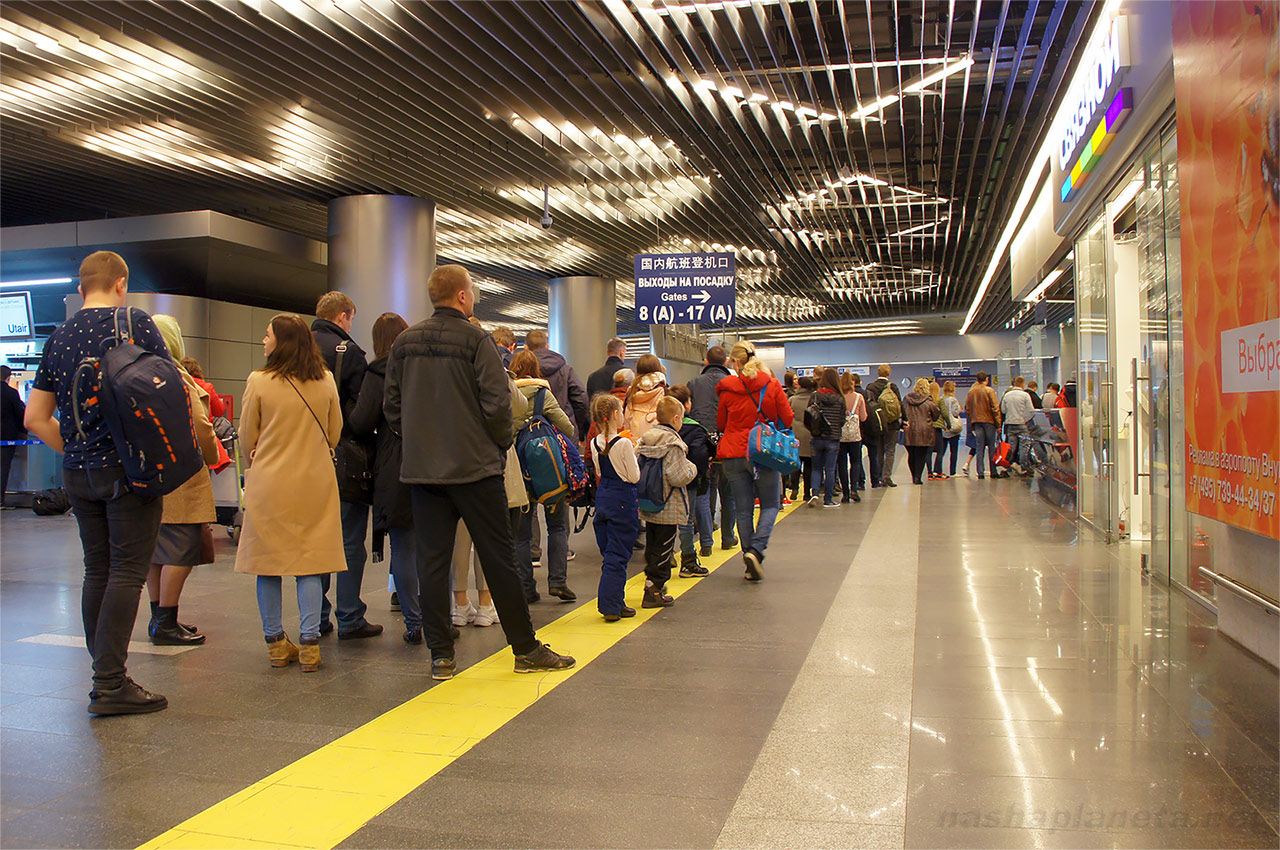
Delayed because of Carpet: who pays for a missed connection
The main question is who will pay for a new ticket and my losses if I was late through no fault of my own. Let us break it down now:
Single ticket: rebooking is free
You bought Moscow – Doha – Bangkok on one booking. You have one booking number. If there is a delay, the carrier is obliged to rebook you on the next flight for free. This also works during an airspace closure. They may send you on a flight of another partner airline if yours has no free seats. You cannot demand compensation for the delay itself in a force majeure situation, but rebooking must be provided.
And what about the hotel, meals, and transfer? In a force majeure situation, a hotel is not guaranteed. But large companies at their base hubs often accommodate passengers. Emirates and Qatar Airways value their reputation. Under Omani law, if departure or arrival is through Oman, care for the passenger is not removed even in a force majeure situation. The right to drinks arises from 2 hours of delay, to meals – from 3 hours, compensation – for delays over 6 hours. Low-cost carriers may limit themselves to a voucher for water and a sandwich.
The transfer to the hotel is usually organized by the carrier if it provides the hotel. If you get there yourself, keep the receipts. Sometimes the expenses are reimbursed, but not always.
Baggage is the simplest. With a single booking, it is most often transferred automatically, and you do not need to collect it at the transit airport. But in some countries (for example, in the USA) you will have to collect it and check it in again even with a through ticket.
Separate tickets: the second one burns up
You took a separate ticket to Istanbul, and from there to Europe – another one, on a local company. If the first flight is delayed, the second ticket simply burns up. For the second airline, you are a late passenger. The new ticket will have to be bought at your own expense. Both the hotel and meals – also at your own expense. Separate tickets are two independent contracts, and each carrier is responsible only for its own segment. If the airlines belong to the same alliance (for example, Star Alliance), sometimes they may accommodate you and rebook even with separate tickets. This is rare, but it happens.
Baggage is more complicated. With separate tickets, you need to collect it at the first airport and check it in again for the second flight. If the second flight is missed, the baggage will have to be collected and dragged with you to the hotel or into storage.
If you do not want to risk it, buy a single ticket or allow at least 8–10 hours between flights. A new ticket can be bought online through Russian aggregators, for example Trip.com or Aviasales. They work from any country, and Russian cards are accepted there. More details – in our whitelist of travel sites where Russian cards are accepted.
What if you missed a domestic flight, train, bus, or did not check into your hotel?
If you have already arrived at your destination after a connection, but missed a domestic flight, train, or bus, or did not manage to check into your hotel – the rule is simple: the airline is responsible only for its own flight. If your next ticket for a train, bus, or local low-cost carrier like AirAsia was bought separately, it burns up. There will be no compensation, even if the delay happened through no fault of your own.
If the hotel was part of a tour package and you lost a day of rest due to a flight delay, the issue is resolved with the tour operator. In practice, getting compensation is difficult. You can try through a pre-trial claim or court, but the chances of success are slim. If you want to try, collect all documents and receipts for the lawyers.
The only real protection is insurance, if it covers such cases. Check the terms in advance, before buying the policy. Most standard insurance policies do not cover delays and missed connections. Some agencies offer a "connection guarantee" service – if the first flight is delayed, they take on the rebooking.
Assistance rules for connections in different countries
If a connection on a single ticket drags on, the assistance rules – hotel, meals, transfer, compensation – differ in different countries and with different airlines. Here is how things stand with the key destinations.
- UAE, Qatar. Emirates and Qatar Airways at their base hubs almost always provide a hotel and meals. Refunds are processed quickly.
- Oman. Under local law, care for the passenger is not removed even in a force majeure situation. The right to drinks from 2 hours, meals from 3 hours, compensation for delays over 6 hours.
- Turkey. Turkish carriers and Pegasus may act differently. Large companies more often help, low-cost carriers save money.
- China. China Eastern and other Chinese carriers will make you go through circles of bureaucracy. Formally, compensation for delays in China is provided (200–400 yuan), but it is difficult to obtain, and often only for cancellations, not delays. Instead of a refund, they will persistently offer a free transfer to another day.
- Bahrain. Gulf Air provides a hotel and meals during delays, but much depends on the fare.
- Low-cost carriers. Air Arabia and similar ones, instead of a refund to the card, will try to credit a voucher to your personal account. You can only spend it on their own tickets in the future.
An example from our trip. We flew through Shanghai on a single ticket. The first flight from Kazan was delayed by 4 hours due to Carpet, and we missed the connection. At the China Eastern counter, they rebooked us without questions onto the next flight 4 hours later, and our new boarding passes were already ready. They did not offer a hotel; 4 hours can be waited out in the terminal. If the tickets had been separate, we would have bought a new one at our own expense.
Information vacuum: what to do if the internet is cut off
In emergency situations, mobile internet may be selectively cut off. The phone shows full signal bars, but apps and the online board do not update. We advise in such a situation to go to the airport strictly according to the original schedule.
The reasons are simple:
- Check-in closes automatically usually 30–60 minutes before departure, depending on the airline. If you stay at home, the system will cancel the ticket even if the plane departs 5 hours later.
- Regular calls and SMS often continue to work. Call the carrier's hotline directly. Keep in mind: some Russian low-cost carriers, for example Pobeda, charge for calls to the hotline, even if you call from Russia. Most large carriers have free calls. And from abroad the call may be even more expensive. It is better to save the hotline number in your notes or write it on paper in advance, because without the internet you will not find it.
- Vouchers for food, water, and the hotel are given only at the terminal and in person.
Is the airline obliged to warn about delays by SMS? Formally yes, but during mass disruptions messages may arrive late or not arrive at all. Do not rely only on SMS. Check the flight status by phone and at the terminal. The status in the airline's app may update with a delay; it is more reliable to look at the airport's online board.
If the mobile internet disappears, do not wait at home. Go to the airport on schedule. The system does not know that you are "waiting" and will cancel the booking automatically.
What to do at a transit airport if the plane left without you
If you are already at the transit airport and realize that the connection has collapsed, act in order.
- Go straight to the transfer desk or the airline representative. Do not wait at the gate and do not sit in a cafe "to think". The sooner you report the problem, the higher the chance of getting on the nearest flight. If the desk is closed or there is no representative, look for the airport's general transit desk (in large hubs like Istanbul, Doha, or Dubai they exist), call the hotline, or write in the airline's app chat. With many carriers (Emirates, Qatar, Turkish) you can rebook your flight yourself in the app without standing in line.
- If the ticket is single – demand rebooking. This is the carrier's obligation. They may send you on a flight of their own company or a partner if yours has no free seats.
- If the tickets are separate – the second ticket burns up. No one will give you rebooking. Buy a new ticket at your own expense. You can do this online if you have internet, or in cash at airline ticket offices. Keep in mind: ticket offices may be closed at night, then only online purchase or waiting until morning remains.
- If the ticket is single and the wait drags on – request a hotel, meals, and transfer. By law, for delays over 2 hours you must be given water, over 4 hours – hot meals, over 8 hours during the day (or 6 at night) – a hotel with transfer. Large carriers at their base hubs usually provide this. Low-cost carriers often limit themselves to a voucher for a sandwich. If the tickets are separate, no one is obliged to give a hotel and meals – all at your own expense.
- Keep all receipts. Food, water, taxi to the hotel. Sometimes expenses are reimbursed, but only with documents.
Financial shield: getting a refund for a non-refundable ticket
If you are departing from the territory of Russia, a foreign airline is obliged to comply with the Air Code of the Russian Federation. This applies to Emirates, China Eastern, Air Arabia, and other carriers.
If a flight is delayed by more than 30 minutes due to an airspace closure, you have the legal right to a refund of the fare, even if the tariff was non-refundable. In practice, some airlines refund the full amount, others withhold service fees. In a force majeure situation, the carrier may offer a rebooking instead of a refund. If the flight was not delayed but canceled, the rules are the same.
For a refund you need an official stamp about the delay. You can get it from the airline representative at the airport where you are at the time of the delay, at the transfer desk, or through the carrier's app. Without the stamp, getting a refund for a delayed ticket will be more difficult, but still possible; this is your guaranteed right.
Refund times depend on the carrier and the bank. In practice, a refund can take from 2 weeks to 2 months. Emirates and Qatar Airways usually refund faster. Chinese airlines can drag it out for several months. Air Arabia and other similar carriers, instead of money to the card, will push a voucher.
The right to a forced refund also works for foreign airlines if the departure was from the territory of Russia. Even a non-refundable tariff can be refunded if the delay is more than 30 minutes due to an airspace closure.
Three rules for a safe departure in current realities and our experience
- Choose daytime or evening departures from Russia. Restrictions are more often introduced from 2:00 to 7:00. By noon, airports usually manage to clear the congestion.
- Forget about short connections. For problematic hubs (Moscow, Sochi, Kazan) the minimum safe gap is now 8–10 hours. For stable ones (Doha, Dubai) less is possible, but with a buffer. Better a full day in a transit city with a hotel.
- Keep a financial cushion and documents. Cash, insurance, a Russian card for online purchases through domestic aggregators. And be sure to get official stamps about the delay. This is your money and your peace of mind.
Before a trip, I always look at what other flights operate from the transfer airport in the direction I need. For this it is convenient to use Google Flights or FlightRadar24 – they show all flights in the direction and their status in real time. If my flight is delayed, at least I know what to count on. If after my flight the next one is only tomorrow – that is one situation, I will have to book a hotel. If flights are every hour or two – that is a completely different one, I can calmly wait in the terminal. If an airline employee cannot offer anything suitable, I suggest options from the schedule myself – on a single ticket I can be sent on a flight of another partner airline.
Traveling is still possible now. But it is no longer about spontaneity, but about a reserve of time, money, patience, and detailed planning. If your flight gets caught in Carpet, first get the stamps and vouchers, then demand what is yours. Calm skies and a soft landing.