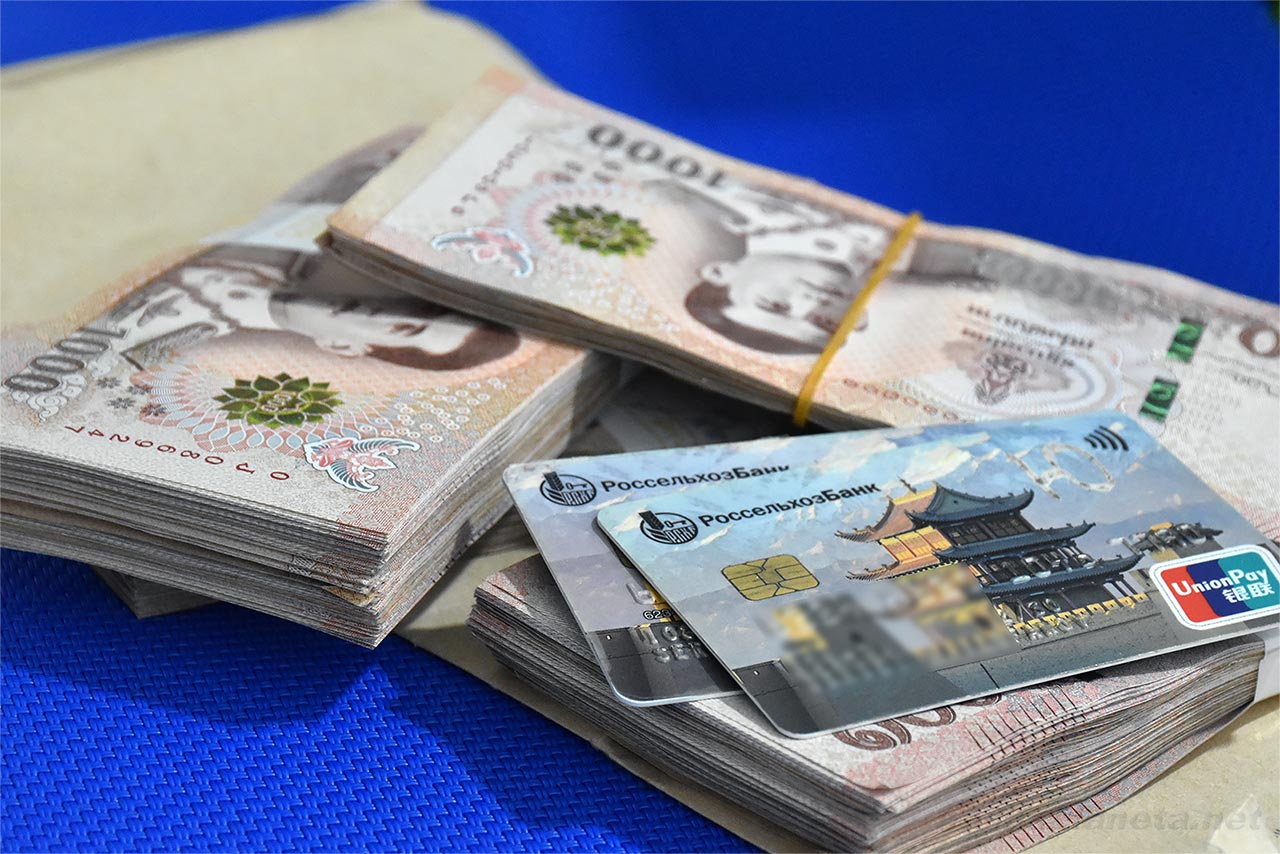
Tourists from Russia are already used to financial quests during their vacation. Sanctions have limited payment methods, and right now cash is king again. UnionPay cards work in many countries (including Asia, Turkey, Egypt, and other popular destinations), but you can't pay with them everywhere. Sometimes you specifically need paper money. And that raises the main question: wouldn't it be cheaper to just bring cash?
Why UnionPay is convenient but not a panacea
The situation with UnionPay cards from Russian banks is complicated right now. Of the big players that issue cards that actually work abroad, practically only the Russian Agricultural Bank (RSHB) is left. There are a few other local banks not under sanctions, but they have a weak presence in the regions. So for most travelers, the most popular and widely used option is the RSHB card.
And here it's important to give a warning. Russian UnionPay cards can stop working at any moment, as already happened with cards from other banks. Tourists were left without funds abroad overnight. So always have a backup option in the form of cash. This isn't paranoia – it's harsh reality.
In Europe or the US these cards don't work, but for a vacation in Thailand, Malaysia, or Turkey, it's an excellent tool. However, ATMs aren't on every corner, and some places only accept cash. Usually travelers look for workarounds: transfer rubles to local exchangers, use cryptocurrency, or ask friends. But withdrawing money from an ATM is the easiest. The other question is how hard it hits your wallet. We decided to test it in practice.
Our latest calculations below on withdrawals were done in Thailand. But before that, we did the same in Indonesia, Malaysia, and Sri Lanka. The result is roughly the same and even better, since Thailand has some of the highest ATM fees.
How much the fees cost: our real experience
For the sake of a clean experiment, we withdrew the maximum possible amount at once to minimize the fixed fee. In Thailand, the limit per withdrawal in a single transaction is 30,000 baht. The Thai ATM fee for using a foreign card is 250 to 320 baht depending on the bank.
So, we withdrew 30,000 baht. Including the local fee of 250 baht, the ATM debited 30,250 baht (894 USD) from our account. If we'd withdrawn just 1,000 baht, the fee would have eaten a quarter of the amount. That's why you should only withdraw the maximum.

But the Thai ATM fee isn't the end of the expenses. We withdrew money from an RSHB card, and the bank also takes its own percentage for the operation: 4% of the amount (minimum 239 yuan or 250 rubles depending on the account currency). That's exactly why withdrawing small amounts is extremely unprofitable.
Which currency is better for the card and how to top it up
At RSHB you can open a card in rubles or in yuan. It might seem like, why complicate things and use yuan? However, the bank's direct conversion rate from rubles to foreign currency is much worse. The yuan card performs much better when paying in stores and withdrawing cash. In practice, we now always use only the yuan card for trips.
A logical question arises: where do you get yuan to top up the card? There are two ways. The first – just convert rubles to yuan inside the RSHB app. It's simple but not very profitable. The second option is a real lifehack. You transfer rubles from the RSHB app to the "Svoi Investitsii" brokerage app. There you buy yuan at the exchange rate and withdraw it back to the card. It sounds complicated, but in reality anyone who knows how to use a smartphone can do it. No investment knowledge is needed – you're just doing a currency exchange.
Buying yuan through a brokerage account saves more than 1,700 rubles on our amount. As a percentage, that's about 2.2% of the purchase amount, which is quite significant on a trip.
Comparing all the ways to get currency
Now let's do the math. So, we withdrew 30,000 baht. With the ATM fee, that's 30,250 baht. In yuan, 5,983.72 yuan was debited from our account plus the bank fee of 239.35 yuan (that 4%). Total – 6,223.07 yuan.
To buy these yuan through the brokerage app, we spent 76,574.87 rubles (buying directly in the online bank, this amount would have been 78,285 USD). Now let's take these same 76,574 rubles and see how many baht you can get by other methods.
| Method of getting money | Result in baht | Pros and cons |
|---|---|---|
| Cash (buying dollars in Russia + exchanging in Pattaya) | 30,785 | ✅ The most cost-effective option. Alfa-Bank rate is 83.9, exchange in Pattaya at 33.73. But there's a risk of losing money and dependence on the rate at the moment. |
| Withdrawal from a UnionPay card (in yuan) | 30,000 | 👍 Safe and convenient. Losses on fees and rates are predictable. |
| Buying USDT cryptocurrency and exchanging for baht | 29,765 | ⚠ We buy USDT for rubles (914.14 USDT) and exchange at a licensed exchanger. Lots of operations and you need to understand the topic. |
| Cashless transfer to a Thai exchanger (SBP) | 28,237 | 👎 Simple and convenient, but the losses are significant. The exchanger's rate eats a lot of money. |
| Exchanging cash rubles at a Thai exchanger (rate 0.340) | 26,035 | ❌ The simplest option, but extremely unprofitable due to the poor ruble rate in Thailand. |
As you can see, withdrawing from UnionPay is second only to cash. And given the risks of carrying large sums, the card looks very decent.
If it's easier for you to take in information visually rather than in numbers, check out our short video on this topic. In it, we show in practice how to withdraw money from a UnionPay card at a Thai ATM and explain all the nuances with fees.
And what about other countries
Our experience is relevant not only for Thailand. In Malaysia, for example, the situation is even better. Many local banks (such as Maybank) don't charge any fee for withdrawing from foreign cards at all. As a result, withdrawing money from UnionPay there is even more cost-effective than exchanging cash. The same applies to Vietnam and Indonesia – you just need to look for ATMs of friendly banks.
Useful materials for traveling in Asia:
- How to exchange money in Thailand with the best value
- Which RSHB UnionPay card to choose: rubles, yuan, dollars, or euros
- How to book hotels abroad with a Mir card
- QR codes of Russian banks no longer work in Thailand: what's left for tourists
- What money and cards to take abroad in 2026-2027 so you don't end up penniless
- UnionPay tariffs went up in 2026: which card to choose for your trip – rubles or yuan
- The 21st sanctions package: will our people abroad survive, and how do we pay now?
We recommend treating the UnionPay card as an essential financial tool for any Russian traveler. The main thing is to open it in yuan, top it up through the exchange, and withdraw money in large amounts from ATMs without predatory fees. And don't forget about cash as a backup – then you'll save your nerves and your money.