Imagine: you're calmly planning a fall vacation or another "winter stay" in warm places, and suddenly it turns out that the visa-free regime in two countries that Russians particularly love is changing. Let's figure out what's happening and what to prepare for.
Montenegro cancels visa-free regime from October 1, 2026
Currently, Russian citizens can stay in Montenegro without a visa for up to 30 days. The visa-free regime is still in effect this summer. But from October 1, 2026, according to the local publication DAN citing government sources, visa-free entry for Russians will be canceled.
Why? Montenegro is actively moving toward EU membership. To gain EU candidate status, the country must align its visa policy with European standards. This means introducing visas for citizens of Russia, Belarus, and later Turkey, China, and Middle Eastern countries.
Montenegrin authorities, by the way, tried to delay this decision – the tourism sector accounts for 26% of GDP, and Russians in 2025 accounted for 16.4% of all foreign overnight stays. But EU requirements won out.
What currently applies under visa-free rules
While the visa-free regime is still in effect, entry requires:
- International passport – valid for at least 3 months from the end of your trip.
- Return tickets – border officials may ask for them.
- Health insurance – not strictly required, but we strongly recommend it. In a foreign country without insurance is like being without an umbrella in a downpour – it's not mandatory, but if you get caught, you'll regret it.
Important nuance: within 24 hours of arrival, every foreigner must register at a local tourist office or police station. If you're staying at a hotel or apartment, the management usually does this for you. But if you're renting directly from the owner – make sure to handle this yourself.
What will change after October 1 and how to get a visa
From October 1, the visa-free regime will be canceled. Instead, a visa will be required, processed through VFS Global – the largest visa application operator. Since early 2026, Montenegro has already opened visa centers in eight Russian cities – an indirect but telling confirmation that the visa-free cancellation is a done deal.
Our advice: if you were planning Montenegro for the fall, factor in time for a visa. And if you wanted to make one last visa-free trip – August and September are your chance.
Thailand cuts visa-free regime to 30 days
With Thailand, the situation is slightly more complex and perhaps even more dramatic – especially for those used to spending winters there.
Currently, the visa-free regime for Russians allows 60 days in the country. This effectively enables a "winter stay": arrive, extend your stay at an immigration office for another 30 days (costs 1900 baht, about 45460 USD), or leave for a couple of days to a neighboring country (Laos, Malaysia, Cambodia) and return with a fresh 60-day stamp. This is how many people live for six months or more.
But Thailand's cabinet has made a principled decision: visa-free entry will be reduced to 30 days. This hasn't been officially published or taken effect yet, but according to industry media, the changes will happen in the coming weeks or months.
Why? The 60-day visa-free period was a temporary unilateral measure by Thailand. Meanwhile, the bilateral agreement between Russia and Thailand allows mutual visa-free travel for exactly 30 days. So the country is simply returning to the baseline rules. Authorities explain this as a crackdown on abuse: excessively long stays were being used by some foreigners for work unrelated to tourism.
Who will be affected by the visa-free changes
Tourists going for 2–3 weeks – you can breathe easy. Nothing changes for you. 30 days is more than enough for any standard vacation.
But "winter visitors" and digital nomads – here's where it gets complicated. 30 days is no longer "almost half a year without problems." You'll have to do border runs more often (leave and re-enter). And there's an unpleasant catch: you might be refused a new entry stamp. Thailand is not obligated to let you in again and again, and border officials periodically exercise this right.
The risk of refusal with frequent border runs is real. We believe that if you plan to stay in Thailand for more than 60 days a year, it's better to consider official visa options, especially since the visa-free regime is tightening.
Options for long-term stay if visa-free no longer works
For those who want to stay in Thailand long-term, there are options. But they require money.
-
Option 1: DTV Visa (Destination Thailand Visa)
This is a long-term multiple-entry visa for 5 years for digital nomads, freelancers, and remote workers. It allows stays of up to 180 days per entry with the possibility of extending another 180 days within the country.
Cost – about 10,000 baht (approximately 239250 USD, )depending on the country of application).
But: you need to show 500,000 baht in your account (about 11962280 USD) and provide proof of remote employment.
-
Option 2: Retirement Visa (Non-Immigrant O or OA)
For citizens over 50. Requirements are also costly: proof of income or a substantial account balance.
The problem is that all types of long-term visas require significant account balances. And not every remote worker can show 500,000 baht.
Practical tips in light of the visa-free changes
So what to do in this situation? Here are a few recommendations.
- If you're planning Montenegro – make it before October 1, while the visa-free regime is still in effect. Or prepare for visa fees and a trip to VFS Global. Plan your visa procedures in advance.
- If you're planning Thailand – short vacations are unaffected. If planning a winter stay – start researching DTV options or prepare for more frequent border runs with the risk of entry refusal. Also note that extending at the immigration office (for 30 days) costs money and takes time.
- For remote workers – DTV is the most reliable option if you have the funds. If not – consider alternative countries with more lenient visa regimes, for example, Vietnam currently maintains visa-free for Russians up to 45 days.
We're not surprised. The global trend of tightening visa-free regimes for Russians is not new. But when it affects favorite beaches and a familiar lifestyle – it's always unpleasant. Although, perhaps this is a reason to discover new destinations? There are still many places in the world waiting with open arms and without visa hassles.
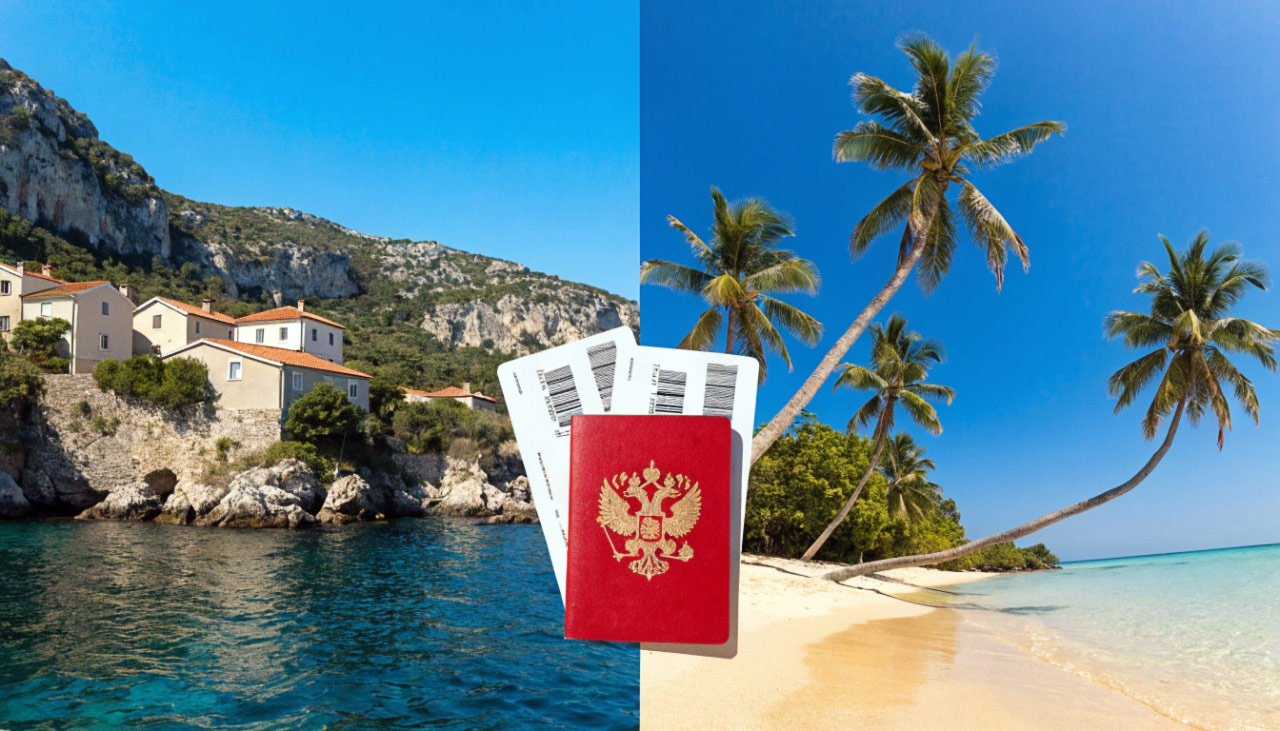
In the table below, we've summarized the key changes to the visa-free regime for clarity:
| Country | Current visa-free regime | New visa-free rules from 2026 |
|---|---|---|
| Montenegro | Visa-free entry up to 30 days | Visa-free regime canceled from October 1, 2026 |
| Thailand | Visa-free entry up to 60 days | Visa-free entry up to 30 days (in the coming weeks/months) |
Useful materials on visa-free entry:
This article is based on official sources and media publications from July 16–17, 2026. The situation may change, so follow the latest news before your trip.