What is langsat and where does it grow
Langsat (scientific name – Lansium domesticum) and longkong are two names for the same fruit. Longkong is a cultivated, sweeter variety of wild langsat. On markets, they're often sold under one name, but longkong is larger, sweeter, has almost no seeds, and its skin doesn't release sticky sap when peeled. Externally, they are yellow-brown fruits 2.5–5 cm in diameter, resembling small potatoes or large grapes. They grow in clusters – if you see a bunch on a branch, that's it. By the way, longan hangs individually – that's how you tell them apart.
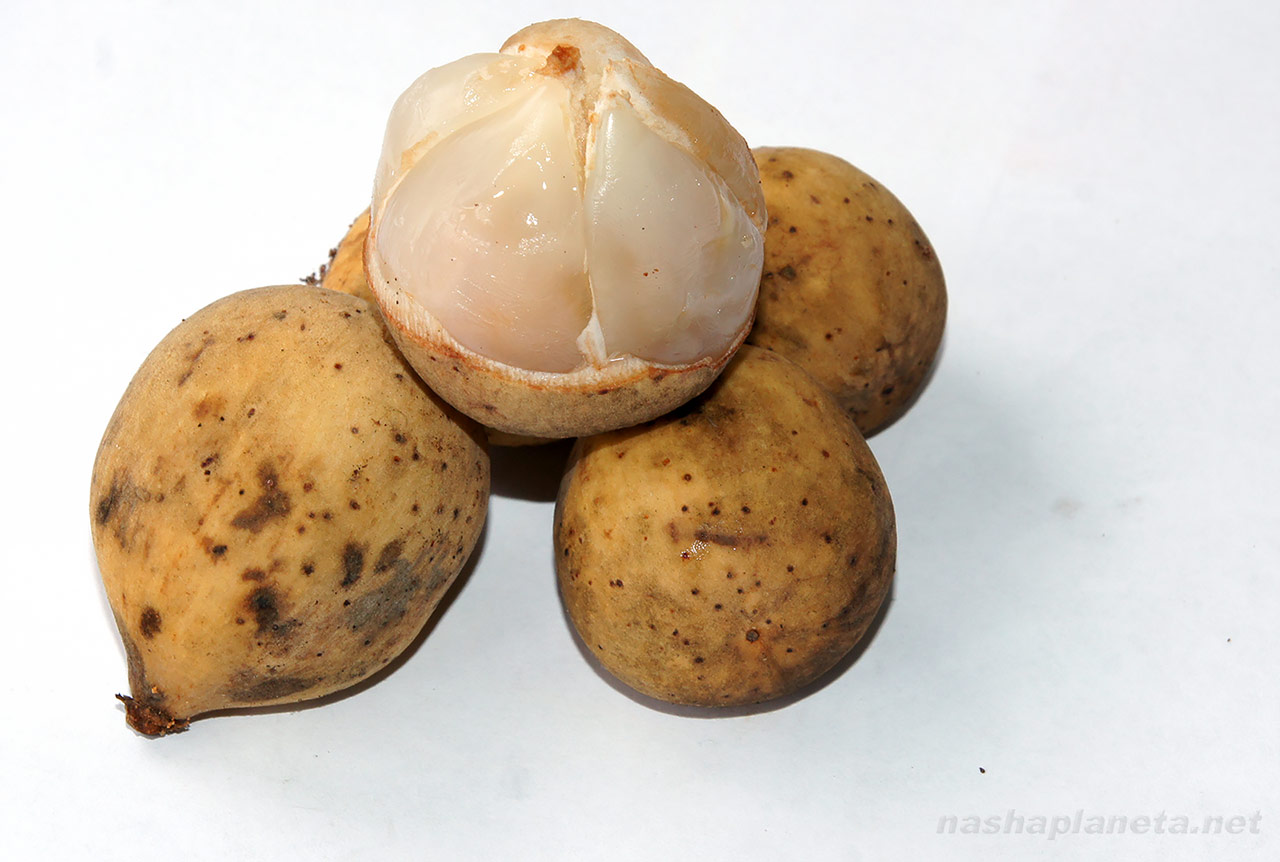
Inside, the fruit is divided into segments, like garlic. The flesh is translucent, firm, almost jelly-like – not watery, but dense yet very juicy. The taste is sweet-and-sour, refreshing, with a slight citrus note. It's not cloying – more like lemonade: sweetness gives way to a pleasant tang that quenches thirst well. In texture and flavor balance, many compare it to lychee, but langsat is more delicate and less tart. Others see similarities to grapes, but to my taste, it has its own character – light, clean, without a heavy aftertaste.
Langsat grows not only in Thailand but also in Vietnam, Malaysia, Indonesia, the Philippines, and Sri Lanka. So if you're traveling around the region, you can try it everywhere.
And a small bonus for the curious: dried or even fresh langsat peel, when burned, releases a pleasant aroma and repels insects. Locals sometimes use it as a natural repellent – not a replacement for bug spray, but a fun fact to remember.
30 baht in June – and 80 in Pattaya. Don't let them fool you
The langsat season mainly lasts from April to October, with peak in June–July. In some regions, there are two harvests per year. At the peak of the season, the price drops to 30 baht per kg (0.89 USD). Off-season or at tourist markets (Pattaya, Phuket), the price rises to 70–80 baht (2.07 rub. – 2.37 USD), or even higher. So the main advice is to look for local markets away from the fruit baskets on beach streets.
How to choose: the skin should be firm, without cracks or dark spots. If the fruit is soft or damaged – it's already starting to spoil. Check if there are ants on the clusters – they love this fruit, and if they've already appeared, the fruits are overripe or damaged. In the fridge, langsat keeps for 4–5 days (at +10..+12°C – up to two weeks).
How to peel langsat and not end up with sticky hands
The skin is thin and easy to peel with your nails – like a mandarin or lychee. But there's a catch: when peeling some varieties (especially wild langsat), a sticky milky sap is released, like latex. It's so sticky that your fingers start sticking together after just 2–3 fruits. Regular soap won't remove it – only alcohol, oil, or alcohol wipes. However, if you've bought cultivated longkong – this won't be a problem: its skin hardly releases any sap. We recommend peeling the fruit over a bowl, then wiping your hands with a wipe. If you don't have alcohol – try rubbing your hands with a slice of lime or orange: the acid also helps deal with stickiness.
What about the seeds – can you eat them?
Inside the segment, there may be a soft seed. It's not hard, but it's slightly bitter. If you chew it, the experience will be ruined. The good news is that some varieties have almost no seeds at all.
By the way, langsat seeds can be planted – they grow into a tree, but it's difficult at home, and you'd have to wait several years for fruit. In folk medicine, seeds are sometimes used as a dewormer, but we don't recommend experimenting.
Why don't people like it? The secret is that it's... another fruit
The main reason for disappointment is confusion with mafai. It's a close relative, but with a sour and slightly bitter taste. They look almost identical on the outside, so you might accidentally buy mafai without knowing it. Ripe langsat is sweet, with a slight tang, and no bitterness. If you got a bitter one with hard seeds, it's most likely mafai or an unripe fruit.
But actually, they're easy to tell apart. Langsat has a matte, almost velvety skin, while mafai is smoother, almost glossy. Also, langsat is more grayish in color, while mafai has a distinct yellowish tint.
Langsat is also often confused with longan. They look similar (yellow-brown round fruits), but inside there's a huge difference: longan has solid flesh and one hard round seed, while langsat has segments, like garlic. Remember this – and you'll never make a mistake.
The second point – price. Overpaying at a tourist market, you risk being disappointed. But if you buy it in season and cheap – langsat can become one of your favorite fruits.
Health benefits and how to store it
Langsat is a light and healthy snack in the heat. It provides energy without weighing down your stomach and helps replenish fluids thanks to its juiciness. It's rich in vitamin C, B vitamins (thiamine, riboflavin, niacin), as well as potassium, iron, calcium, and phosphorus. Additionally, the flesh contains antioxidants that help protect cells from damage. Locals value this fruit for its tonic effect and ability to fight fatigue.
Important: due to its high carbohydrate and sugar content, langsat is contraindicated for people with diabetes. Consume it in moderation.
Store the fruit in the fridge, no longer than 4–5 days. If you have a section with a temperature of +10..+12°C, you can extend storage to two weeks. And remember: langsat doesn't ripen after harvest, so choose only ripe specimens – with firm skin and no spots.
So, is it worth trying?
Definitely yes, but wisely. Choose the season, don't overpay, distinguish it from mafai and longan, and don't forget about alcohol wipes (if you get wild langsat). If you do everything right – you'll discover one of the most underrated fruits of Southeast Asia.
And don't limit yourself to eating it fresh – langsat is used in jams, sauces, added to meat dishes and curries, and used to make refreshing drinks and ice cream. In short, there's huge room for culinary experiments.
By the way, langsat is far from the only exotic fruit worth trying on your trip. We've gathered all the most interesting fruits, their seasons, prices, and personal impressions in a big guide to exotic fruits – including a ranking of the tastiest ones and tips on where to buy them without overpaying.