Our 18-day route: from Pattaya to the Myanmar border
We planned the route in advance but left room for improvisation. The main idea: connect familiar resorts with places we hadn't been to before – primarily Kanchanaburi province and its remote corners.
Here's what our roadmap looked like:
- 3 days – Pattaya and surroundings. Our starting point, where we picked up the car and got used to left-hand traffic. Also visited the new Skywalk Wat Khao Tabaek glass bridge.
- 1 day – transfer to Hua Hin. Drove through central Bangkok (yes, that was intentional – we wanted to see the famous Maeklong railway market along the way).
- 3 days – Hua Hin and its surroundings. Beaches, night market, national park – classic, but at our own pace.
- 6 days – Kanchanaburi province. This was the main goal of the trip. We stayed in Kanchanaburi city, then in a village near Erawan Waterfall, and then in Sangkhlaburi – a town right on the Myanmar border.
- 1 day – transfer to Ayutthaya. Through central Thailand, with a stop at the science museum in Bangkok.
- 3 days – Ayutthaya. The ancient capital, temples, and ruins – we've seen them before, but every time we discover something new.
- 1 day – return to Pattaya. Returned the car, got our deposit back – everything went as planned.
Mileage at the start: 159,857 km. At the end: 162,410 km. Total over 18 days – 2,553 kilometers. Not counting walking and boat trips.
We intentionally booked the car for the entire period, including days when we didn't drive much (e.g., walking around Hua Hin). This turned out to be cheaper than returning and re-renting – the extra days were worth the convenience, and we saved on bus and train tickets for moving between locations.
We cover all the visited locations, hotels, routes, and resorts in detail in our Thailand travel guide, as well as in videos on our channels. Here – only the most important information related to car rental and our experience of getting around the country.
📺 More videos from our routes: YouTube, VK Video, Rutube. Subscribe so you don't miss new independent travel videos!
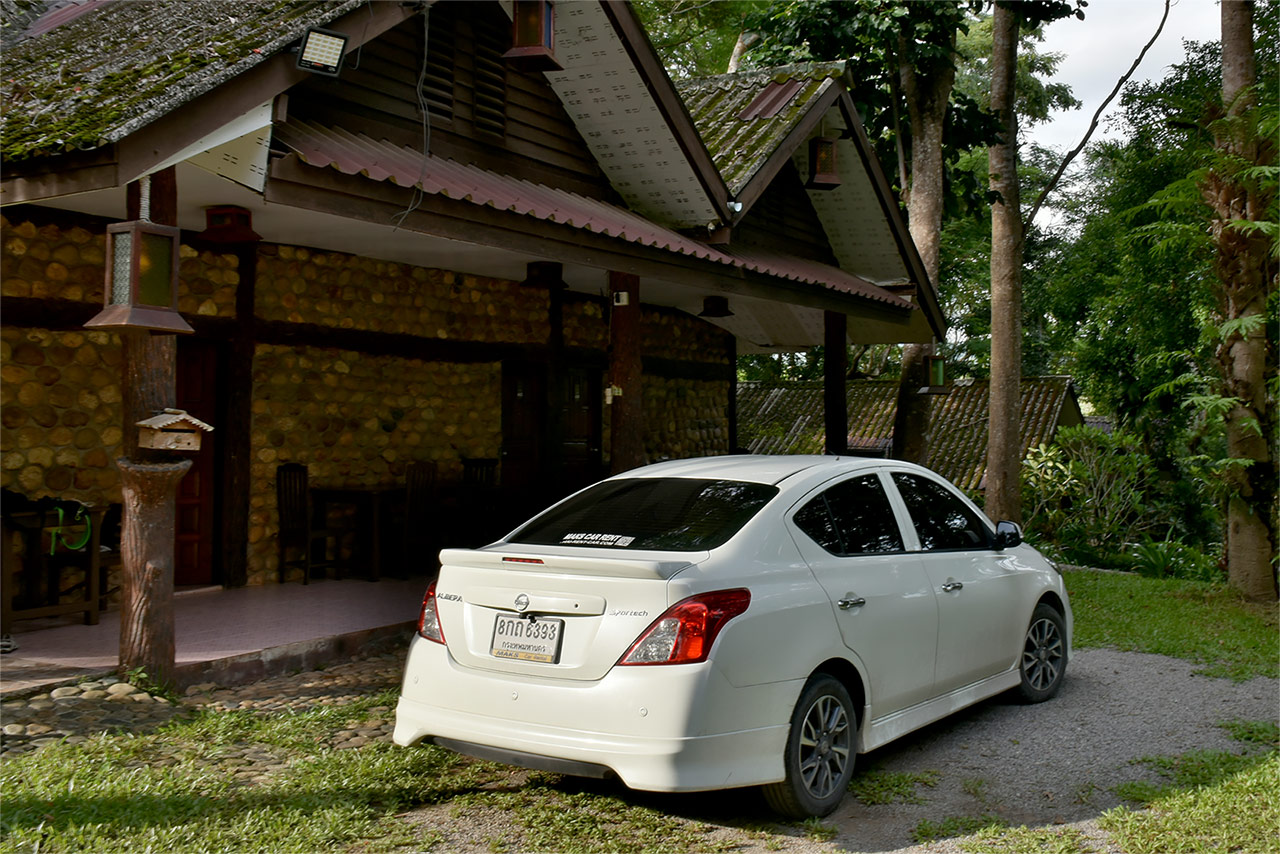
Practical info: how we rented the car
Now – about the technical details that might be useful for anyone planning to rent a car in Thailand. We've tried to collect the most important things, tested in practice.
Documents and licenses
To rent a car in Thailand, you need:
- International passport – they'll make a copy or take a photo.
- National driver's license – for local companies, this is often enough – check the specific rental's terms.
- International Driving Permit (IDP) – we strongly recommend it. Yes, Thailand officially recognizes the Vienna Convention, but local police often ignore that fact. You could be fined for not having an IDP. You can get it through Gosuslugi without a medical certificate or exams, valid for 5 years.

Where to look for a car? We considered two options:
- International companies (Avis, Hertz, Budget) – reliable, but often require a foreign bank credit card for the deposit. For tourists from Russia, this is currently difficult.
- Local Thai or Russian-speaking companies – accept cash deposits, often deliver the car to your hotel. The key is to check reviews and the existence of a real office.
We chose the second option. We picked a well-known Russian-speaking company in Pattaya, sent a request on their website, discussed the terms via email, and booked online (payment via a link to a local Russian-speaking exchanger with a Russian card – 1000 baht). We booked 2 days before the start of our road trip, while already in Thailand, but this was low season (summer) – in high season, it's better to book a few weeks in advance. The remaining amount and deposit (5000 baht or 200 dollars, our choice) were paid at key handover. The car was delivered to our hotel in Pattaya for free – everything was very fast, convenient, and Thai-polite.
We can't name the rental company, as it could be considered advertising under Russian law. But if you need a tip, join our Thailand chat and ask questions – you can share your experience there.
Insurance and deposit
In Thailand, there are two types of insurance:
- Porobo (Por Bor Ror) – mandatory insurance, similar to Russian OSAGO. Covers only medical treatment for those injured in an accident. Car repairs – at your expense.
- 1st Class Insurance – the full equivalent of Casco. Covers damage to your car, other vehicles, and property.
Some local companies rent cars with only Porobo, and then you're responsible for all damage. But that's rare – we've only seen it on the islands. 1st Class insurance usually comes with a deductible – for our car, it was 5000 baht, exactly the amount of the deposit. In case of an accident, we would have lost this money but wouldn't have paid for repairs. Also, fines (if any at the end of the rental) and any damage found upon return are deducted from the deposit.
Many companies also offer full coverage without a deductible as an option – meaning you lose nothing in case of an accident or damage, but the insurance costs more. In our case, for 18 days, that would have added 3800 baht to the cost, which seemed like a lot compared to the 5000 baht deductible, so we decided against full coverage. But it's up to you, depending on your experience and risk tolerance.
Deposit: 5000 baht in cash. We got it back in full when we returned the car with no fines.
What to check when picking up the car
Here's the mandatory checklist when picking up a car:
- Full video walkaround – record continuously, slowly, with verbal comments. The company employee should be in the frame.
- Front bumper underside – tourists often scrape high curbs. This is the main "trap" for your deposit.
- Alloy wheels – photograph each one close-up. Scratches are a common reason to keep your deposit.
- Windshield – check for stone chips. If it's not noted on the form and a crack appears during your trip, you'll pay for a replacement.
- Air conditioning – in Thailand's climate, it must work perfectly. Turn it on full blast and wait a couple of minutes.
- Interior – check for stains, cigarette smell, animal marks. All should be noted in the contract.
- Trunk and engine bay – don't forget to look there too, check the spare tire, jack, and wheel wrench, and under the hood, check for cleanliness and any loose wires.
Don't hesitate to point out all found defects to the company employee – they mark everything on the car diagram in the contract, and they take it in stride. The more you mark, the fewer problems you'll have.
What you can't check or mark – the condition of the engine and other components. Unfortunately, rental cars are often very worn out and can break down on the road. In our case, for example, the engine with very high mileage barely accelerated and knocked heavily every time we pressed the pedal, which was nerve-wracking. But if the car breaks down not through your fault, the rental company will arrange repairs at their expense, and sometimes provide a replacement car. However, some rental contracts explicitly state that in case of a breakdown, the lessor only repairs the car but bears no responsibility for your problems or downtime if your plans are disrupted. If this matters to you, study the contract terms before renting from different companies – don't trust the manager's words alone.
If you need more practical information about renting, we've prepared a complete guide to car rental in Thailand with step-by-step instructions, fine tables, parking and fuel nuances. Everything is laid out and supplemented with tips from this trip.
Road adventures: what awaited us
Thailand's roads are a separate art form. Left-hand traffic, chaotic motorbikes, unexpected U-turns, and almost no priority signs. We prepared, but a couple of surprises still happened.
20 minutes after we started, the police stopped us. They checked our IDP, looked at our documents, and wished us good luck. That was the only time we were stopped during the entire trip.
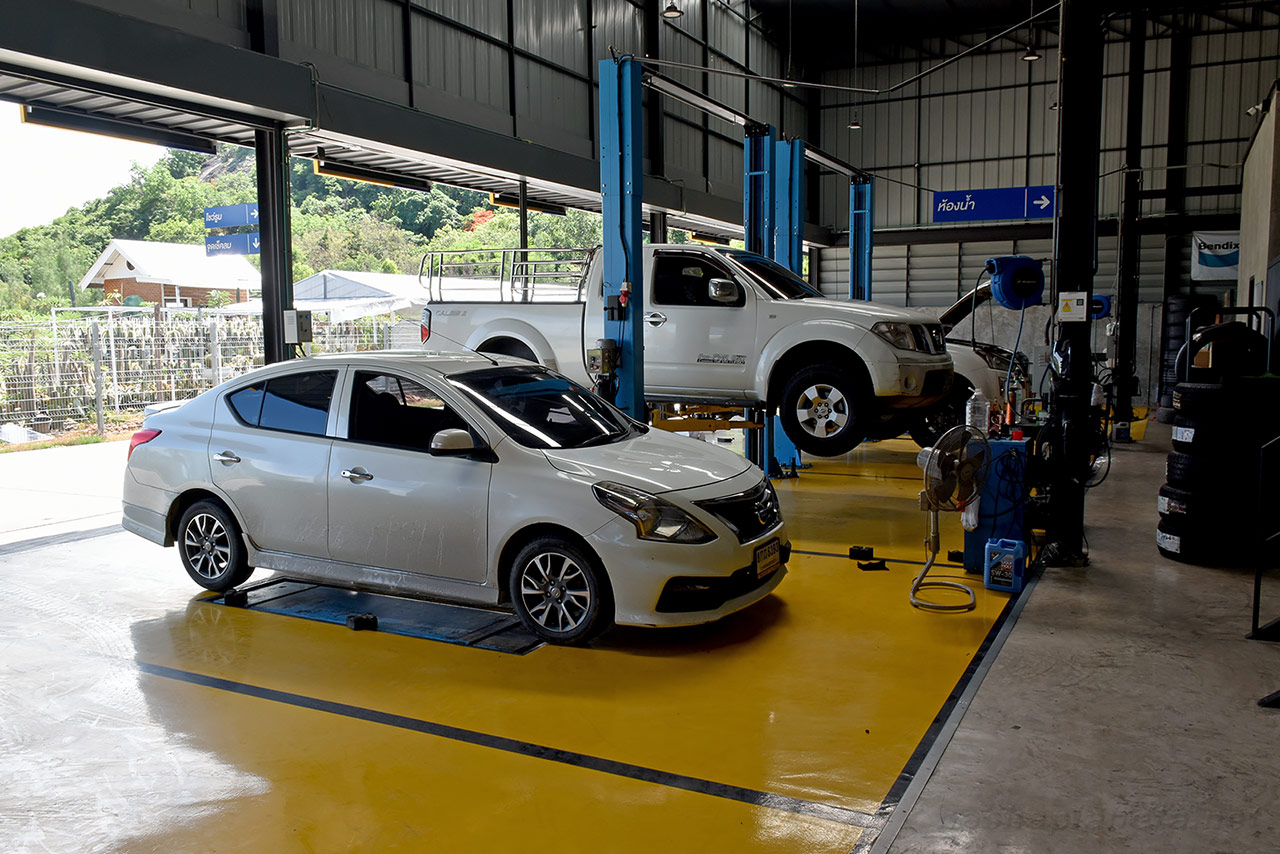
In Hua Hin, a tire started going flat. The nearest tire shop fixed it for 100 baht (2.97 USD). Our rental contract stated that using the jack and spare tire would incur a fine of 1100 baht, so we didn't even think about changing it ourselves.
The most serious adventure happened in Kanchanaburi. We decided to leave the main road and take a shortcut from Erawan Waterfall toward Sangkhlaburi, as shown by Google Maps. The road along the reservoir was perfect – with stunning views. But after an hour, the asphalt ended, and we hit a good dirt road. A few more kilometers – and we reached impassable mud for a sedan. We had to turn around, go back, and take a detour. We lost about three hours and made an extra 200 kilometers.
Important takeaway: don't blindly trust your navigation in rural areas. Check the route in advance using satellite maps and street views, or simply ask local drivers.
Hidden gems we discovered
On this trip, we deliberately looked for places with almost no foreign tourists. And we found them – some became real discoveries.
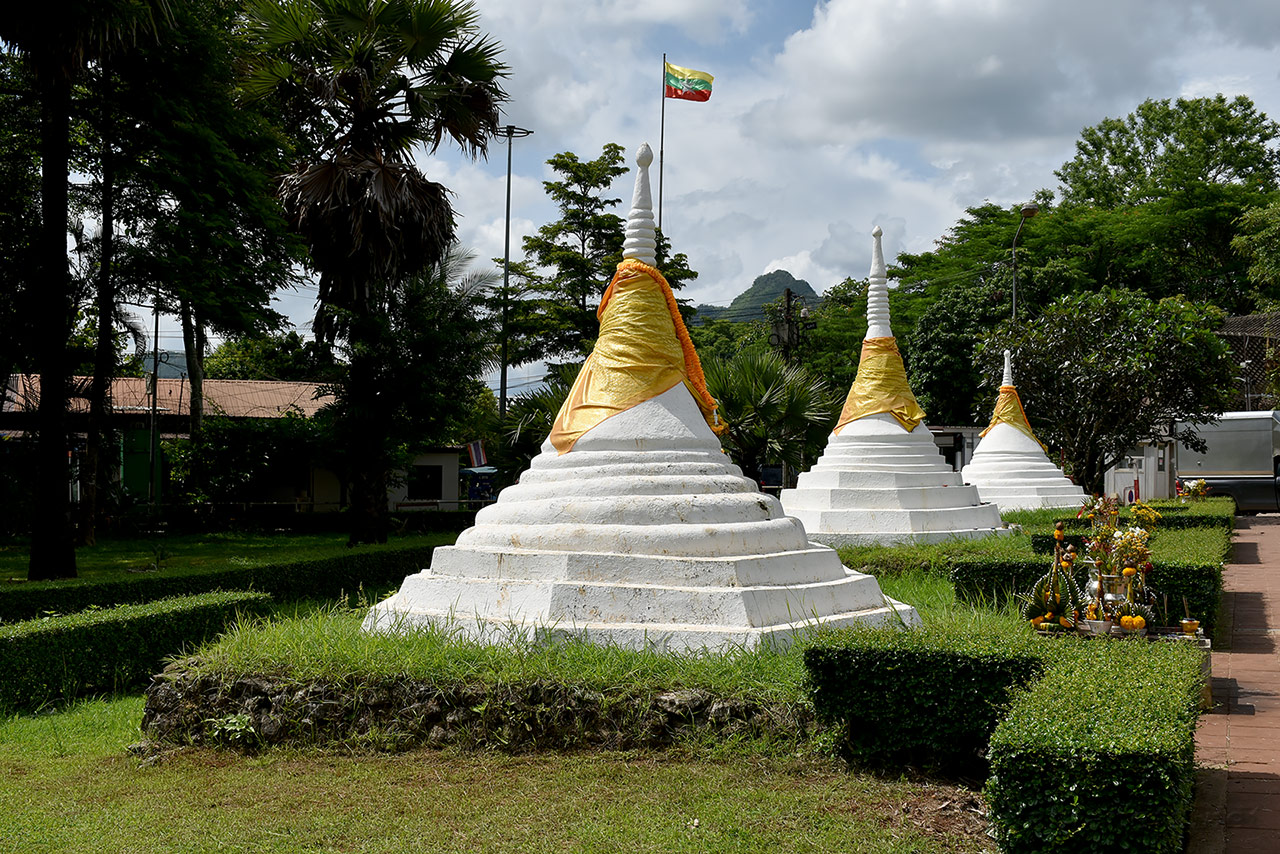
Three Pagodas Pass on the Myanmar border
The town of Sangkhlaburi right on the Myanmar border. We stayed there for two days. We didn't see any Europeans at all – only Thais and a few travelers from neighboring countries. At the Three Pagodas Pass, there's a duty-free shop where you can buy alcohol, cigarettes, sweets, and souvenirs at ridiculous prices without even crossing the border. Surrounding – mountains, mist, an old Burma atmosphere. We walked through the morning market, ate local noodles, and felt like explorers.
Wat Tham Phra That – a temple carved into a cliff
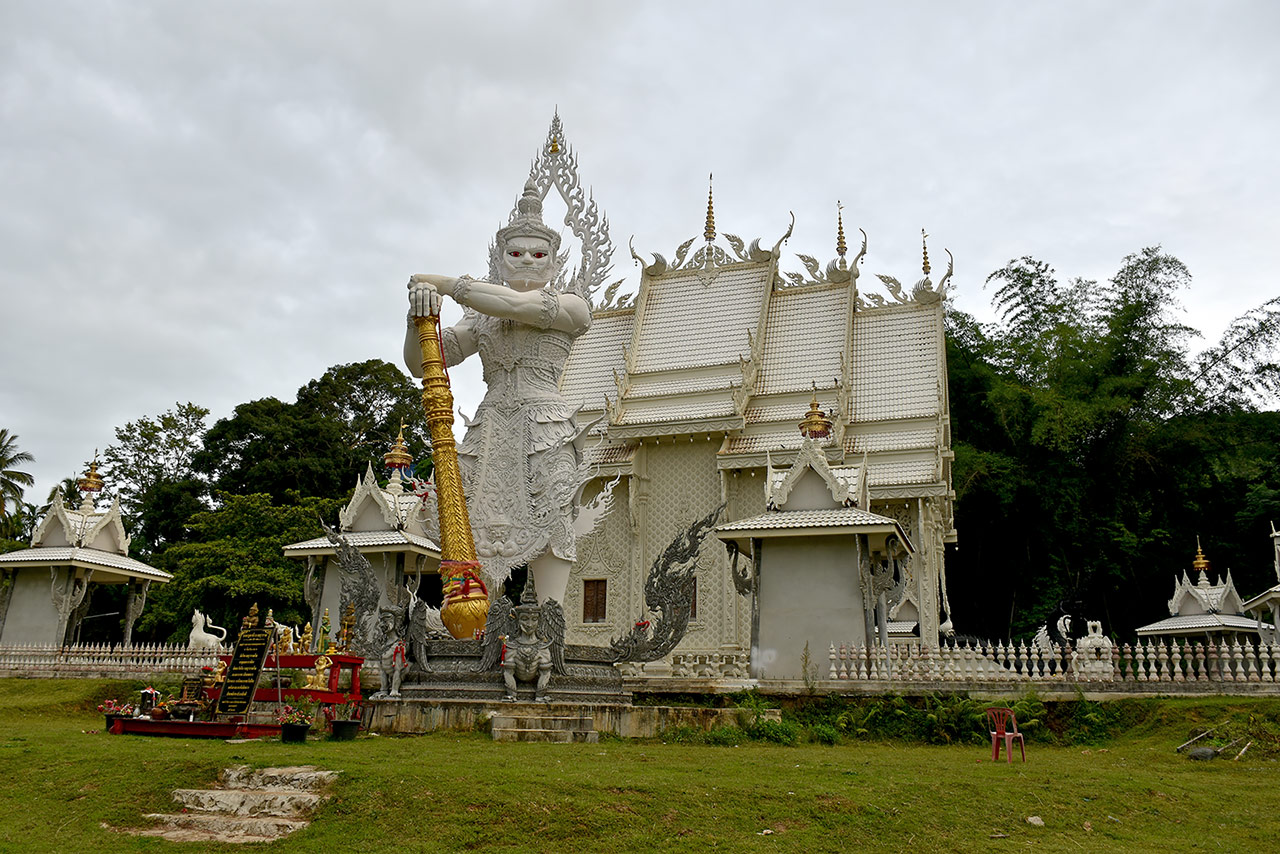
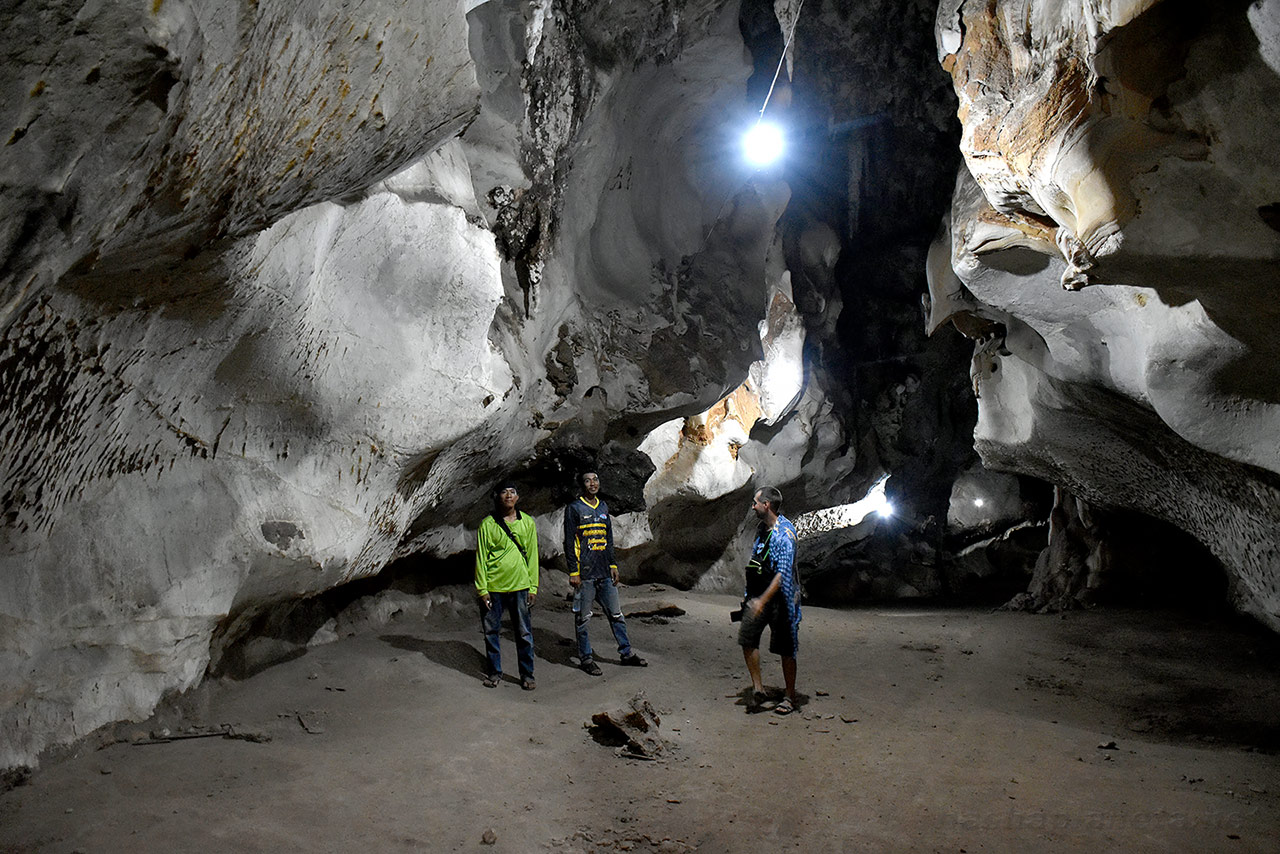
In a small village near Erawan, we found a Buddhist temple carved into a cliff. And the locals, who didn't speak English, led us to Nam Mut Cave. We communicated through a translator and gestures. It was an honest, real experience – no tourist show. A rare opportunity to see authentic life in the Thai countryside.
Nam Mut Cave – communicating through a translator
Local residents who didn't speak English led us to Nam Mut Cave. We communicated through a translator and gestures. It was an honest, real experience – no tourist show.
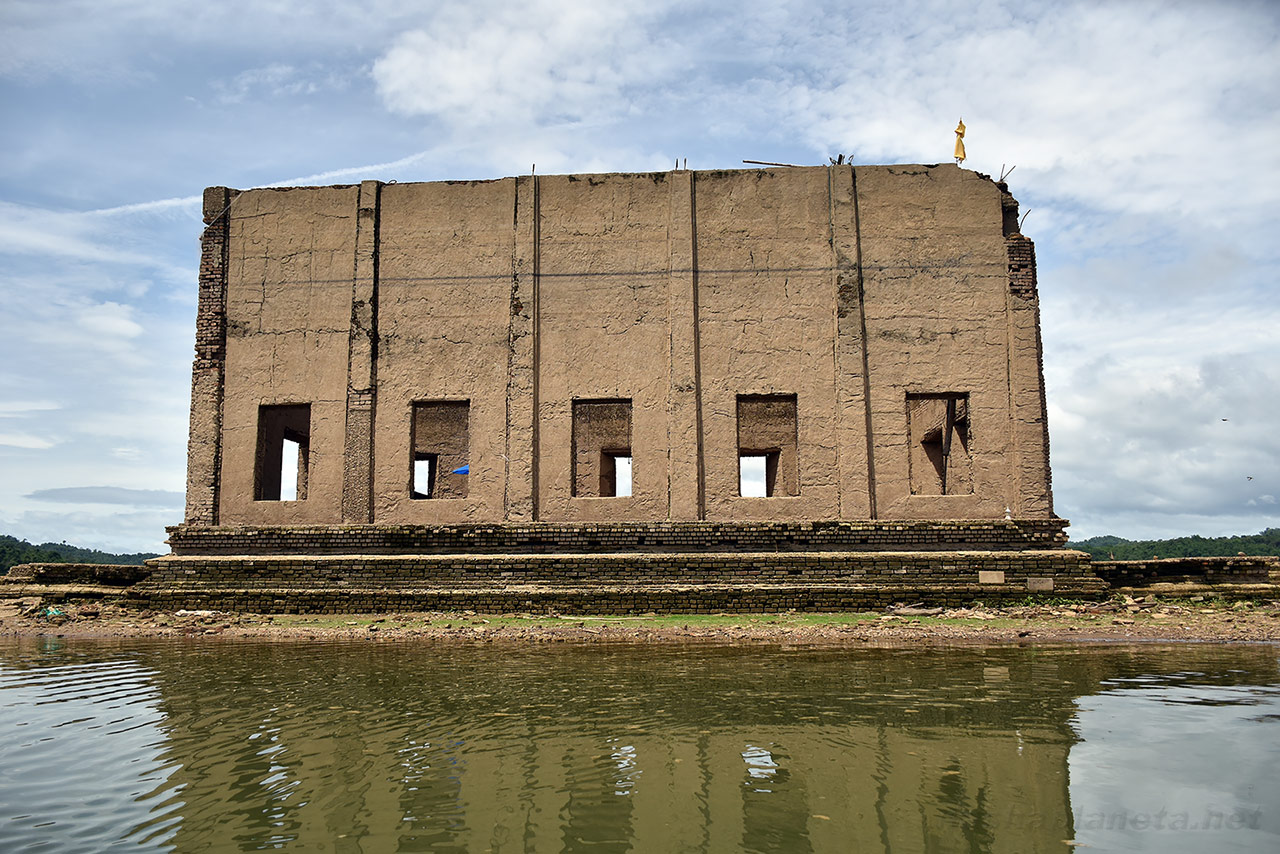
Sunken temples in Sangkhlaburi
For 500 baht (14.87 USD) for three of us, we took a boat ride on the reservoir. We saw the spires of temples that had gone underwater decades ago. A mystical sight that's hard to put into words.
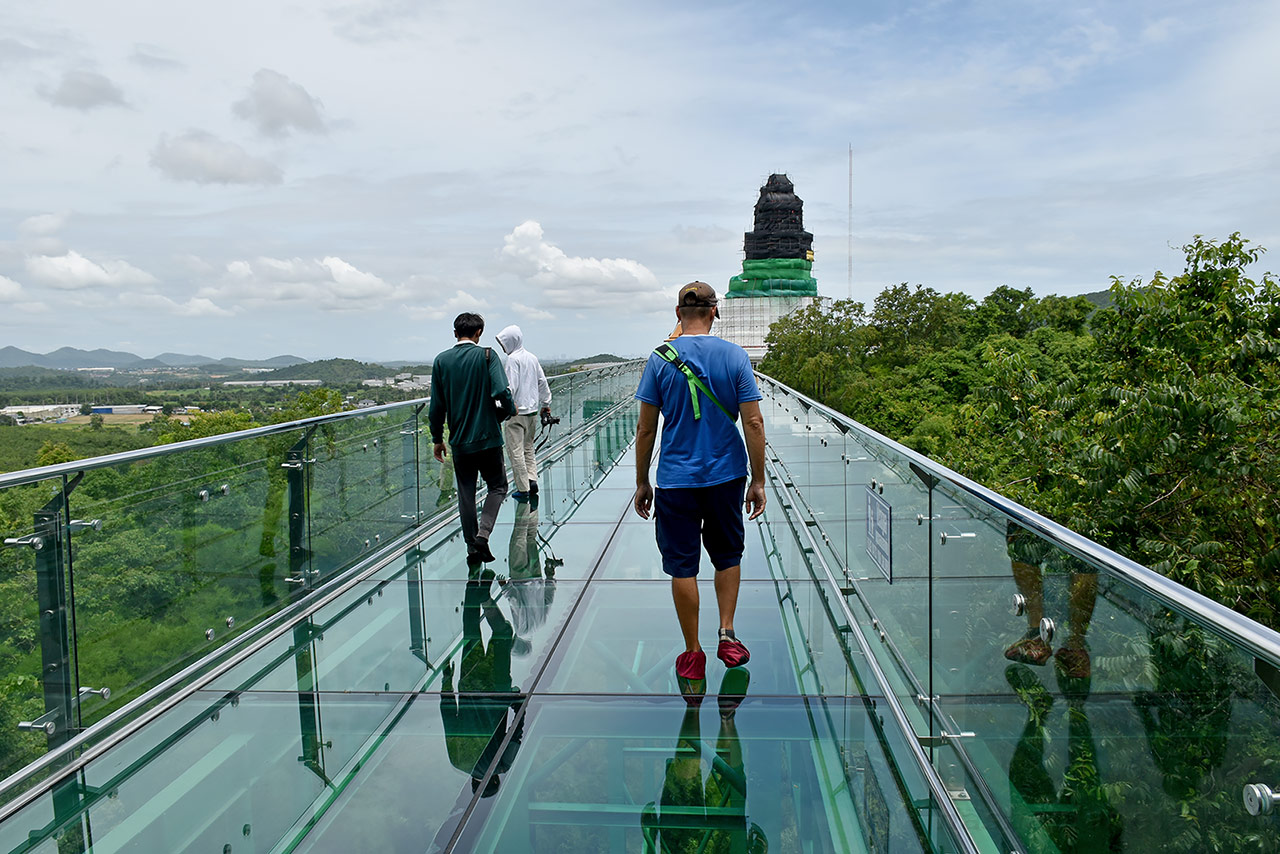
Skywalk Wat Khao Tabaek – a glass bridge near Pattaya
A new glass bridge not far from Pattaya. Free entry, few people, great views. We stopped there on the first day to stretch our legs after the flight.
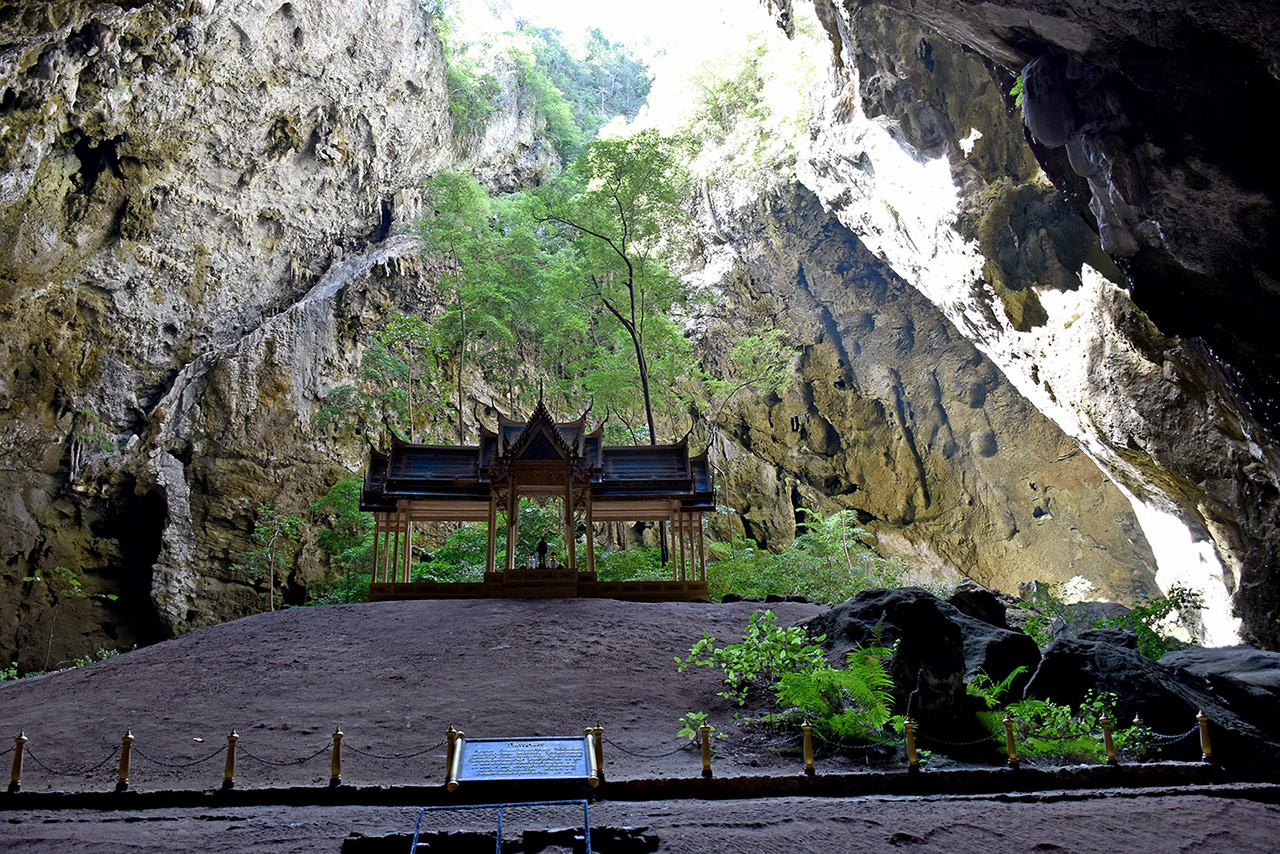
Sam Roi Yot National Park – disappointment
But Sam Roi Yot National Park was a disappointment. We drove there for the famous cave with the pavilion, but it turned out that almost all other caves, trails, and viewpoints were closed. And the entrance fee for foreigners was steep. Honestly, we didn't understand what we were paying for. In the future – we'll be more careful about checking current information before visiting.
Expenses: full report
Let's calculate all the car-related expenses. Hotels, food, and entrance tickets are not included – only the transport part.
| Expense item | Amount (baht) | Amount (rubles) |
|---|---|---|
| Car rental (18 days × 571 baht) | 10,278 baht | 306 USD. |
| Fuel | 4,955 baht | 147 USD. |
| Toll roads | 330 baht | 9.81 USD. |
| Tire repair | 100 baht | 2.97 USD. |
| Car wash before return | 60 baht | 1.78 USD. |
| Fines | 0 baht | 0 USD. |
| Total | 15,723 baht | 467 USD. |
So, per day, our car expenses averaged about 875 baht (26.01 USD). Considering we drove almost 3000 km, we consider this a very good deal.
Conclusions and recommendations
Let's summarize and highlight the main things to remember for anyone planning to rent a car in Thailand.
What we did right:
- Got an IDP in advance. This saved us nerves and possibly money.
- Took 1st Class insurance. Even if we didn't use it, it gave us peace of mind.
- Cash deposit. No surprises on the card, no blocks.
- Documented the car's condition thoroughly. Photos and videos were our witnesses upon return.
- Refueled and washed the car before returning it. This is specified in many contracts and helps avoid fines.
What we'll keep in mind for the future:
- Don't blindly trust the navigation. Check the route using satellite maps, especially in rural areas.
- Check tire pressure. Gas stations have free air pumps – use them.
- Check the current status of national parks. Closed trails and caves can ruin the experience.
The return went perfectly. We drove back to Pattaya, the manager inspected the car, compared it with the photos, checked the fuel tank. No complaints, deposit returned in full. This is exactly how honest rental companies should work.
The main takeaway: Renting a car in Thailand is not only convenient but also budget-friendly if you approach it wisely. A car gives you freedom that tourists on group tours don't have. You can stop at any point with a beautiful view, turn onto an unfamiliar road, or linger at a market where they make the best pad thai. If you're planning a trip to Thailand – go ahead and rent a car, but don't forget to prepare.
And for those who want more practical information – step-by-step instructions, fine tables, parking and fuel nuances – we've prepared a complete guide to car rental in Thailand. Everything is laid out and supplemented with tips from this trip.