Don't want to read a lot of text? Here are quick answers on the topic:
- How much alcohol can you bring into Russia? – Up to 3 liters duty-free. If you bring up to 5 liters, you pay 10 euros duty for each extra liter.
- Which foods will definitely be confiscated at customs? – Homemade and non-factory products: meat, fish, cheese, honey, eggs, and alcohol in plastic bottles. Bringing them is extremely risky.
- Do I need to declare money when entering? – Yes, if the cash amount exceeds 10,000 USD (in any currency). Declaration is mandatory but free.
- Why can souvenirs ruin your vacation? – Corals, shells, and products made from exotic animal leather without a CITES certificate will be confiscated and you'll be fined. Always ask for a receipt and documents!
- Are limits different for planes and trains? – Yes, very different. For planes – 10,000 euros and 50 kg, for trains or cars – only 500 euros and 25 kg.
- Can you bring more than one carton of cigarettes? – No, the limit is strict: 200 cigarettes, 50 cigars, or 250 g of tobacco. Exceeding this will result in a fine.
- Which customs corridor should you choose? – If you're unsure or bringing something above limits (alcohol, money, expensive purchases) – go to the RED corridor. It will save your nerves and money.
And now, we share everything from our personal experience, with nuances and hacks:
Customs isn't about passports. So what is it about?
Let's get one thing straight: customs and passport control are two completely different things. Passports, visas, entry permits – that's for border guards. Customs only looks at what you're carrying across the border: in your suitcase, backpack, pockets, and even in the car trunk.
So when you're standing in the customs queue, remember: they're checking your luggage, not you. And if you know the rules, there's nothing to fear. But if you don't – your vacation might suddenly get a few tens of thousands of rubles more expensive, and you might lose your souvenirs. So let's figure it out to avoid that.
Always keep receipts for major purchases abroad. If a customs officer questions the value of your items, the receipt will be the main proof of their actual cost. Without a receipt, they'll estimate the value themselves – and usually on the higher side.
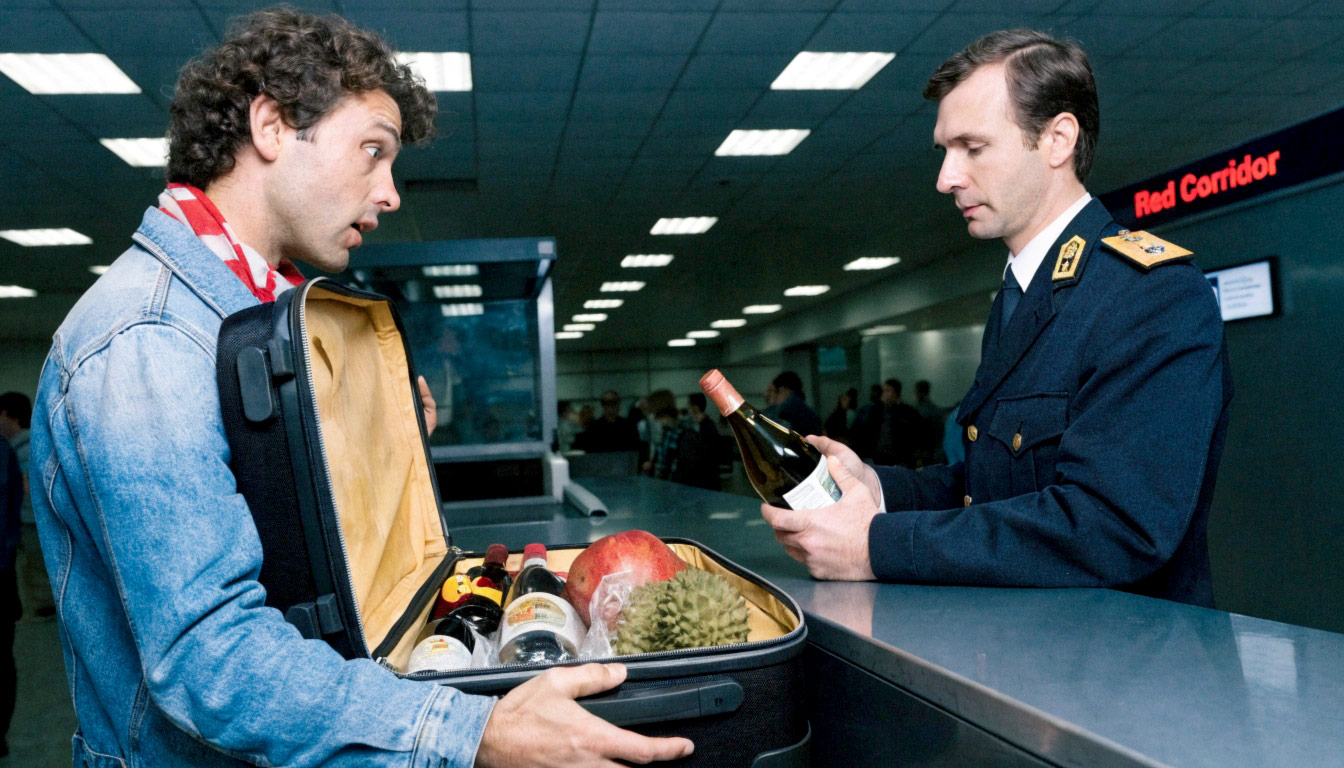
Green or red? How not to make a mistake and ruin your vacation
At any airport or border crossing, there are two corridors – green and red. They're like two paths in a quest: one fast and simple, the other with bureaucracy.
- Green corridor – for those with nothing to declare. No goods above limits, prohibited items, or large sums of money. Just walk through, and if you're not selected for a check – you're already in Russia.
- ⚠ Red corridor – for those carrying something that needs to be declared. Large amounts of currency (over 10,000 USD), goods above weight or value limits, and any items restricted without declaration.
Choosing the wrong corridor is the easiest way to ruin your vacation. If you go through the green corridor with an extra liter of alcohol in your luggage and get checked – it's a violation. "I didn't know" won't work. So if you're unsure – go to the red corridor and ask the inspector. It'll take 5 minutes, but save you nerves.
How much can you bring without customs ruining your trip
Now for the main thing: the limits depend on how you cross the border. Plane or ground transport – the difference is huge, and it can seriously hit your wallet.
If you're flying by plane
When crossing by air, the limits are generous: you can bring goods worth up to 10,000 euros and weighing up to 50 kg per person. So a new laptop, a couple of bags, and lots of souvenirs – all without problems.
If you're traveling by train or car
Here the limits are more modest: only 500 euros and 25 kg. An important detail many forget. Driving from Europe with a car full of shopping? Be prepared to pay duty on everything over 500 euros. And that can be an unpleasant surprise.
Duty for exceeding: 30% of the value, but no less than 4 euros per 1 kg.
ATTENTION: these limits apply to goods for personal use. If a customs officer suspects you're carrying a commercial shipment (e.g., 10 identical iPhones), the rules get stricter – and your vacation will definitely become more expensive.
Alcohol, cigarettes, and food – the main traps for tourists
This is the most common area where tourists get into trouble. And where one mistake can really ruin your vacation.
Alcohol
You can bring up to 3 liters of alcohol duty-free. If you bring up to 5 liters – you pay duty of 10 euros for each liter over three.
Important nuance: alcohol is counted together. Bought 2 liters at duty-free and 2 liters in your luggage? That's 4 liters total – you pay for 1 liter over the limit. And don't forget about age: you can only bring alcohol from 18 years old.
Tobacco
You can bring 200 cigarettes (one carton), or 50 cigars, or 250 grams of tobacco.
Food and fruit
You can bring up to 5 kg of plant products (fruit, vegetables, nuts) and up to 5 kg of animal products (but the latter only in factory packaging).
Here's what you cannot bring in food without risking problems:
- Meat, fish, sausages – even in vacuum, if not in factory packaging
- Cheese and dairy products
- Honey not in a factory jar
- Eggs
- Alcohol in plastic bottles (homemade moonshine, wine, etc.)
Important! Formally, if the packaging has a factory label – no problem. But if you're bringing homemade jam or pickles in a jar without any labels, be prepared that they might be confiscated. Customs officers aren't always strict about such small things, but the risk exists – and it can ruin your mood. The same goes for alcohol in bottles without labels and with broken seals.
Money: how much you can bring in and out without problems
Due to sanctions, Russia currently has special rules. Remember the main point so your vacation doesn't become a nightmare:
ATTENTION: since March 2, 2022, there's a ban on taking ANY foreign cash currency – no more than 10,000 US dollars equivalent per person. Rubles can be taken out without limits, but amounts over 10,000 dollars need to be declared.
Now about bringing money in. Formally, there is no limit on bringing currency into Russia. But if you're carrying an amount equivalent to 10,000 US dollars or more – you must fill out a declaration. This applies even to rubles.
How to calculate: add up all cash in all currencies. 5,000 euros and 6,000 dollars – that's already over 10,000 in dollar equivalent, so declaration is mandatory.
The declaration is free and easy to fill out. You can do it at customs or in advance online on the personal cabinet website. Ignoring it is not an option – if they find undeclared money, it can be confiscated and the case sent to court. And your vacation will definitely be memorable.
What you absolutely cannot bring in – otherwise your vacation will definitely be ruined
Here's a list of things that will guaranteed cause problems at the border. Some are obvious, others less so.
- Drugs, weapons, explosives – no explanation needed, it's criminal liability.
- Food without factory packaging – meat, fish, cheese, honey, eggs, alcohol in canisters.
- Plants with roots – want to bring a seedling? Without a special permit, you can't.
- Animals and plants from the CITES list – this is the main trap for tourists.
What is CITES? The international convention on endangered species. The list includes tens of thousands of items: corals, seashells, crocodile leather products, some parrot species, orchids. An average tourist can't tell a legal shell from a prohibited one. So the rule is simple:
GOLDEN RULE: buying anything made of corals, shells, exotic animal leather, or other "natural" souvenirs – demand a receipt and a CITES certificate from the seller. Without the paperwork, customs will confiscate it and fine you. And your vacation will be remembered not for the sea, but for the bureaucratic hassle.
What you cannot take out of Russia – even if you really want to
There are fewer restrictions here, but they exist. Remember the main ones so you don't ruin your return trip:
- Fish and seafood – no more than 5 kg per person.
- Sturgeon caviar – no more than 250 grams, only in factory packaging and обязательно with a receipt.
- Fuel – cannot export more than 10 liters in canisters (except fuel in the car's tank).
- Diamonds – valued over 75,000 USD cannot be exported.
- Items made of precious metals and stones – if the total value exceeds 1 million rubles, they need to be declared.
- Watches with precious metal cases – must be declared.
In practice, most tourists don't encounter these restrictions. But if you're carrying an expensive gift or a collectible item – better to be safe and go through the red corridor.
7 rules that will save your vacation at customs
We believe knowing the rules is half the success. The other half is behaving correctly. Here are 7 simple tips that will save your nerves and money:
How to get through customs without losses
- Keep your receipts – for all expensive purchases. This is your protection if questions arise about value.
- Don't bring food without factory packaging – meat, cheese, honey, alcohol in plastic bottles. The risk of confiscation is too high.
- Declare large amounts – if you're carrying more than 10,000 dollars, fill out a declaration. It's free and easy.
- Check your souvenirs – corals, shells, leather products – demand a CITES certificate.
- Don't try to cheat – random checks work, and customs officers have seen every trick.
- Go to the red corridor if you're unsure – better to spend 5 minutes than to get a fine.
- Treat customs officers with respect – they're just doing their job. Calmness and politeness work wonders.
Want to know more? Read our other guides on the topic: